


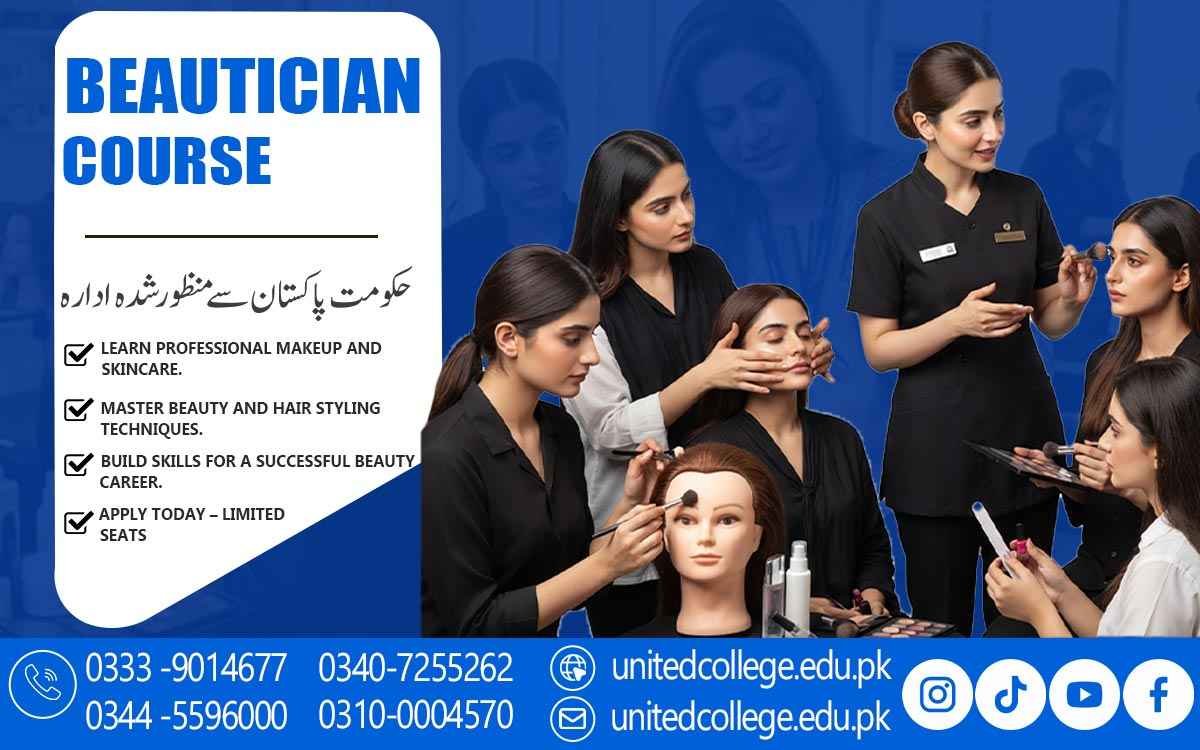

Beautician Course in Okara: Learn Beauty, Makeup and Salon Skills
Turning an Interest in Beauty Into a Practical Skill
For someone who enjoys skincare, makeup, hairstyling, or helping others feel confident about their appearance, beauty can become much more interesting when it is learned as a practical skill. A Beautician Course in Okara gives beginners an opportunity to understand different beauty services step by step instead of learning only by watching others. A learner can become familiar with skincare routines, makeup application, hair care, grooming, nail care, beauty tools, and salon practices while gradually improving technique and confidence.
Beauty work is not simply about making someone look different; it also involves understanding what a client needs, preparing the skin or hair correctly, selecting suitable products, maintaining cleanliness, and completing each service carefully. For fresh learners in Okara, this type of beautician training in Okara can provide a structured way to explore the beauty field while developing skills that can also be useful for personal grooming and everyday beauty care.
Understanding Skin Types Before Starting Any Treatment
Good beauty work often begins before a facial cream, cleanser, or makeup product is applied because understanding the condition of the skin can influence the entire treatment. In a Beautician Course in Okara, learners can explore different skin types, including dry, oily, combination, and sensitive skin, and understand why each may require a different approach. Skin cleansing is an important starting point because removing dirt, excess oil, makeup, and other buildup helps prepare the skin for further care.
Learners can also study simple skincare techniques such as cleansing, exfoliation, moisturizing, and basic skin preparation while learning why products should not be selected randomly. For example, a product that feels comfortable on oily skin may not provide the same experience for dry or sensitive skin. Understanding these differences helps beginners become more careful when planning beauty treatments and allows them to approach skincare with greater awareness rather than treating every client in the same way.
Building Facial Skills Through Careful Skin Preparation
A facial can look simple from the outside, but good facial work involves several connected steps that need attention and consistency. Beautician training in Okara can introduce learners to facial techniques such as preparing the skin, cleansing, gentle exfoliation, steaming where appropriate, applying suitable products, performing basic massage movements, and finishing with moisturizing or other appropriate skincare steps. The purpose is not simply to apply several products one after another; learners need to understand the role of each stage and how careful handling can make the service more comfortable.
They can also learn the importance of using clean towels, properly prepared tools, and suitable products during facial services. This practical understanding becomes especially useful when working with different skin needs because a beginner learns to observe the skin, follow a suitable routine, and avoid unnecessary or overly harsh treatment. With repeated practice, facial work can become more controlled, organized, and comfortable for both the learner and the person receiving the service.
Developing Makeup Techniques From Preparation to Final Finish
Makeup is often the part of beauty work that attracts beginners first, but creating a neat makeup look requires more than simply applying foundation and lipstick. A beauty course in Okara can help learners understand the complete makeup process, beginning with skin preparation and moving toward foundation, concealer, powder, eye makeup, blush, contouring or highlighting where appropriate, lipstick, and final finishing. Learners can explore how different shades, textures, and application methods can affect the overall appearance and why makeup should be adapted to the person's features and the occasion.
Everyday makeup may require a lighter and more natural approach, while party or event makeup may involve stronger eye makeup and more defined features. Bridal makeup can require additional attention because the look needs to work with clothing, lighting, photography, hairstyle, and the bride's preferences. By practicing different makeup techniques, beginners can gradually learn how to create balanced looks rather than depending on one fixed style for every person.
Learning Hair Care and Styling With Better Technique
Hair services add another important dimension to beautician education because grooming is often connected with the overall appearance created through makeup and skincare. During a Beautician Course in Okara, learners can become familiar with basic hair care, hair preparation, styling, and common grooming techniques while understanding that different hair textures and conditions may need different handling. Hair styling can include techniques for creating simple everyday looks as well as more polished styles for parties, weddings, and other occasions.
Learners may also explore basic hair cutting concepts, blow-drying, sectioning, straightening or curling methods, and suitable approaches to maintaining hair neatly. Hair care is equally important because styling should not be separated from the condition of the hair itself. Understanding products, heat tools, cleanliness, and careful handling can help beginners develop more responsible habits. As learners practice different hairstyles, they can also become better at managing time, organizing tools, and adapting a style according to the person's preferences and occasion.
Creating Neat Looks Through Threading, Waxing, and Grooming
Small grooming details can make a noticeable difference to an overall beauty look, which is why services such as threading, waxing, and eyebrow shaping are useful parts of professional beauty training. In beauty and skincare training, learners can study how threading is used to shape eyebrows and remove unwanted facial hair, while waxing can be used for hair removal on suitable areas of the body. These services require cleanliness, controlled movements, appropriate preparation, and attention to the individual's comfort.
Beginners also need to understand that not every technique or product is suitable for every person, particularly when someone has sensitive skin or a specific skin concern. Eyebrow shaping, for instance, should consider the natural shape of the brow and the person's facial features rather than following exactly the same shape for everyone. Through practice, learners can develop better hand control and learn how to perform grooming services carefully. These skills can become useful in salons, beauty studios, personal grooming routines, and other settings where neat and detailed beauty services are required.
Practicing Manicure, Pedicure, and Complete Nail Care
Well-groomed hands and feet are another important part of personal presentation, making manicure, pedicure, and nail care valuable areas of beautician education. A learner taking a Beautician Course in Okara can understand how to prepare the hands or feet, clean and shape the nails, manage cuticles carefully, apply suitable products, and finish the service neatly. Manicure and pedicure services require patience because working around the nails and surrounding skin should be done with care rather than rushed.
Learners can also explore simple nail finishing techniques and understand the importance of keeping tools and working surfaces clean between services. Hygiene and sanitation are particularly important in nail care because tools, towels, bowls, and other materials can come into contact with the skin. By practicing these steps in an organized manner, beginners can learn how a small grooming service can involve preparation, technique, cleanliness, and client comfort at the same time. This also helps learners develop a more complete understanding of beauty services rather than focusing only on makeup or hair.
Using Beauty Tools While Maintaining Hygiene and Client Comfort
A skilled beautician needs to know not only how to perform a treatment but also how to use and maintain the tools involved in that treatment. Beauty tools and equipment may include brushes, combs, scissors, makeup applicators, facial accessories, manicure and pedicure tools, hair styling equipment, towels, and other salon materials. During practical beauty training, learners can become familiar with the purpose of different tools and the importance of using them correctly instead of treating every tool as interchangeable.
Hygiene and sanitation should remain part of the routine throughout the service, including cleaning reusable tools, changing towels when necessary, keeping work surfaces tidy, and handling beauty products responsibly. Client communication also matters because a person receiving a beauty service may have preferences, sensitivities, or concerns that should be understood before starting. In a professional setting, a clean workspace combined with respectful communication can make the service more organized and comfortable. These habits help beginners understand that professional beauty work involves both technical ability and responsible behavior.
Building Confidence Through Hands-On Beauty Training in Okara
Reading about beauty techniques can provide useful information, but confidence usually develops when learners actually practice the movements, tools, products, and service steps themselves. This is why practical beauty training can play an important role in a Beautician Course in Okara. Instead of trying to remember every technique at once, beginners can practice individual skills and gradually connect them into complete services. A learner might first practice skin cleansing, then facial preparation, makeup application, hair styling, threading, nail care, or other services before working toward a more complete beauty routine.
Mistakes during practice can also become useful learning opportunities because they help learners identify problems with product application, tool handling, timing, or technique. United College of Technology can be mentioned naturally in this learning journey as an institute where students can explore structured beauty-related training. The wider purpose is to help learners become more familiar with the practical side of the field while developing patience, cleanliness, communication, and confidence through repeated work.
Bringing Beautician Skills Into Everyday Beauty and Salon Services
This does not mean every learner must follow the same career path; some may want salon experience, while others may be interested in personal grooming or developing specific beauty services. What matters is building a strong foundation and learning how to apply each technique carefully. With continued practice and attention to hygiene, client needs, and changing beauty trends, learners completing the Beautician Course in Okara can develop a practical understanding of beauty work that connects classroom learning with everyday salon and personal-care situations.
Once skincare, makeup, hair care, grooming, nail care, hygiene, and client handling are understood together, learners can see how individual techniques connect within real beauty services. In Okara, these beauty industry skills may be useful in different settings, including beauty salons, beauty studios, personal grooming services, bridal preparation, freelance work, or even for improving one's own understanding of skincare and appearance. A client may arrive for a single service such as eyebrow shaping but later require makeup, hairstyling, or nail care for a special occasion, so a broader skill set can help a beautician understand the complete beauty experience.
Frequently Asked Questions (FAQs)
A Beautician Course in Okara introduces learners to skincare, facial techniques, makeup, hairstyling, threading, waxing, manicure, pedicure, nail care, and salon hygiene.
Yes, beginners can learn beauty techniques step by step, including skincare, makeup application, hair care, grooming services, and the proper use of beauty tools.
Training may include skincare techniques, facial treatments, makeup, bridal makeup, hair cutting, hairstyling, hair care, threading, waxing, eyebrow shaping, manicure, pedicure, and nail care.
Bridal makeup may be included as part of beauty training, along with skin preparation, makeup application, hairstyling, and grooming techniques for special occasions.
Hygiene helps maintain a clean working environment and supports responsible handling of beauty tools, products, towels, and other materials used during beauty treatments.
Admission Open: Start Your Professional Journey Today!
Join United College of Technology and build a career with practical training, recognized certifications, and Gulf job support. Seats are limited.
Apply Now via WhatsAppContact Information
- Address: Rawalpindi: F-272 Main New Katarian Stop, Old IJP Road | Lahore Campus: Lahore, Pakistan
- Phone/WhatsApp: 0340-7255262 / 0333-9014677 / 0301-5044340 / 0310-0004570 / 051-8770756
- Website: unitedcollege.edu.pk
















Leave a Comment