


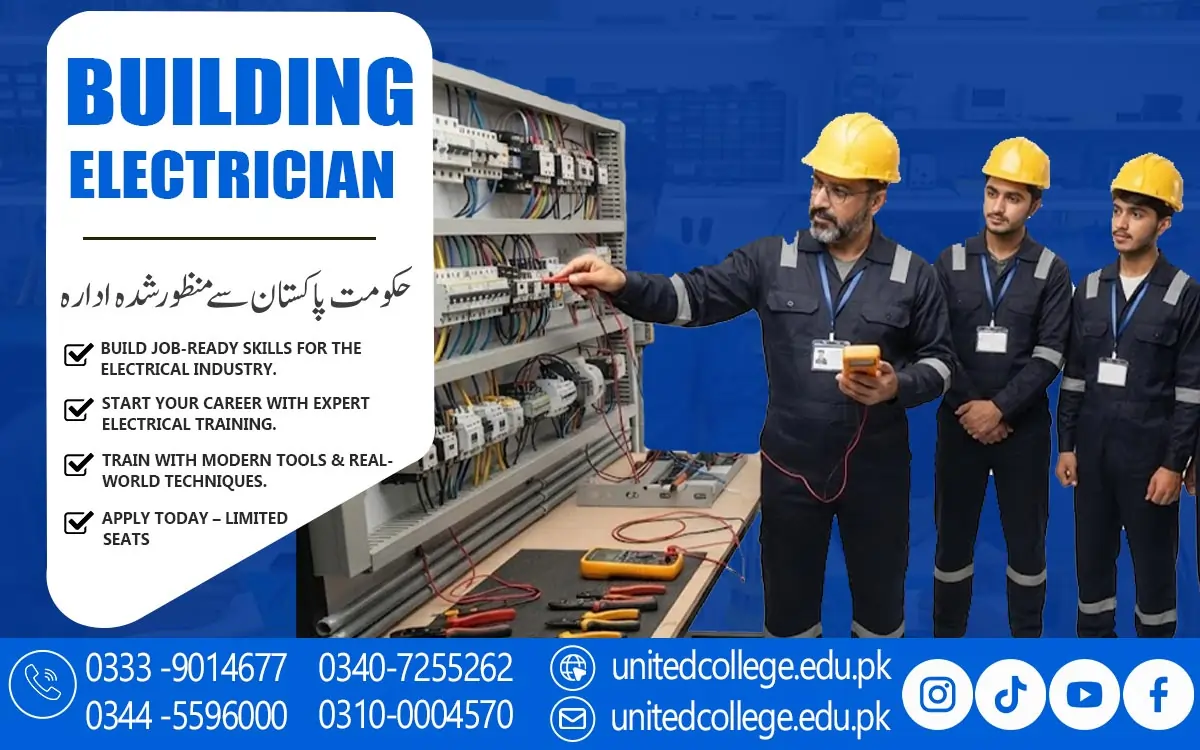

Building Electrician Course in Bhakkar for Electrical Maintenance
Learning the Core Principles of Building Electricity
Electricity is an essential part of modern buildings, providing power for lighting, appliances, fans, sockets, and other equipment. A Building Electrician Course in Bhakkar introduces students to the basic principles of electricity and how electrical systems are used in residential and commercial properties. Learners begin by understanding common electrical terms, components, circuits, and connections.
Students become familiar with basic electrical materials such as wires, switches, sockets, circuit breakers, distribution boards, and junction boxes. They learn the purpose of these components and how they contribute to a complete building electrical system. This foundation helps beginners understand electrical work before moving toward more practical activities.
The course also focuses on the importance of safety and organized working methods. Learners understand why electrical tasks require careful planning and proper procedures. Developing these basic concepts can help students approach practical electrical work with greater confidence and responsibility.
Understanding Power Supply and Distribution Systems
Power distribution allows electricity to reach different areas and electrical points within a building. Building Electrician Course teaches the basic path through which electrical power is distributed from the main supply toward various circuits. They also explore the general role of distribution boards and protective devices in building electrical systems.
Learners study how different circuits can be arranged for lighting, sockets, fans, and other electrical requirements. Understanding these arrangements helps students recognize why buildings often require organized circuit planning. This knowledge can also make it easier for learners to understand basic electrical layouts and diagrams.
Proper power distribution requires attention to safety and correct connections. Students learn why electrical circuits should be inspected carefully and why protective devices are important. These concepts provide useful preparation for practical installation and maintenance activities.
Exploring Electrical Wiring Components
Electrical wiring depends on different components that work together to deliver power to specific points. Students learn about wires, cables, switches, sockets, holders, junction boxes, circuit breakers, and other common wiring materials. They become familiar with the basic purpose of each component.
Learners also study how wiring components are connected within different electrical circuits. They explore their use in lighting systems, socket circuits, fans, and other building requirements. This helps students understand how individual components become part of a complete electrical installation.
Knowledge of wiring components is useful when performing installation and maintenance tasks. Students learn why components should be selected and handled carefully. Becoming familiar with these materials can help learners develop better technical confidence during practical exercises.
Studying Installation and Connection Procedures
Electrical installation requires an organized process to ensure that wiring and electrical fittings are positioned and connected properly. Students learn basic procedures for installing switches, sockets, lighting points, and other electrical components. Practical activities help learners understand how installation concepts are applied to building projects.
Learners also study the importance of planning before starting an electrical task. They learn to consider the position of electrical points, wiring routes, connections, and circuit requirements. Proper planning can make installation work more organized and easier to inspect.
Safety is included throughout installation training. Students learn about safe tool handling, checking electrical supplies, and following appropriate procedures before working on circuits. These practices help learners develop responsible habits that can be useful in future electrical work.
Developing Skills for System Checking
Checking an electrical system is an important part of installation and maintenance. Students learn basic methods for inspecting wiring, switches, sockets, lighting points, and other electrical components. They understand why an electrical system should be examined carefully before it is put into regular use.
Learners are introduced to basic testing tools and their general purpose. They study how systematic testing can help identify issues such as loose connections, interrupted circuits, incorrect wiring, or faulty components. This approach helps students understand the importance of finding the actual cause of an electrical problem.
Regular inspection can also help identify potential issues in existing electrical systems. Students learn why unusual performance or electrical faults should be investigated carefully. Developing system-checking skills can strengthen their basic troubleshooting abilities.
Learning Practical Approaches to Electrical Maintenance
Electrical systems require regular attention to keep their components and connections in suitable working condition. Building Electrician Course teaches about basic maintenance requirements found in homes, offices, shops, and other buildings. They explore how electricians inspect electrical points before deciding what maintenance may be required.
Learners become familiar with common problems such as loose connections, damaged switches, faulty sockets, and lighting issues. They learn to approach these problems systematically and understand why the source of a fault should be identified before taking action. This can help improve their basic maintenance and troubleshooting skills.
Maintenance work also requires careful handling of existing electrical installations. Students learn the importance of appropriate tools, safety precautions, and proper working procedures. These lessons can prepare learners for basic maintenance responsibilities under suitable supervision.
Applying Technical Learning to Real Tasks
Practical training allows students to apply the concepts they study through actual technical exercises. Learners can practice wiring, electrical connections, fitting installation, lighting work, circuit checking, and other basic building electrician activities. This helps connect theoretical knowledge with practical experience.
Students also gain familiarity with common electrical tools and materials during hands-on activities. They learn how tools are used for different tasks and why selecting the appropriate equipment is important. Regular practice can gradually improve their accuracy, coordination, and confidence.
Realistic technical exercises also help students understand the importance of following a proper sequence. They learn to prepare materials, perform tasks carefully, inspect their work, and correct basic mistakes. These habits can support their development as they move toward more professional electrical responsibilities.
Preparing for a Future in Building Electrical Services
A Building Electrician Course in Bhakkar can provide students with the foundational knowledge to enter the electrical field. After completing basic training, learners may explore opportunities related to residential wiring, electrical installation, building maintenance, construction projects, and technician assistance.
Students can continue improving their technical abilities through workplace experience and additional training. As they gain knowledge, they may learn about more advanced electrical systems, equipment, testing procedures, and maintenance practices. Continuous skill development can help them adapt to different electrical work environments.
For learners in Bhakkar, developing a strong foundation in building electricity can be a useful step toward technical career growth. Combining electrical theory, practical training, system checking, maintenance knowledge, and safety awareness can help students prepare for future opportunities in building electrical services. c
Frequently Asked Questions (FAQs)
The course covers building electricity, power distribution, wiring components, installation procedures, electrical connections, system checking, maintenance, and practical tasks.
Yes, beginners can learn electrical concepts from the basics and gradually develop practical skills through structured technical training.
Students can practice basic wiring, electrical connections, fitting installation, lighting work, circuit checking, and maintenance-related activities.
System checking helps identify issues such as loose connections, faulty components, incorrect wiring, and interrupted circuits before they cause further problems.
Students may explore opportunities in residential wiring, building maintenance, electrical installation, construction projects, and other building electrical services.
Admission Open: Start Your Professional Journey Today!
Join United College of Technology and build a career with practical training, recognized certifications, and Gulf job support. Seats are limited.
Apply Now via WhatsAppContact Information
- Address: Rawalpindi: F-272 Main New Katarian Stop, Old IJP Road | Lahore Campus: Lahore, Pakistan
- Phone/WhatsApp: 0340-7255262 / 0333-9014677 / 0301-5044340 / 0310-0004570 / 051-8770756
- Website: unitedcollege.edu.pk
















Leave a Comment