

Chef and Cooking Course in Pakpattan for Practical Cooking Education
Getting Started with Professional Food Preparation
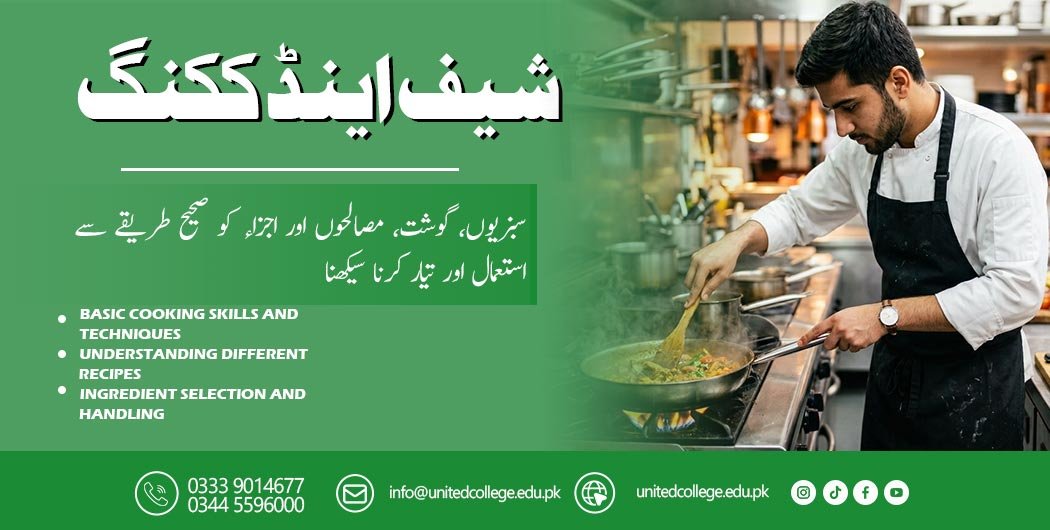
Chef and Cooking Course in Pakpattan provides learners with a practical introduction to professional food preparation. The course is designed for individuals who want to understand how food is prepared, cooked, presented, and served in organized kitchen environments.
Students begin with basic culinary activities and gradually become familiar with professional kitchen routines. They learn how to prepare ingredients, follow recipes, arrange their workstations, and complete cooking tasks in a systematic manner.
This training can be useful for beginners, students, cooking enthusiasts, and people planning to enter the food service sector. Practical activities give learners an opportunity to develop confidence while working with ingredients, recipes, utensils, and common kitchen equipment.
Learning Everyday and Commercial Cooking Techniques
Cooking at home and cooking in a commercial kitchen can involve different levels of planning and organization. Students learn techniques that can be applied to everyday meals as well as larger-scale food preparation.
The Chef and Cooking course may cover methods such as frying, grilling, steaming, boiling, roasting, sautéing, and simmering. Learners practice selecting suitable methods according to the type of food, desired texture, and cooking requirements.
Students also learn how to maintain consistency when preparing dishes. Following recipes carefully, controlling cooking temperatures, and measuring ingredients properly can help produce reliable results. These practices are valuable for anyone considering professional kitchen work.
Understanding Proper Ingredient Handling
Correct ingredient handling is an important part of food preparation. Learners are introduced to different food categories and learn how ingredients should be cleaned, prepared, portioned, and stored before they are used in cooking.
Students can learn the difference between perishable and non-perishable food items. They understand why products such as meat, dairy, vegetables, and other fresh ingredients require suitable storage conditions to maintain quality.
Proper handling also involves avoiding unnecessary food waste. Learners can understand how ingredients can be measured and prepared according to the requirements of a recipe. Efficient ingredient management can support better kitchen organization and cost control.
Developing Skills in Baking and Sweet Dishes
Baking and sweet dish preparation add variety to culinary training. Students can explore the preparation of cakes, biscuits, breads, pastries, cookies, and simple desserts while becoming familiar with basic baking procedures.
Learners practice measuring ingredients accurately and following recipes in the correct order. They also learn about mixing, shaping, oven temperature, and baking time. These details are important for achieving consistent results in bakery products.
Sweet dishes can also involve creativity in decoration and presentation. Students may practice simple finishing techniques that make desserts more attractive. Such knowledge can be useful for bakeries, cafés, restaurants, catering businesses, and home-based food ventures.
Following Kitchen Safety and Cleanliness Practices
Kitchen safety and cleanliness are essential for anyone working around food and cooking equipment. Chef and Cooking Course learn how to maintain clean preparation areas and use kitchen tools responsibly during different cooking activities.
The training introduces safe practices for handling knives, hot utensils, ovens, stoves, and electrical appliances. Learners understand the importance of paying attention while using equipment and keeping potentially dangerous items in appropriate places.
Cleanliness also continues throughout the cooking process. Students learn to wash utensils, sanitize surfaces, dispose of waste properly, and maintain personal hygiene. These habits can help create a more organized and safe working environment.
Learning Effective Food Plating Methods
Food plating involves arranging prepared dishes in an appealing and organized manner. Students learn basic principles related to portion size, plate selection, spacing, garnishing, and arrangement.
Learners practice presenting different types of dishes while keeping the plate clean and balanced. They discover that the presentation should match the type of food and should not interfere with its practical serving and eating.
Good plating can be particularly valuable in restaurants, cafés, hotels, and catering services. A well-presented dish can create a positive impression and contribute to the overall dining experience.
Understanding Basic Kitchen Management
Kitchen management involves organizing people, ingredients, equipment, preparation activities, and cleaning routines. Students learn how these different elements work together to keep a kitchen functioning efficiently.
Learners can practice planning preparation tasks before cooking begins. They understand how ingredients and equipment should be arranged so that important items are available when needed.
Basic kitchen management also involves monitoring supplies and reducing unnecessary waste. Developing these organizational habits can help learners understand the responsibilities involved in running a professional kitchen or small food business.
Exploring Self-Employment and Culinary Career Options
Chef and Cooking Course in Pakpattan can provide learners with a foundation for exploring different culinary career paths. After gaining practical knowledge, individuals can look for opportunities in restaurants, hotels, cafés, bakeries, catering companies, and other food-related businesses.
Self-employment is another possibility for people with culinary interests. Learners may consider home-based food services, catering, bakery products, dessert preparation, or specialized meal services depending on their abilities and available resources.
Professional growth can continue through workplace experience and further culinary learning. By improving cooking techniques, understanding customer preferences, and developing better kitchen management abilities, learners can gradually build a stronger position within the food and hospitality industry.
Frequently Asked Questions (FAQs)
The course covers professional food preparation, commercial cooking methods, ingredient handling, baking, sweet dishes, kitchen safety, food plating, and basic kitchen management.
Yes, beginners can start with basic cooking concepts and gradually learn practical techniques through hands-on kitchen activities.
Yes, the training can include basic bakery products and sweet dishes such as cakes, biscuits, pastries, cookies, and simple desserts.
Yes, learners are introduced to safe equipment handling, personal hygiene, clean workstations, proper utensil care, and responsible food preparation practices.
Yes, the culinary knowledge gained through training can support self-employment options such as home-based food services, catering, bakery products, or other small food ventures.
Admission Open: Start Your Professional Journey Today!
Join United College of Technology and build a career with practical training, recognized certifications, and Gulf job support. Seats are limited.
Apply Now via WhatsAppContact Information
- Address: Rawalpindi: F-272 Main New Katarian Stop, Old IJP Road | Lahore Campus: Lahore, Pakistan
- Phone/WhatsApp: 0333-9014677 / 0344-5596000 / 0310-0004570 / 0301-5044340 / 0340-7255262
- Website: unitedcollege.edu.pk
















Leave a Comment