


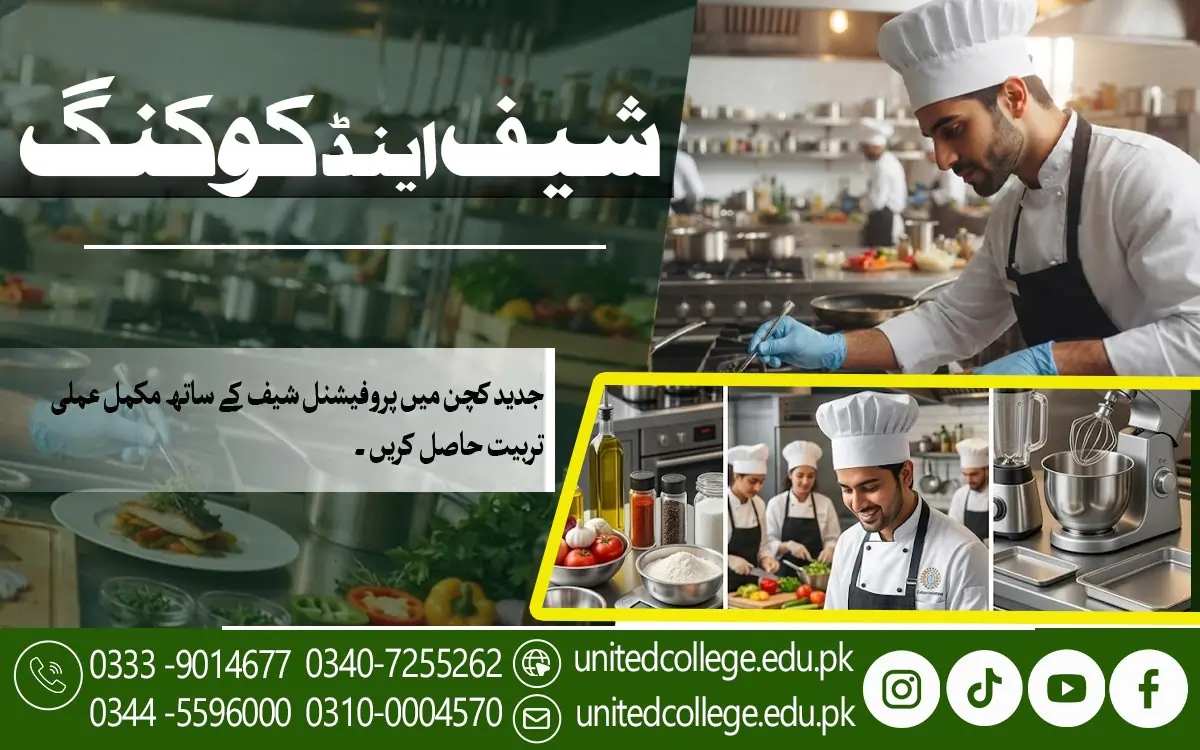

Chef and Cooking Course in Talagang for Restaurant Industry Careers
Introduction to Commercial Kitchen Operations
Chef and Cooking Course in Talagang gives learners an opportunity to understand how commercial kitchens function in restaurants, hotels, cafés, and catering businesses. The training introduces students to kitchen routines, food preparation processes, equipment usage, and the responsibilities involved in professional culinary work.
Students learn how different kitchen areas are organized according to specific tasks. Preparation, cooking, plating, storage, and cleaning each require proper coordination. Understanding these areas helps learners become familiar with the structured environment found in professional food businesses.
The course is suitable for individuals who want to develop a foundation in cooking and explore the hospitality sector. Beginners can learn basic concepts before moving toward practical kitchen activities. This gradual approach can help learners become more comfortable with professional culinary responsibilities.
Developing Confidence Through Cooking Practice
Regular cooking practice can help students become more confident when preparing different dishes. Instead of relying only on theoretical information, learners get opportunities to work with ingredients, kitchen tools, recipes, and cooking procedures.
Students can practice preparing meals while learning how to control heat, follow cooking times, season food, and check the quality of dishes. Repeated practice helps them understand how small changes in cooking methods can affect the final result.
Confidence also develops through learning from mistakes and improving techniques. Learners can identify areas that need attention and gradually improve their approach to food preparation. This Chef and cooking practical experience can be valuable when entering a professional kitchen environment.
Learning Meat, Vegetable, and Rice Preparation
Meat preparation is an important part of many restaurant menus. Students can learn basic procedures for cleaning, cutting, seasoning, marinating, and cooking different meat products. They also become familiar with the importance of appropriate cooking temperatures and preparation methods.
Vegetable preparation introduces learners to cleaning, peeling, chopping, slicing, and cooking a variety of vegetables. They can explore different methods such as steaming, sautéing, roasting, boiling, and frying while learning how cooking methods affect texture and flavor.
Rice preparation is another useful area of culinary training. Learners can practice preparing different rice dishes while understanding the importance of water quantity, heat control, cooking time, and seasoning. These fundamental techniques can support the preparation of many popular meals.
Exploring Baking and Specialized Food Items
Baking allows students to develop knowledge beyond regular cooking. The Chef and Cooking course can introduce basic preparation of cakes, breads, biscuits, pastries, and other bakery products. Learners become familiar with the importance of accurate measurements and suitable baking temperatures.
Students may also explore specialized food items that require particular preparation techniques. These can include snacks, desserts, specialty dishes, and selected items commonly served in restaurants and cafés. Exposure to different food categories can broaden their culinary knowledge.
Practical bakery activities can also improve attention to detail. Learners need to follow recipes carefully, prepare mixtures correctly, and monitor baking processes. These habits can be helpful for anyone considering work in bakeries, hotels, cafés, or catering services.
Applying Safe Food Handling Procedures
Safe food handling is essential in every commercial kitchen. Students learn how food should be cleaned, prepared, stored, and served to maintain appropriate hygiene. They are introduced to practices that help protect food from contamination during different stages of preparation.
Learners also understand the importance of separating raw and ready-to-eat food. Proper storage, clean utensils, and suitable working surfaces are important parts of responsible food preparation. These procedures can help maintain food quality and support a hygienic kitchen environment.
Personal hygiene is equally important for culinary workers. Students learn about clean clothing, handwashing, careful handling of ingredients, and maintaining cleanliness throughout their work. Developing these habits can prepare them for professional food service settings.
Creating Attractive and Well-Balanced Dishes
A well-prepared dish should offer more than good taste. Students learn how different elements of a meal can be arranged to create a balanced appearance. They explore basic concepts such as portion size, color combination, garnishing, and plate arrangement.
Learners can practice presenting different dishes in a clean and attractive manner. They understand that excessive decoration is not always necessary and that presentation should suit the type of food being served.
Balance also applies to the food itself. Students can learn how ingredients, seasonings, textures, and portions work together. Developing an understanding of these elements can help them prepare meals that are more appealing to customers.
Understanding Kitchen Teamwork and Workflow
Commercial kitchens depend heavily on teamwork. Students learn how different members of a kitchen team work together to complete food orders. They become familiar with responsibilities related to preparation, cooking, plating, cleaning, and kitchen support.
Communication is important when several orders are being handled at the same time. Learners discover how clear instructions and cooperation can help prevent confusion and unnecessary delays. Working respectfully with other kitchen staff is an important professional habit.
Kitchen workflow also involves completing tasks in the correct sequence. Students learn how preparation can be organized before cooking begins and how different dishes can be coordinated during service. This knowledge can help them adapt to busy restaurant and catering environments.
Preparing for Restaurant and Catering Opportunities
Chef and Cooking Course in Talagang can provide learners with a foundation for exploring opportunities in restaurants and catering services. After gaining suitable knowledge and practical experience, individuals may consider entry-level roles in kitchens, cafés, hotels, bakeries, and food businesses.
Restaurant work can expose learners to different responsibilities, including ingredient preparation, cooking assistance, plating, cleaning, and kitchen support. With experience, they may gradually develop expertise in specific culinary areas and take on greater responsibilities.
Catering is another area where culinary knowledge can be useful. Catering teams prepare food for events, gatherings, functions, and private occasions. Individuals with practical cooking knowledge can explore employment or self-employment opportunities while continuing to improve their culinary abilities.
Frequently Asked Questions (FAQs)
The course covers commercial kitchen operations, cooking practice, meat and vegetable preparation, rice dishes, baking, food safety, plating, teamwork, and basic kitchen workflow.
Yes, beginners can join the training. The course introduces basic culinary concepts and provides practical activities to help learners become familiar with professional cooking.
Yes, learners can practice basic methods for cleaning, cutting, seasoning, and cooking meat and vegetables, along with preparing different rice dishes.
Yes, food safety and hygiene are important parts of culinary training. Students learn about proper food handling, storage, cleanliness, and safe kitchen practices.
Learners can explore entry-level opportunities in restaurants, hotels, cafés, catering companies, bakeries, and other food businesses, or consider starting their own small food venture.
Admission Open: Start Your Professional Journey Today!
Join United College of Technology and build a career with practical training, recognized certifications, and Gulf job support. Seats are limited.
Apply Now via WhatsAppContact Information
- Address: Rawalpindi: F-272 Main New Katarian Stop, Old IJP Road | Lahore Campus: Lahore, Pakistan
- Phone/WhatsApp: 0333-9014677 / 0344-5596000 / 0310-0004570 / 0301-5044340 / 0340-7255262
- Website: unitedcollege.edu.pk
















Leave a Comment