

Chef and Cooking Course in Wazirabad for Modern Kitchen Training
Exploring Modern Culinary Training
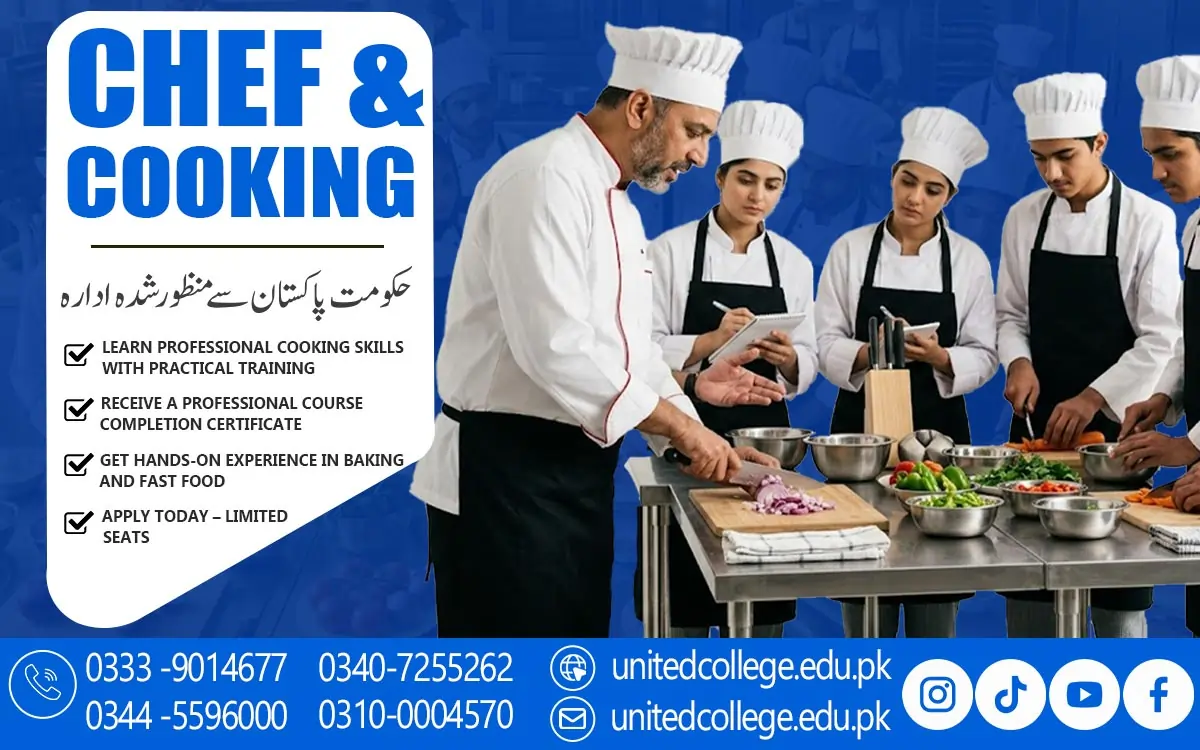
Chef and Cooking Course in Wazirabad provides learners with an opportunity to understand modern culinary practices and professional food preparation. The training introduces students to different kitchen activities, cooking procedures, ingredient handling, and basic culinary concepts. It is designed to help learners become familiar with the working environment of a professional kitchen.
Students explore how chefs plan and organize their cooking activities before preparing meals. They learn to select suitable ingredients, prepare recipes, control cooking temperatures, and maintain consistent food quality. This structured approach helps beginners understand the discipline required in culinary work.
The course can be useful for stuto select suitable ingredients, prepare recipes, control cooking temperatures, and maintain consistentdents, cooking enthusiasts, job seekers, and individuals interested in the hospitality sector. Through hands-on learning, participants can build confidence while working with various ingredients and kitchen equipment. The knowledge gained can also provide a foundation for further specialization in culinary fields.
Mastering Different Styles of Food Preparation
Food preparation involves more than simply following a recipe. Students learn how different ingredients should be cleaned, cut, measured, seasoned, and prepared before cooking. Understanding these stages helps create better coordination between preparation and cooking activities.
The training introduces learners to a variety of Chef and Cooking styles and food preparation approaches. They may practice preparing vegetables, meat, poultry, rice, sauces, soups, and other commonly served dishes. Exposure to different food categories allows students to become more comfortable with varied kitchen assignments.
Learners also understand the importance of consistency when preparing food. Similar dishes should maintain an appropriate taste, texture, portion, and appearance. Developing this awareness can help students adjust to the expectations of restaurants and other professional food service environments.
Using Kitchen Tools and Equipment Correctly
Professional kitchens use a wide range of tools and equipment for different tasks. Students learn about commonly used items such as knives, chopping boards, mixers, ovens, stoves, pans, measuring tools, and other kitchen accessories. Knowing the purpose of each item helps learners select the right equipment for specific tasks.
Safe handling is an important part of equipment training. Learners are shown how to use kitchen tools carefully and how to avoid common mistakes when working with sharp, hot, or electrical equipment. Proper handling can reduce accidents and improve efficiency during busy kitchen operations.
Students also learn the importance of cleaning and maintaining equipment after use. Keeping tools in suitable condition supports hygiene and helps extend their useful life. These habits can become valuable when working in restaurants, hotels, bakeries, and commercial kitchens.
Learning Restaurant Menu Preparation
Menu preparation requires an understanding of customer preferences, ingredients, cooking methods, and portion sizes. During the Chef and Cooking course, students can learn how different dishes are selected and prepared for restaurant service. This provides insight into how professional kitchens organize food production.
Learners may practice preparing dishes from different categories, including starters, main courses, side dishes, desserts, and beverages. They can also learn how recipes are organized so that ingredients and preparation steps are easy to follow.
Understanding menu-based cooking can help students manage multiple food orders more effectively. They learn to prepare ingredients in advance and coordinate different cooking stages. This knowledge can be particularly useful for those planning to work in restaurants, cafés, hotels, or catering businesses.
Practicing Baking and Pastry Making
Baking and pastry preparation offer students another area of culinary learning. The training introduces basic bakery techniques and allows learners to work with ingredients commonly used in cakes, breads, biscuits, pastries, and desserts. These activities can make the course more diverse and practical.
Students learn why accurate measurements, suitable temperatures, and proper mixing methods matter in baking. They practice following recipes carefully and understanding how different ingredients affect the final product. Such knowledge can help learners improve consistency in bakery preparation.
Pastry and dessert making can also encourage creativity. Learners can practice basic decoration, shaping, finishing, and presentation techniques. These abilities may be useful for employment in bakeries, cafés, hotels, restaurants, and catering services.
Maintaining Clean and Organized Workspaces
A clean workspace is essential for efficient food preparation. Students learn how to organize ingredients, tools, and equipment before starting kitchen activities. Keeping everything within easy reach can make food preparation smoother and reduce unnecessary delays.
The course also emphasizes cleanliness during and after cooking. Learners practice cleaning work surfaces, washing utensils, disposing of waste properly, and storing equipment after use. These routines help create a professional kitchen environment.
Good organization also supports food safety. Students learn why raw ingredients should be handled carefully and why different food items need appropriate storage. Developing these habits can help learners maintain professional standards when working in commercial kitchens.
Understanding Professional Kitchen Coordination
A professional kitchen usually involves several people working together at the same time. Students learn how chefs, cooks, kitchen assistants, and other staff coordinate their responsibilities. Understanding these roles can help learners become more comfortable with teamwork.
Communication is particularly important during busy service periods. Learners discover how clear instructions and cooperation can help kitchen staff complete orders efficiently. They also learn the importance of remaining focused when several tasks need attention simultaneously.
Time management is another important aspect of kitchen coordination. Students learn how to prioritize preparation, cooking, plating, and cleaning activities. These organizational abilities can help them adapt to fast-paced restaurant and hospitality environments.
Developing a Path Toward Hospitality Careers
A chef and Cooking Course in Wazirabad can provide a practical foundation for individuals interested in hospitality and food-related careers. After completing their training, learners can explore entry-level opportunities in restaurants, hotels, cafés, bakeries, catering services, and other food businesses.
With additional experience, individuals can gradually take on more responsibilities in the kitchen. They may choose to develop expertise in baking, pastry, traditional cuisine, international dishes, or other areas of culinary work. Continuous practice can play an important role in professional development.
Some learners may also use their knowledge to start a small food business. Catering, home-based food services, bakery products, and specialty cooking are possible areas to explore. By combining culinary knowledge with experience and good business planning, learners can create different pathways within the food and hospitality industry.
Frequently Asked Questions (FAQs)
The course covers modern cooking methods, food preparation, kitchen equipment, restaurant menu preparation, baking, pastry making, hygiene, and professional kitchen practices.
Yes, beginners can enroll. The training starts with basic culinary concepts and gradually introduces learners to more practical cooking and kitchen activities.
Yes, students are introduced to commonly used kitchen tools and equipment and learn appropriate handling, cleaning, and safety practices.
Yes, baking and pastry activities can include preparing cakes, breads, biscuits, pastries, and desserts while learning basic techniques for mixing, baking, decoration, and presentation.
Learners can explore opportunities in restaurants, hotels, cafés, bakeries, catering services, and other food businesses, or use their knowledge to start a small culinary venture.
Admission Open: Start Your Professional Journey Today!
Join United College of Technology and build a career with practical training, recognized certifications, and Gulf job support. Seats are limited.
Apply Now via WhatsAppContact Information
- Address: Rawalpindi: F-272 Main New Katarian Stop, Old IJP Road | Lahore Campus: Lahore, Pakistan
- Phone/WhatsApp: 0333-9014677 / 0344-5596000 / 0310-0004570 / 0301-5044340 / 0340-7255262
- Website: unitedcollege.edu.pk
















Leave a Comment