


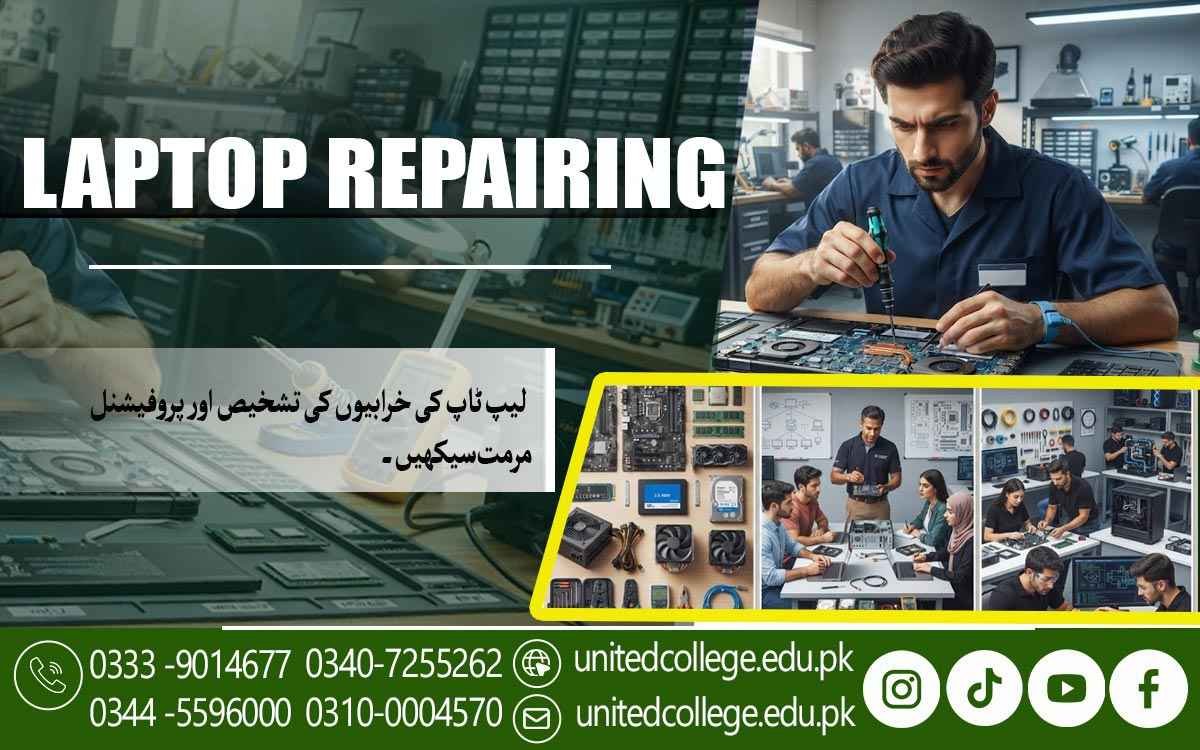

Laptop Repairing Course in Bhakkar for Advanced Hardware Work
Exploring Laptop Hardware and Repair Fundamentals
A Laptop Repairing Course in Bhakkar provides students with an introduction to laptop hardware and basic repair techniques. Students learn about the different parts used inside laptops and understand how these components work together to perform various tasks. This knowledge creates a strong foundation for practical laptop servicing.
The course introduces learners to important hardware components such as motherboards, processors, RAM, storage devices, batteries, cooling systems, displays, keyboards, touchpads, and charging ports. Understanding these parts helps students recognize the role of each component in laptop operation.
Students also become familiar with the basic procedures used during laptop inspection and repair. Learning these fundamentals allows them to move toward more practical troubleshooting and maintenance activities with greater confidence.
Understanding Internal Components and Their Connections
Modern laptops contain many internal parts connected through cables, ports, and connectors. During the Laptop Repairing Course in Bhakkar, students learn about these connections and understand how hardware components communicate with each other.
Students study motherboard connectors, display cables, keyboard connections, battery interfaces, storage connections, and other important hardware links. They learn that loose or damaged connections can sometimes affect laptop performance or cause hardware problems.
Practical activities help learners identify different components and observe how they are installed inside laptops. This understanding supports better inspection and troubleshooting during repair work.
Learning Laptop Disassembly and Assembly Techniques
Proper disassembly is an important part of laptop repair. Students learn how to open laptops carefully and remove internal components without causing unnecessary damage. Safe disassembly helps protect sensitive hardware parts during inspection and maintenance.
A Laptop Repairing Course in Bhakkar also teaches students how to organize screws, connectors, and small components while working on a laptop. Proper organization is useful because it makes reassembly easier after completing repair work.
Students practice assembling laptops correctly after inspection or replacement tasks. They learn how to reconnect cables, install components, and perform testing before completing the servicing process.
Studying Processor, RAM and Storage Components
Processors, RAM, and storage devices are important components of every laptop system. Students learn about processors and their role in carrying out system instructions and managing laptop performance.
The course also explains RAM modules and storage devices such as hard drives and SSDs. Students understand how these components affect system speed, data storage, and overall operation during the Laptop Repairing Course in Bhakkar.
Practical sessions help students learn how to inspect, remove, install, and test memory and storage devices. This experience improves their understanding of laptop hardware systems.
Identifying Common Hardware and Power Problems
Laptop hardware can develop different types of problems due to regular use, heat, physical damage, or faulty components. Students learn how to identify common issues such as startup failure, overheating, charging problems, display faults, and slow performance.
A Laptop Repairing Course in Bhakkar teaches learners to follow systematic troubleshooting methods instead of replacing components without proper inspection. Students learn to examine symptoms and identify possible causes before taking action.
Power-related issues are also discussed in detail. Students study batteries, charging ports, adapters, and related components to understand common charging and power faults found in laptops.
Practicing Display, Keyboard and Battery Replacement
Display, keyboard, and battery replacement are common tasks in laptop servicing. Students learn the proper methods for handling these components during repair activities.
The course explains how display cables, keyboard connectors, and battery connections should be removed and reinstalled carefully. Students practice safe procedures while handling sensitive laptop parts.
After replacement work, learners perform basic testing to ensure that the installed components are functioning properly. This practical experience helps students become more confident in performing common laptop repair tasks.
Applying Safe Laptop Repair and Maintenance Methods
Safety is an important part of professional laptop repair. Students learn how to use tools correctly, handle components carefully, and follow organized procedures during maintenance work.
The Laptop Repairing Course in Bhakkar also introduces learners to maintenance techniques such as cleaning dust, checking cooling systems, inspecting connections, and maintaining hardware in good condition.
Students understand that proper maintenance can help reduce certain hardware problems and improve laptop performance. These practices are useful for both repair and preventive servicing activities.
Preparing for Professional Laptop Servicing Work
Practical experience helps students apply the knowledge gained during the Laptop Repairing Course in Bhakkar. They can practice inspection, troubleshooting, component replacement, testing, and maintenance procedures.
Students gradually become familiar with different laptop models and common repair situations. This experience can help them develop confidence and improve their understanding of hardware servicing.
With continued learning and practical experience, students may explore opportunities in laptop repair shops, computer service centers, technical workplaces, or independent laptop servicing. The course provides a useful foundation for learners interested in laptop hardware and repair work.
Frequently Asked Questions (FAQs)
A Laptop Repairing Course in Bhakkar teaches students about laptop hardware, internal components, troubleshooting, maintenance, testing, and basic repair procedures.
Students learn about processors, RAM, storage devices, motherboards, batteries, displays, keyboards, charging systems, cooling components, and other laptop hardware.
Yes, beginners can start with basic laptop hardware concepts and gradually develop practical knowledge through structured training and hands-on activities.
Yes, students can learn how to safely open laptops, handle internal components, organize parts, reconnect hardware, and assemble laptops after repair work.
Yes, the training covers basic fault detection for issues involving power, display, charging, overheating, storage, memory, and other hardware components.
Admission Open: Start Your Professional Journey Today!
Join United College of Technology and build a career with practical training, recognized certifications, and Gulf job support. Seats are limited.
Apply Now via WhatsAppContact Information
- Address: Rawalpindi: F-272 Main New Katarian Stop, Old IJP Road | Lahore Campus: Lahore, Pakistan
- Phone/WhatsApp: 0340-7255262 / 0333-9014677 / 0301-5044340 / 0310-0004570 / 051-8770756
- Website: unitedcollege.edu.pk
















Leave a Comment