


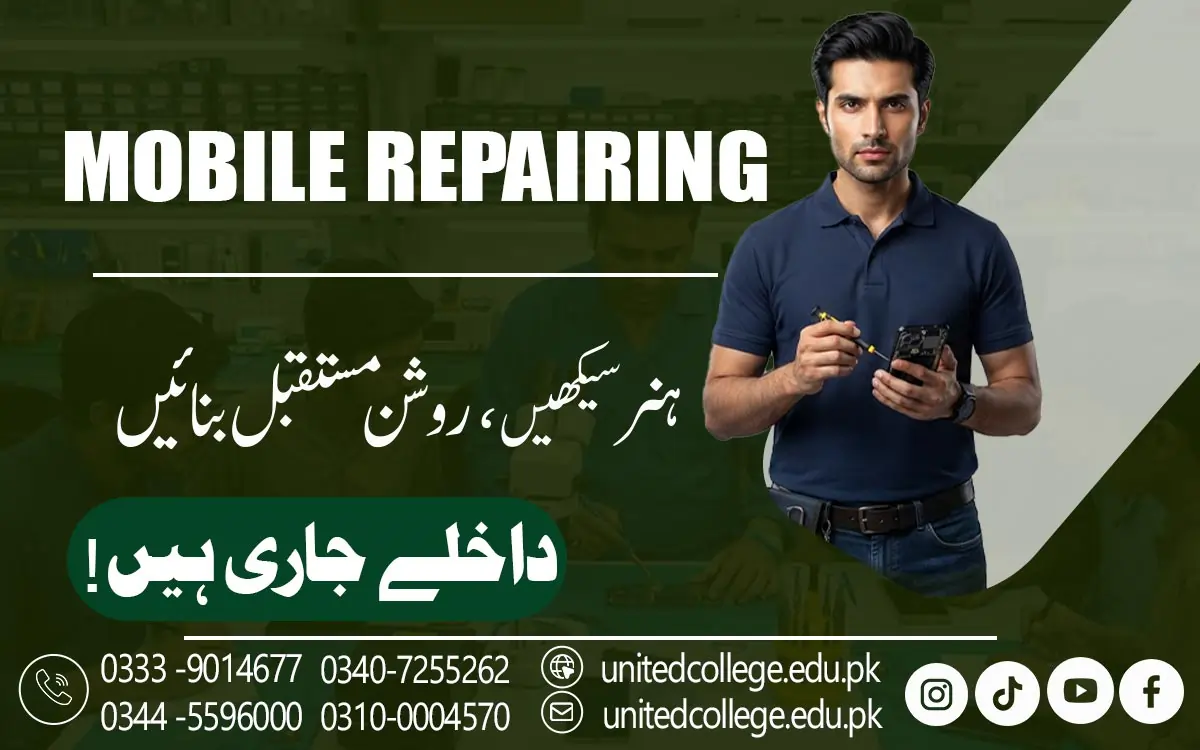

Mobile Repairing Course in Lodhran for Modern Phone Diagnostics
Exploring the World of Smartphone Repair
Smartphones have become an important part of everyday communication, education, business, and digital activities. As more people rely on mobile devices, the need for skilled technicians who can service and repair smartphones continues to grow. A Mobile Repairing Course in Lodhran introduces learners to the practical and technical side of smartphone repair.
Students explore how mobile phones operate and learn about the different stages involved in repairing a device. They are introduced to basic inspection methods and understand why identifying the actual cause of a problem is important before starting repair work.
This training can provide beginners with a useful starting point in the mobile repair field. By learning basic concepts first, students can gradually develop the confidence and technical understanding required for more advanced servicing tasks.
Understanding Mobile Circuits and Components
Mobile phones contain complex circuits and numerous small electronic components. Students learn about important parts of smartphones, including motherboards, batteries, charging sections, displays, speakers, microphones, cameras, connectors, and other components.
Learners explore how different components work together to support various phone functions. Understanding these relationships helps students recognize the possible effects of a damaged or malfunctioning component on overall device performance.
Knowledge of mobile circuits also supports better troubleshooting. Students can develop the ability to inspect different sections of a phone and understand which components may need testing when a particular problem occurs.
Learning to Diagnose Hardware Problems
Hardware faults can affect important mobile functions such as charging, power, display, sound, and battery performance. Students learn how to observe these symptoms and consider possible causes behind different hardware problems.
The course introduces learners to basic diagnostic procedures used by mobile technicians. Instead of immediately replacing parts, students learn the importance of inspection and testing to determine where the actual fault may exist.
Practical diagnostic exercises can improve students' technical thinking and problem-solving abilities. With continued practice, learners can become more confident when dealing with different types of smartphone hardware issues.
Managing Common Mobile Software Issues
Not every smartphone problem is related to physical components. Software errors can also cause slow performance, application failures, system crashes, and other operational difficulties. Students learn about common software problems that mobile users may experience.
Learners are introduced to basic software troubleshooting concepts and learn how to examine symptoms before selecting a suitable solution. They also understand the importance of following appropriate procedures when handling mobile software.
Software troubleshooting knowledge can make mobile technicians more versatile. Having an understanding of both hardware and software allows learners to approach a wider range of mobile repair requirements.
Developing Knowledge of Repair Equipment
Mobile repairing requires suitable tools and equipment because smartphone components are often small and delicate. Students learn about commonly used tools and understand their basic purposes in different repair tasks.
Training helps learners become familiar with equipment used for opening phones, handling components, testing electrical values, and working with circuit boards. They also learn why using the appropriate tool is important for safe and accurate servicing.
Practical tool handling can gradually improve students' confidence and technical control. Proper use of repair equipment helps learners develop better working habits and reduces the possibility of unnecessary damage during servicing.
Testing Components Through Practical Methods
Component testing is an important part of mobile phone troubleshooting. Students learn basic methods for checking different components and understanding whether a part is working correctly or may require further inspection.
Learners practice using appropriate testing equipment and become familiar with basic electrical measurements and component behavior. These activities help them understand how testing can narrow down the source of a mobile fault.
Regular testing practice can strengthen technical observation and accuracy. Students can gradually learn to make better repair decisions based on test results rather than relying only on assumptions.
Improving Skills Through Mobile Repair Practice
Hands-on practice allows students to apply the concepts they learn during classroom training. They can work with mobile devices, components, repair tools, and troubleshooting procedures to develop practical servicing abilities.
Students learn to follow an organized approach that may include device inspection, fault identification, component testing, servicing, and final checking. This practical process helps connect theoretical knowledge with real repair situations.
Continued practice can improve patience, precision, and confidence. These qualities are useful for technicians because mobile repair often involves working with small components and requires careful attention to detail.
Creating a Strong Foundation in Phone Servicing
A strong foundation in mobile servicing can help learners prepare for different opportunities in the technical field. After developing suitable knowledge and practical experience, students can explore work in mobile repair shops, service centers, and other electronics-related workplaces.
Some learners may also choose to provide independent mobile repair services after gaining sufficient experience. Combining technical skills with professional customer dealing and responsible work practices can support gradual career development.
A Mobile Repairing Course in Lodhran can therefore help beginners develop useful skills in smartphone hardware, software troubleshooting, component testing, tool handling, and practical servicing. Continued learning and hands-on experience can help learners adapt to new mobile technologies and build a stronger future in phone repair.
Frequently Asked Questions (FAQs)
You can learn smartphone hardware, mobile circuits, component testing, software troubleshooting, repair tools, fault diagnosis, and practical phone servicing.
The basics can be learned gradually. Training usually starts with fundamental mobile components and repair concepts before moving toward more practical and technical tasks.
Component testing helps identify whether a particular part is working correctly and can assist technicians in finding the actual source of a mobile phone problem.
Yes. Students can learn about common software-related problems and basic troubleshooting methods alongside hardware repair skills.
After gaining practical experience, learners can work in mobile repair shops, service centers, electronics businesses, or develop their own mobile servicing setup.
Admission Open: Start Your Professional Journey Today!
Join United College of Technology and build a career with practical training, recognized certifications, and Gulf job support. Seats are limited.
Apply Now via WhatsAppContact Information
- Address: Rawalpindi: F-272 Main New Katarian Stop, Old IJP Road | Lahore Campus: Lahore, Pakistan
- Phone/WhatsApp: 0340-7255262 / 0333-9014677 / 0301-5044340 / 0310-0004570 / 051-8770756
- Website: unitedcollege.edu.pk
















Leave a Comment