


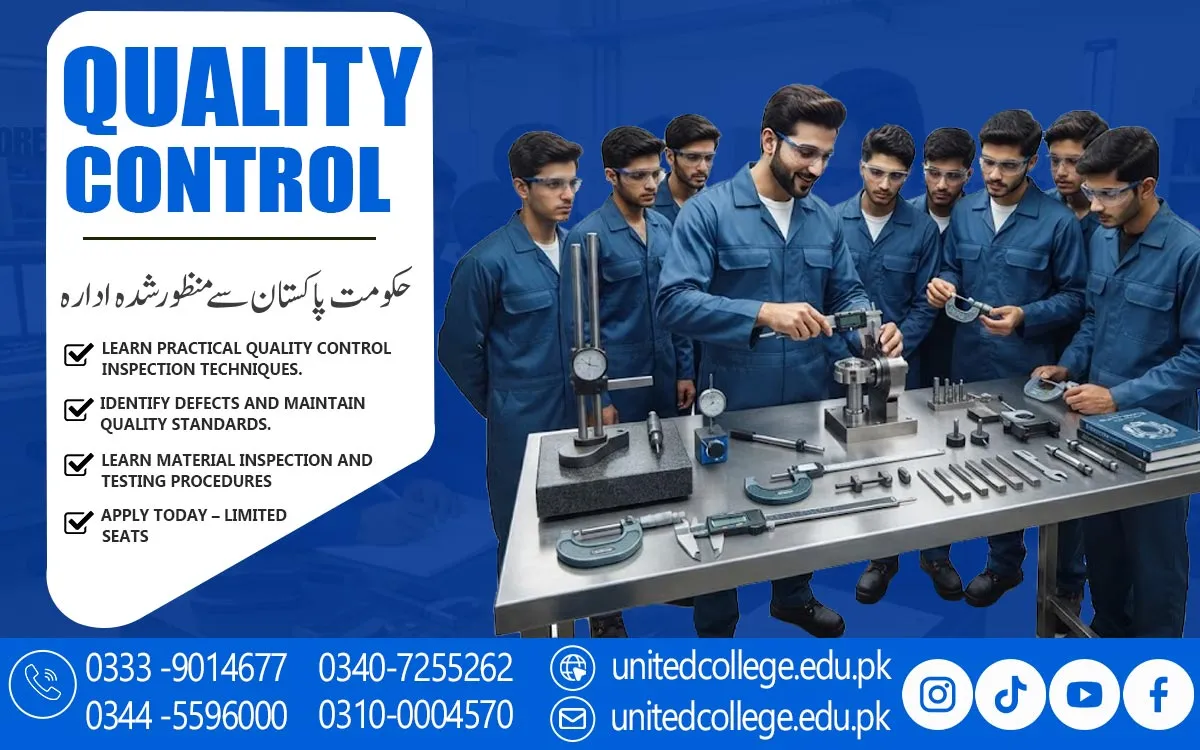

Quality Control Course in Murree for Professional Quality Practices
Exploring the Principles of Professional Quality Control
Professional quality control involves systematic activities designed to make sure products and processes meet established requirements. It is not limited to finding mistakes after production; it also involves monitoring work and identifying areas where quality can be improved.
Students can learn about important principles such as consistency, standardization, inspection, testing, process monitoring, and corrective action. Understanding these principles can help learners see how quality control supports the overall performance of an organization.
A professional approach to quality also requires responsibility and objectivity. Inspectors need to base their findings on specifications and reliable information rather than personal opinions. This helps organizations make fair and informed decisions about their products and processes.
Understanding Inspection Methods for Different Products
Different products require different inspection methods depending on their materials, purpose, design, and technical specifications. Some products may mainly require visual examination, while others may need measurements, functional checks, or specialized testing.
Learners can explore how inspection methods are selected according to the characteristics of a product. They can understand why an inspection should follow a defined procedure so that results remain consistent and dependable.
The Quality Control Course in Murree can also help students understand the importance of inspecting products at suitable stages. Early inspection may allow quality problems to be identified before they affect a larger quantity of products or create additional production costs.
Learning Effective Approaches to Quality Testing
Quality testing provides information about whether a product or material performs according to the required specifications. Testing can help reveal problems that may not be visible during a basic visual inspection.
Students can learn why testing procedures should be followed carefully and consistently. Proper equipment handling, accurate measurements, suitable testing conditions, and correct recording of results can all influence the reliability of a quality check.
Effective testing also involves understanding the meaning of results. Learners can develop awareness of how test findings are compared with established requirements and how unusual results may require further investigation before a final decision is made.
Identifying Factors That Affect Product Quality
Product quality control can be affected by many factors throughout the production process. Materials, equipment, employee practices, environmental conditions, measurements, storage, and production procedures can all influence the final result.
Learners can study how changes in these factors may create variations or defects. For example, unsuitable materials may affect product performance, while poorly maintained equipment can lead to inaccurate production or inconsistent results.
Understanding these factors helps quality personnel look beyond the final product. When a quality issue is identified, examining the process that produced it can help determine the possible cause and support more effective corrective action.
Studying Quality Improvement and Monitoring Practices
Quality improvement is a continuous activity that aims to make products and processes more reliable. Organizations may review inspection results, identify recurring problems, and introduce changes to improve their overall quality performance.
Students can learn how monitoring supports this process. Regular observation of production activities and review of quality records can help teams notice trends, variations, or problems that might otherwise remain unnoticed.
Improvement can involve several actions, such as updating procedures, improving employee training, maintaining equipment, changing unsuitable materials, or introducing better monitoring methods. These efforts can help organizations maintain a more stable level of quality.
Developing Accuracy in Product Inspection Tasks
Accuracy is one of the most important qualities required during product inspection. A small measurement error or overlooked defect can sometimes affect the decision made about a product or production process.
Learners can develop an understanding of how careful observation and correct measurement contribute to reliable inspection. They can also learn why inspection equipment needs to be used appropriately and why findings should be recorded immediately and clearly.
The Quality Control Course in Murree can help students develop a systematic approach toward inspection tasks. Rather than rushing through checks, learners can understand the importance of following each step carefully and reviewing their findings before reporting the final result.
Understanding Quality Requirements in Professional Workplaces
Professional workplaces use quality requirements to establish what products, materials, or processes are expected to achieve. These requirements can cover factors such as dimensions, appearance, performance, materials, functionality, and other relevant characteristics.
Students can learn how quality requirements are used during inspection and evaluation. By comparing actual results with established specifications, quality personnel can determine whether a product meets the expected standard.
Understanding workplace requirements can also improve communication between employees. When production workers and inspection teams have a clear understanding of the same standards, it becomes easier to identify differences and discuss suitable corrective measures.
Building a Strong Foundation for Quality Management Careers
Quality management knowledge can be valuable in manufacturing, engineering, construction, production, laboratories, warehouses, and various technical industries. Professionals in these areas may need to understand inspection, testing, documentation, monitoring, and quality improvement.
The Quality Control Course in Murree can provide learners with foundational knowledge that supports their understanding of quality-related responsibilities. Students can become familiar with professional inspection methods, quality requirements, product evaluation, and monitoring practices.
A strong foundation can also support further professional learning. With practical experience and continued education, learners can improve their technical knowledge, develop stronger decision-making abilities, and become better prepared for quality management responsibilities in different professional environments.
Frequently Asked Questions (FAQs)
Quality control helps organizations check products and processes against required standards so that performance remains consistent and reliable.
Material quality, production methods, equipment condition, worker practices, storage, and environmental conditions can all affect the final quality.
Accurate inspection helps identify defects, incorrect measurements, and other problems before they affect the final product or production process.
Regular monitoring helps teams identify repeated issues, review inspection results, and make suitable changes to improve processes and reduce future problems
Yes, the course can help learners develop knowledge of inspection procedures, quality standards, testing methods, documentation, and professional quality practices.
Admission Open: Start Your Professional Journey Today!
Join United College of Technology and build a career with practical training, recognized certifications, and Gulf job support. Seats are limited.
Apply Now via WhatsAppContact Information
- Address: Rawalpindi: F-272 Main New Katarian Stop, Old IJP Road | Lahore Campus: Lahore, Pakistan
- Phone/WhatsApp: 0340-7255262 / 0333-9014677 / 0301-5044340 / 0310-0004570 / 051-8770756
- Website: unitedcollege.edu.pk
















Leave a Comment