


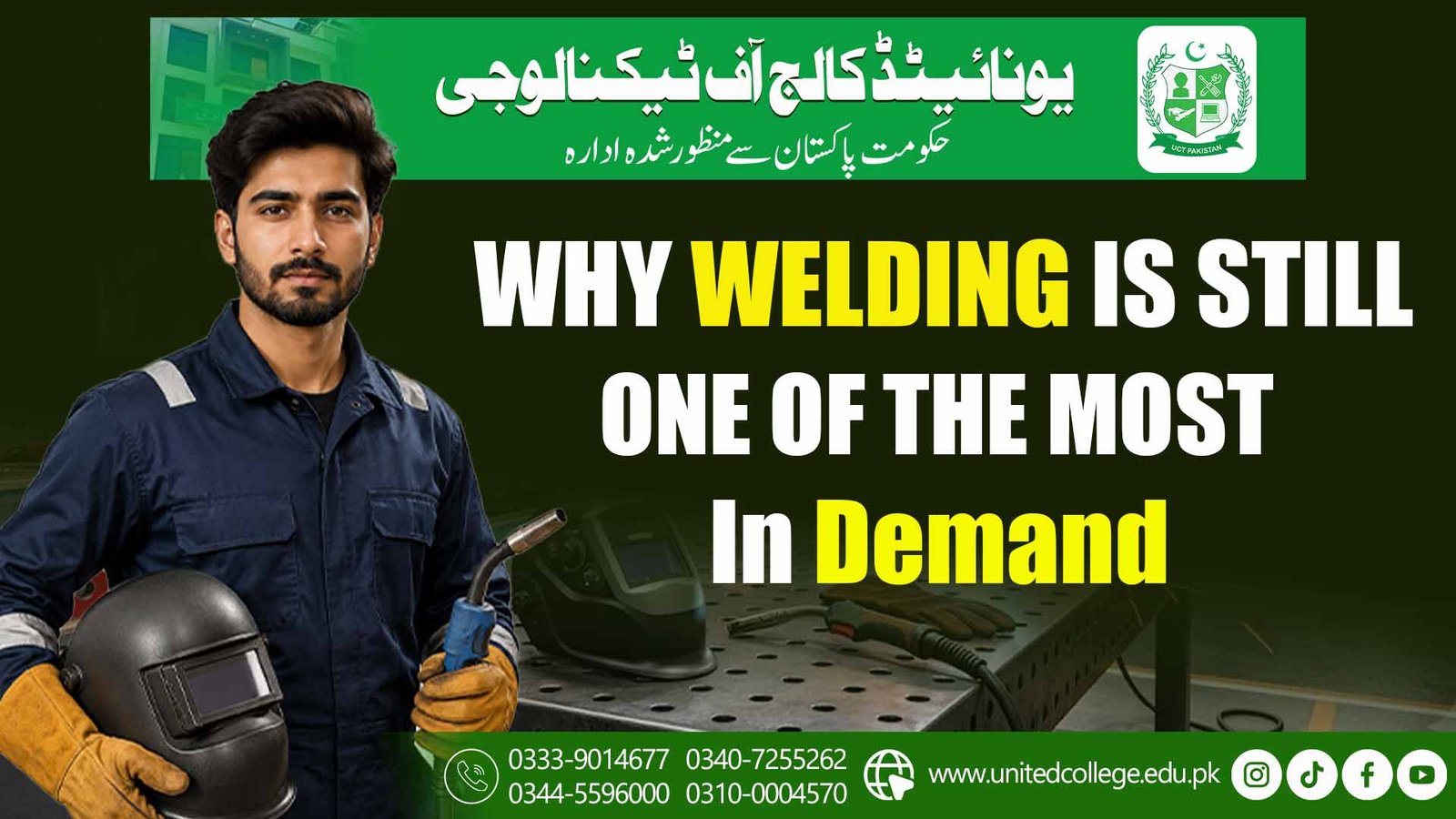

Why Welding is Still One of the Most In-Demand Technical Skills?
What if one practical skill could put you on construction sites, in factories, on pipelines, and on production floors — all at once? While plenty of jobs come and go with changing trends, welding has stayed remarkably steady. Industries keep building, machines keep breaking, and someone always has to join the metal.
That's exactly why welding remains one of the most consistently in-demand technical skills across sectors. Companies aren't just looking for people who know how to weld — they want professionals who can do it safely, accurately, and confidently. Whether you're a student, a fresher, or considering a complete career change, a professional welding course can open doors that most other trades can't match.
The Real Reason Welders Are Always Needed
The logic here isn't complicated: every growing industry depends on welding somewhere in its supply chain. New buildings, roads, factories, and transportation systems don't get built without it.
- Construction: Every commercial building, housing project, and bridge needs welding work, and construction activity keeps expanding.
- Manufacturing: Machines, equipment, steel structures, and production lines simply can't exist without skilled welding professionals.
- Oil & Gas: Certified welders build and maintain pipelines, storage tanks, and processing plants — safety-critical work that pays accordingly.
- Automotive: Cars, trucks, buses, and heavy vehicles all rely on welded components at some stage of manufacturing.
Where a Welding Certificate Can Actually Take You?
One of the strongest advantages of this trade is how many industries will hire you with the same core skill set:
- Construction companies (buildings, bridges, shopping malls, infrastructure)
- Manufacturing plants producing machinery and industrial equipment
- Power plants (maintenance and repair work)
- Steel fabrication companies building metal structures
A single certification opens doors across sectors that don't usually overlap — that's rare in most technical trades.
The Skills That Separate a Good Welder from a Hired One
| Skill | Why It Matters |
|---|---|
| Strong Welding Techniques | A solid arc welding foundation, plus MIG and TIG training, increases your value and range in the job market. |
| Reading Technical Drawings | Understanding blueprints before starting work reduces mistakes and improves overall quality. |
| Safety Awareness | Employers prioritize candidates who use protective equipment properly and follow safety protocols without being reminded. |
| Accuracy & Attention to Detail | Even small errors can compromise a welded structure's strength — precision isn't optional. |
| Teamwork & Communication | Most projects involve engineers, supervisors, and other technicians — clear communication keeps projects on schedule. |
| Problem-Solving | No two projects are identical. Skilled welders adapt and troubleshoot on the spot. |
Why Welding Beats a Lot of Career Options on Paper
There's more to this trade than steady demand. A few reasons students keep choosing it:
- High demand: Skilled welders are needed across nearly every industrial sector — more consistently than many other technical professions.
- Strong earning potential: Experienced welders often command attractive salaries precisely because their skills are hard to replace.
- Job security: As long as industries keep building factories, roads, vehicles, and machinery, welders stay employed.
- Career growth: Experience can take you from welder to welding inspector, supervisor, quality controller, or workshop manager.
- Overseas opportunities: Certified welders frequently find international placements with significantly higher pay.
- Self-employment potential: Many welders eventually start their own fabrication or welding business.
Classroom Theory Won't Make You a Welder — Practice Will
Learning from experienced professionals makes the difference between a certificate and an actual skill. A genuine welding course prioritizes hands-on practice over classroom lecture — real equipment, real machines, real mistakes corrected in real time.
A strong training institute also covers safety procedures, modern welding techniques, equipment handling, and quality control — the details that separate someone who can spark an arc from someone an employer can actually trust on-site. That kind of preparation matters for welding certification, which strengthens job prospects both locally and abroad.
At United College of Technology, students train through hands-on workshops designed to build both technical knowledge and real confidence — not just theoretical understanding. Explore the full Welding Course in Rawalpindi for curriculum, fees, and certification details.
What Sets UCT's Welding Training Apart?
Choosing the right institute is the first real decision in this career path. United College of Technology offers:
- Experienced trainers guide students through every stage of learning
- Practical workshops with modern welding equipment
- Training aligned with real industry standards
- An approachable learning environment that encourages questions
- An affordable fee structure that keeps quality training accessible
Whether your goal is a technician role, manufacturing work, or an international placement, UCT's practical-first approach is built to get you job-ready — not just certified on paper.
Start Building More Than Metal
Every bridge, factory, power plant, vehicle, and steel structure depends on people with the right welding skills — and that demand isn't slowing down. If you're looking for a stable career, solid earning potential, and the flexibility to work across industries, this is a strong time to invest in the trade.
Join the Welding Course at United College of Technology and start building practical, job-ready skills with hands-on training designed for real industry demands.
Frequently Asked Questions (FAQs)
Yes. Welding is an excellent career for beginners because industries constantly need trained welders. With proper training, students can start working soon after completing their course.
Most students begin with an arc welding course before learning advanced methods like MIG welding and TIG welding.
While some entry-level jobs do not require certification, having a welding certification improves your chances of getting better jobs and higher salaries.
Yes. Many countries hire skilled welders for construction, manufacturing, oil and gas, and infrastructure projects.
The duration depends on the course. Most professional welding programs combine classroom learning with practical training to prepare students for employment.
Admission Open: Start Your Professional Journey Today!
Join United College of Technology and build a career with practical training, recognized certifications, and Gulf job support. Seats are limited.
Apply Now via WhatsAppContact Information
- Address: Rawalpindi: F-272 Main New Katarian Stop, Old IJP Road | Lahore Campus: Lahore, Pakistan
- Phone/WhatsApp: 0333-9014677 / 0344-5596000 / 0310-0004570 / 0301-5044340 / 0340-7255262
- Website: unitedcollege.edu.pk
















Leave a Comment