


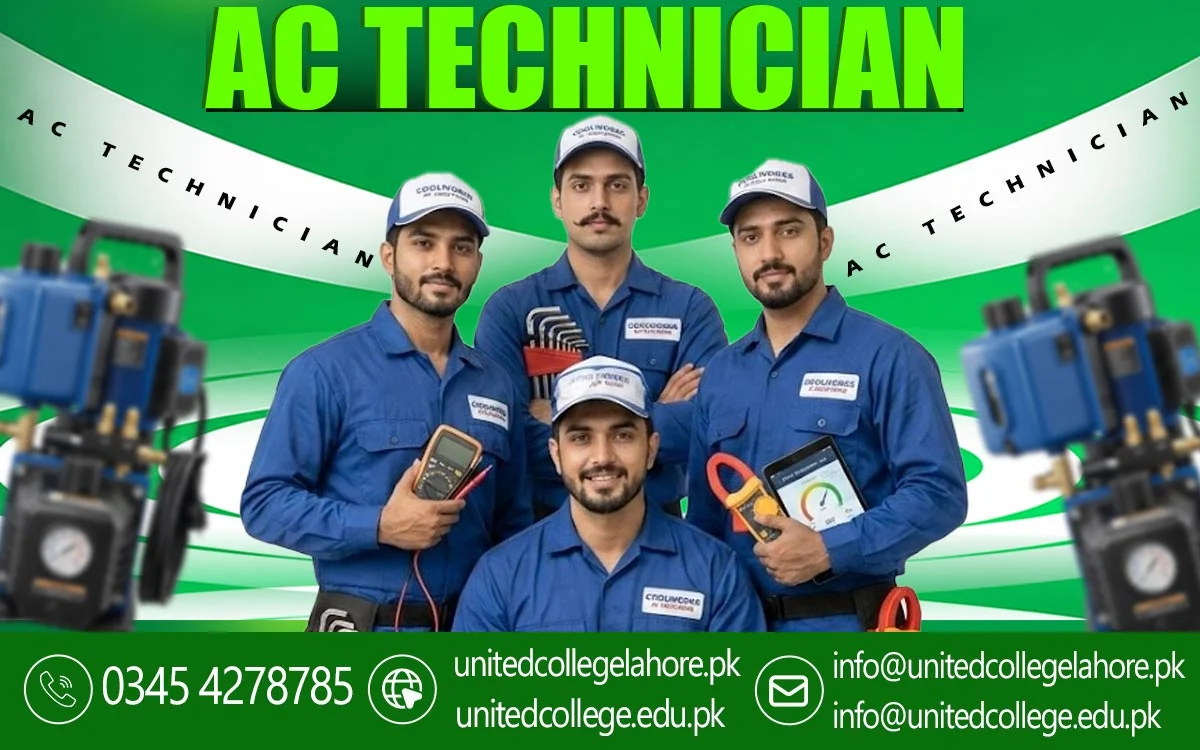

AC Technician Course in Lodhran for HVAC Repair and Maintenance
Introduction to HVAC Principles and Cooling Operations
HVAC stands for heating, ventilation, and air conditioning. Understanding its basic principles gives learners a foundation for working with different types of climate control and cooling equipment.
Students can learn how air moves through a system and how cooling equipment helps maintain comfortable indoor conditions. They can also explore basic concepts related to temperature, airflow, cooling capacity, and system operation.
Learning these fundamentals makes it easier to understand more advanced technical topics. Once students have a clear idea of how cooling operations work, they can approach installation and servicing tasks with better technical awareness.
Getting Familiar with Refrigeration and AC Components
Air conditioning systems contain several components that perform different functions during the cooling process. Understanding these parts is important for anyone planning to work as an AC or HVAC technician.
During the AC Technician course, learners can study components such as evaporators, compressors, condensers, expansion devices, fans, filters, and other related parts. They can learn what each component does and how it contributes to system operation.
Component knowledge also supports troubleshooting and maintenance work. When a system develops a fault, a technician needs to understand its individual parts to inspect the equipment and identify areas that may require attention.
Building Practical Skills foir AC Installation
AC installation requires careful planning and an understanding of the equipment being installed. Proper positioning, connections, and system setup can influence the overall operation of an air conditioner.
Learners can study the basic stages involved in AC installation and become familiar with the practical requirements of different units. Training may include equipment placement, connection procedures, and preparation for safe system operation.
Practical exercises allow students to understand installation work beyond theoretical explanations. Repeated practice can help them become more comfortable with the tools, equipment, and procedures used during installation tasks.
Understanding Compressor and Condenser Functions
The compressor and condenser are important parts of many air conditioning and refrigeration systems. Understanding their functions helps learners develop a clearer picture of how heat is transferred during the cooling process.
Students can explore how the compressor circulates refrigerant through the system and how the condenser releases heat. They can also learn why the proper operation of these components is important for effective cooling.
Knowledge of these components can be useful when investigating performance problems. Air technician who understands their functions can better recognize unusual system behavior and identify areas that may need inspection or servicing.
Learning Methods for Diagnosing AC Faults
AC systems can develop different faults that affect cooling, airflow, electrical operation, or overall performance. Diagnosing these issues requires observation and a systematic approach rather than simply replacing parts.
The course introduces learners to basic fault-diagnosis methods. Students can learn how to examine symptoms, inspect relevant components, and consider possible reasons for problems affecting an AC system.
Developing diagnostic skills can make technical work more organized. With practical training, learners can improve their ability to identify common issues and determine appropriate next steps for servicing or repair.
Practicing Cleaning and Preventive Maintenance
Regular cleaning and preventive maintenance are important for keeping the AC Technician in good working condition. Dust and dirt can accumulate in different parts of a system and may affect airflow and cooling performance.
Students can learn basic maintenance activities such as filter cleaning, visual inspection, checking components, and maintaining suitable system conditions. These practices help learners understand the importance of regular equipment care.
Preventive maintenance can also help technicians identify potential issues before they become more serious. Developing a habit of regular inspection can support better service quality and more efficient technical work.
Handling AC Service Tasks with Greater Confidence
AC servicing involves several practical activities, from basic inspection to cleaning and checking system components. Learners need both technical knowledge and practice to become comfortable with these responsibilities.
Through guided activities, students can gradually develop confidence in handling common AC service tasks. They can learn how to organize their work, use appropriate tools, and follow suitable procedures during servicing.
Practical confidence develops through consistent learning and hands-on experience. The course provides a foundation that learners can continue strengthening through additional practice and exposure to different air conditioning systems.
Developing Technical Skills for Future HVAC Work
The AC Technician Course in Lodhran brings together important areas of HVAC and air conditioning training. Learners can study cooling principles, refrigeration components, installation, compressor and condenser functions, fault diagnosis, cleaning, and preventive maintenance.
These skills can be useful for individuals who want to explore work in AC installation, servicing, maintenance, and related HVAC services. Learners may also continue developing their expertise through additional practical experience and advanced technical training.
Building technical skills requires continuous practice and a willingness to learn. With a strong foundation in air conditioning technology, students can prepare themselves for potential opportunities in the technical services sector and work toward becoming capable HVAC professionals.
Frequently Asked Questions (FAQs)
Students learn HVAC principles, refrigeration components, AC installation, compressor and condenser functions, fault diagnosis, cleaning, and preventive maintenance.
The compressor circulates refrigerant through the system, while the condenser helps release heat. Understanding both is important for AC servicing and troubleshooting.
Yes, learners are introduced to basic diagnostic methods that help them understand common AC problems and identify areas that may require inspection or repair.
Students can learn basic cleaning, filter care, system inspection, component checking, and preventive maintenance practices used to maintain AC performance.
Yes, the training can provide a foundation for exploring opportunities in AC installation, servicing, maintenance, troubleshooting, and other HVAC-related technical work.
Admission Open: Start Your Professional Journey Today!
Join United College of Technology and build a career with practical training, recognized certifications, and Gulf job support. Seats are limited.
Apply Now via WhatsAppContact Information
- Address: Rawalpindi: F-272 Main New Katarian Stop, Old IJP Road | Lahore Campus: Lahore, Pakistan
- Phone/WhatsApp: 0333-9014677 / 0344-5596000 / 0310-0004570 / 0301-5044340 / 0340-7255262
- Website: unitedcollege.edu.pk
















Leave a Comment