


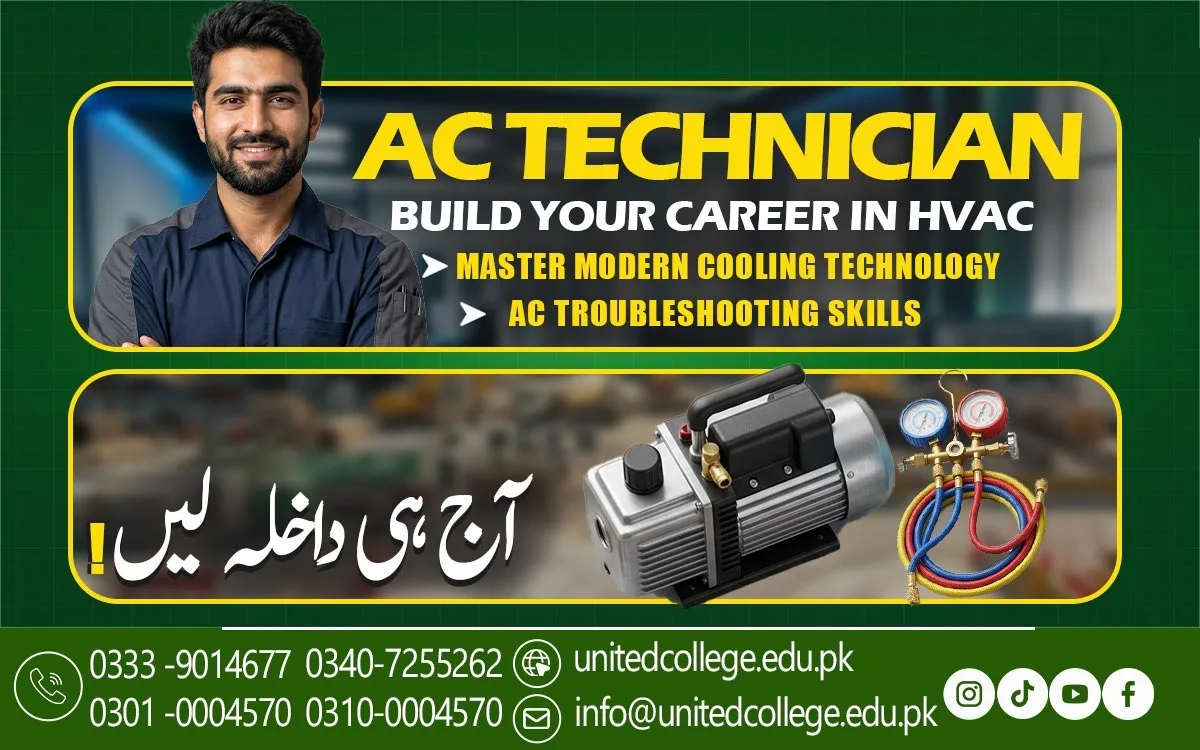

AC Technician Course in Upper Dir for HVAC Operations
Learning the Core Principles of HVAC Operations
Heating, ventilation, and air conditioning (HVAC) systems help maintain comfortable indoor environments by managing temperature, airflow, and, where applicable, humidity. These systems are used in residential buildings, offices, healthcare facilities, educational institutions, and commercial spaces. Students enrolled in an AC Technician Course in Upper Dir can begin by understanding the purpose of HVAC systems and how air conditioning contributes to indoor comfort.
Air conditioning systems work by removing heat from indoor air and transferring it to the outdoor environment. This process depends on the refrigeration cycle, which involves the compressor, condenser, expansion device, and evaporator. Learners can study the functions of these components and understand how they work together to provide cooling.
Students can also explore basic concepts such as heat transfer, temperature regulation, energy consumption, and system performance. Understanding these principles provides a foundation for studying more advanced technical subjects. It also helps learners understand why proper installation, regular inspection, and correct operating conditions are important for reliable air conditioning.
Understanding Airflow and Cooling System Components
Airflow is an important factor in air conditioning performance because it allows indoor air to pass through the cooling system and return to the room at a lower temperature. Fans, filters, evaporator coils, and air passages all contribute to this process. Students can learn how these components work together and why proper airflow is necessary for effective cooling.
The compressor, condenser, evaporator, and expansion device perform essential functions within the refrigeration circuit. The compressor circulates refrigerant, the condenser releases heat, the evaporator absorbs heat from indoor air, and the expansion device regulates refrigerant flow. Through the AC Technician Course in Upper Dir, learners can develop a clear understanding of these components and their roles.
Students can also explore common airflow problems, including blocked filters, dirty coils, obstructed vents, and fan-related issues. Such problems can reduce cooling performance and affect system operation. Learning how to identify these conditions helps future technicians understand the importance of regular inspections and proper equipment maintenance.
Exploring Refrigeration Tools and Equipment
AC technicians use different tools to install, inspect, test, and maintain cooling systems. Common tools include screwdrivers, pliers, spanners, measuring instruments, multimeters, temperature probes, and other equipment suitable for specific tasks. Students can become familiar with these tools and understand how they support routine servicing and technical work.
Refrigeration servicing may also involve specialized equipment, such as manifold gauges, vacuum pumps, refrigerant recovery machines, and leak-detection devices. These tools are used for particular procedures and require appropriate technical knowledge. Learners can study their general purposes and understand why correct equipment selection is important for accurate testing and safe servicing.
Proper tool handling is another important part of technician training. Students should learn how to inspect tools before use, follow manufacturer instructions, keep equipment clean, and store it safely after completing a task. Specialized refrigeration procedures should be performed by trained personnel using suitable protective equipment and approved methods. These habits support professional work and help reduce avoidable risks.
Studying Installation and Commissioning Procedures
Air conditioner installation involves preparing the installation site, positioning the indoor and outdoor units, arranging piping, and ensuring that drainage and electrical connections meet the required specifications. Students can learn why installation planning is important and how correct positioning supports airflow, accessibility, and system performance.
Commissioning refers to checking a system after installation to confirm that it operates according to the manufacturer's requirements. This process may involve checking electrical connections, inspecting drainage, verifying operating settings, and evaluating cooling performance. Learners can explore why these checks are necessary before an air conditioning unit is handed over for normal use.
The AC Technician Course in Upper Dir can introduce students to the importance of following installation instructions and using suitable tools. Incorrect mounting, poor insulation, blocked drainage, or improper connections can lead to operational problems. Practical training should emphasize safe working methods, and electrical connections, refrigerant charging, and pressure testing must be handled under qualified supervision using approved procedures.
Practicing Electrical Testing and Safety Measures
Electrical systems control many important functions of an air conditioner, including compressor operation, fan movement, and temperature regulation. Students can study basic electrical concepts such as voltage, current, resistance, circuit protection, and wiring diagrams. This knowledge helps learners understand how electricity supports cooling equipment and why electrical faults can affect system performance.
Common electrical components include capacitors, relays, contactors, thermostats, sensors, and control boards. Learners can explore their purposes and understand how they interact with other parts of an air conditioning system. They can also learn how technicians use suitable testing instruments to investigate electrical problems and evaluate equipment conditions.
Safety must remain a priority during electrical testing. Students should understand power isolation, verification that equipment is de-energized, appropriate protective equipment, and safe instrument handling. Electrical testing should be performed under qualified supervision, particularly when working with potentially dangerous circuits. Developing these habits helps future technicians protect themselves, their customers, and the equipment they service.
Troubleshooting Air Conditioning Performance Problems
Troubleshooting is the process of identifying the causes of equipment problems and determining appropriate corrective actions. AC Technicians may experience insufficient cooling, weak airflow, unusual noises, water leakage, excessive vibration, or unexpected shutdowns. Students can learn how to recognize these symptoms and understand why a systematic approach is necessary for accurate diagnosis.
Several conditions can cause similar problems. For example, poor cooling may be associated with dirty filters, blocked airflow, incorrect thermostat settings, or refrigeration system faults. Water leakage may result from drainage problems or installation issues. Electrical faults may affect the compressor, fan motor, or control system. Learners can study these possibilities and understand why technicians should investigate the cause before recommending a repair.
Effective troubleshooting involves observing symptoms, checking basic operating conditions, inspecting accessible components, and using suitable diagnostic equipment. Students can also learn to document findings and explain technical issues clearly. Complex electrical faults and refrigerant-related problems require suitable expertise and approved procedures. These diagnostic principles can help learners build a foundation for professional AC servicing.
Understanding Preventive Servicing Requirements
Preventive servicing helps maintain air conditioning performance and reduce the likelihood of unexpected equipment failures. Dust accumulation, restricted airflow, blocked drainage, and neglected components can affect cooling efficiency. Students can learn how routine inspections and maintenance activities help identify developing issues and keep equipment in good working condition.
Common servicing activities include cleaning or replacing air filters, inspecting accessible components, checking drainage arrangements, examining insulation, and ensuring adequate airflow around outdoor units. Learners can also study the importance of monitoring unusual sounds, vibration, and changes in cooling performance. Maintenance should follow manufacturer recommendations and appropriate safety procedures.
Professional servicing also involves maintaining records and communicating with customers. Technicians should explain the condition of the equipment, identify problems that require attention, and recommend suitable maintenance or repair work. Through the AC Technician Course in Upper Dir, learners can understand how preventive maintenance supports equipment reliability, indoor comfort, and responsible energy use.
Exploring Future Paths in AC Technology
Air conditioning and refrigeration technology offers several potential career paths for individuals with suitable training and practical experience. After completing relevant education, learners may explore entry-level opportunities with AC service companies, refrigeration businesses, installation contractors, appliance service providers, and building maintenance departments. Available positions depend on qualifications, technical competence, and employer requirements.
Some technicians focus on installing air conditioners, while others specialize in maintenance, troubleshooting, or refrigeration equipment. With additional experience and further training, individuals may develop expertise in commercial cooling systems and more advanced HVAC applications. Knowledge of electrical safety, diagnostic procedures, and preventive maintenance can help learners prepare for different technical responsibilities.
The AC Technician Course in Upper Dir can also provide a starting point for individuals interested in self-employment. Starting an AC servicing business requires technical knowledge, the right tools, strong customer communication, reliable service, and responsible cost management. By combining structured learning with supervised hands-on experience and ongoing professional development, students can build a career in air conditioning technology.
Frequently Asked Questions (FAQs)
The AC Technician Course in Upper Dir introduces students to HVAC operations, refrigeration technology, AC installation, electrical systems, troubleshooting, and preventive maintenance.
Students can learn about airflow, cooling system components, refrigeration tools, installation procedures, electrical testing, and air conditioning maintenance.
Beginners interested in air conditioning and refrigeration technology can explore this training, subject to the institute’s admission requirements.
Proper airflow helps distribute cooled air effectively, supports heat exchange, and allows an air conditioner to operate more efficiently.
Common tools include multimeters, screwdrivers, pliers, spanners, temperature probes, manifold gauges, and specialized refrigeration equipment.
Admission Open: Start Your Professional Journey Today!
Join United College of Technology and build a career with practical training, recognized certifications, and Gulf job support. Seats are limited.
Apply Now via WhatsAppContact Information
- Address: Rawalpindi: F-272 Main New Katarian Stop, Old IJP Road | Lahore Campus: Lahore, Pakistan
- Phone/WhatsApp: 0340-7255262 / 0333-9014677 / 0301-5044340 / 0310-0004570 / 051-8770756
- Website: unitedcollege.edu.pk
















Leave a Comment