


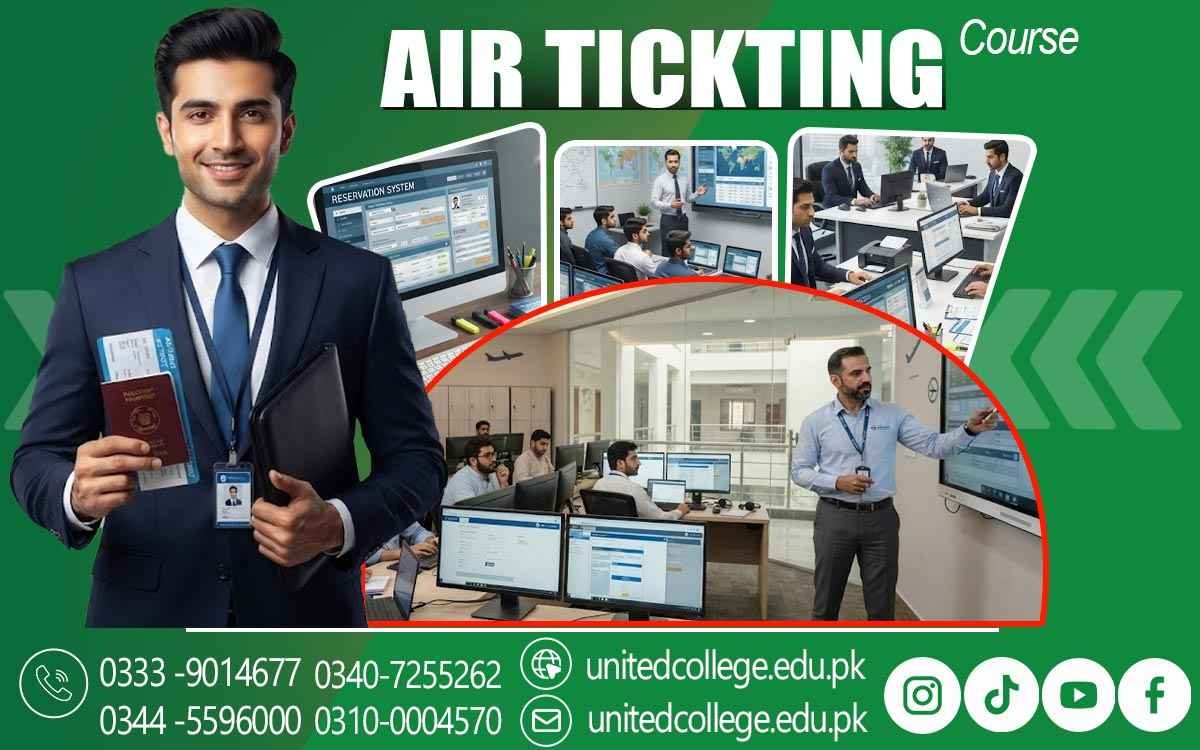

Air Ticketing Course in Narowal – Learn Professional Travel Skills
When a Love for Travel Turns Into a Practical Skill
Have you ever looked at a flight booking and wondered how travel agents know which flight to select, how ticket prices are calculated, or how passenger details are entered correctly? Behind every smooth journey, there is often careful reservation and ticketing work taking place before the passenger reaches the airport. An Air Ticketing Course in Narowal can help beginners understand this work and turn a general interest in travel into a practical skill. Air ticketing is not simply about booking a seat on a plane; it involves understanding flight information, passenger requirements, reservation procedures, fares, ticket conditions, and communication with customers.
During air ticketing training in Narowal, learners can gradually become familiar with the common processes used in travel agencies and airline-related environments. This type of learning can be useful for students, school or college graduates, job seekers, and anyone interested in travel and tourism. Instead of trying to understand the industry through random information, structured training gives learners a clearer way to learn how different parts of airline ticketing connect with each other.
What Really Happens When an Airline Reservation Is Made?
A flight reservation may look like a simple task from the passenger's side, but there are several details to manage behind the screen. When a customer wants to travel, a ticketing professional may need to check the destination, preferred travel date, available flights, departure and arrival times, passenger information, fare conditions, and seat availability before completing a booking. An air ticketing course can introduce learners to these steps in a simple and organized way. Students can learn how ticket reservation works and why accuracy matters when entering names, travel dates, routes, contact information, and other passenger details.
They can also understand the difference between making a reservation and actually issuing a ticket, which is an important part of airline ticketing. Learning these procedures helps beginners understand that a booking is not just about selecting a flight; it is about creating correct travel information that can be used by the passenger and the relevant travel system. With practice, learners can become more comfortable following a proper sequence instead of relying on guesswork when handling reservations.
From Passenger Details to PNR: Understanding the Booking Record
One small spelling mistake in a passenger's name or one incorrect travel date can create unnecessary problems, which is why careful information handling is an important part of ticketing work. During training, learners can explore how passenger information is entered into a reservation and how a PNR (Passenger Name Record) is used to store important booking details. A PNR can contain information related to the passenger, itinerary, flight segments, and other reservation details, depending on the booking system being used. Students can learn how to review booking information and check whether the details match the customer's requirements before moving forward with the ticketing process.
Flight booking practice can also help learners understand how routes and flight segments are arranged within a reservation. For a beginner, these terms may initially seem technical, but practical explanations make them easier to understand. As part of airline ticketing training, learners can work through examples involving passenger names, destinations, travel dates, flight selections, and booking records so they can understand how accurate data entry supports smooth reservation and ticketing procedures.
Airfare Is More Than a Price on a Screen
Why can two passengers travelling on similar flights sometimes pay different amounts? The answer often involves fare conditions, booking classes, travel dates, availability, taxes, and other ticketing rules. Airfare calculation is therefore an important area for anyone learning airline ticketing. Students can become familiar with the idea that a ticket price may include different components and that the displayed fare is connected to specific conditions. Training can also introduce learners to fare rules, including conditions related to changes, cancellations, validity, and refunds.
Understanding these rules is important because customers may ask questions such as whether their ticket can be changed, what happens if they cancel their trip, or whether a refund is possible. Learners can study these situations through practical examples and understand how ticketing staff should check the applicable conditions before giving information to a customer. Instead of memorizing random prices, students learn how to read and understand the information connected with a fare. This knowledge can make reservation and ticketing work more organized and can help beginners communicate travel information more clearly.
Airline Reservation Systems Make Ticketing More Organized
Modern airline booking involves digital systems rather than handwritten records, so learners interested in this field need to become comfortable with computer-based reservation processes. An Air Ticketing Course in Narowal can introduce students to the purpose and working concepts of airline reservation systems and airline booking systems. These systems are used to search flights, check availability, create reservations, manage passenger information, and support ticketing activities. Students can also learn about e-ticketing and understand how an electronic ticket differs from simply making a reservation.
Beginners may find reservation systems confusing at first because they contain codes, abbreviations, flight details, and different commands, but structured practice can make the process easier to follow. At United College of Technology, learners can study air ticketing concepts in a structured environment where technical terms and procedures can be explained step by step. The goal is to develop understanding and practical familiarity rather than expecting beginners to know the system before training begins.
Flight Schedules, Routes, and Baggage Rules Matter to Every Passenger
Imagine booking a flight without checking the departure time, arrival time, route, or baggage conditions. Even when the ticket itself is correctly issued, missing one of these details can create confusion for the traveller. This is why flight schedules, routes, baggage information, and other travel details form an important part of air ticketing knowledge. During training, learners can practice reading flight information and understanding how departure and arrival timings are presented. They can also learn why route details need to be checked carefully, particularly when a journey involves connecting flights or multiple segments.
Baggage information is another area where customers commonly need clear answers, because baggage allowances and conditions can vary according to the airline, route, fare type, and ticket conditions. Learning how to locate and explain relevant information can help students develop more useful travel agency skills. Instead of simply making a booking, a ticketing professional needs to understand the information connected with that booking and communicate it accurately. These skills can be particularly useful for beginners who want to understand how airline and travel services work from the customer's point of view.
Good Ticketing Service Depends on Good Customer Communication
A customer may know the destination but have no idea which flight, fare, or booking option suits their travel needs. This is where communication becomes just as important as technical ticketing knowledge. People working with ticket reservation and travel services may need to listen carefully, ask relevant questions, explain available information, and guide customers through procedures without creating unnecessary confusion. An air ticketing course can help learners understand the importance of professional communication in the travel industry. Students can practice situations such as answering questions about flight schedules, explaining fare conditions, discussing baggage information, and responding to requests for ticket changes or cancellations.
They can also learn why customer details should be repeated or verified before finalizing a booking. Good communication does not mean using complicated language; it means giving clear and accurate information in a respectful way. For beginners, this part of training can be valuable because customer service in the travel industry involves both technical information and human interaction. A person may understand an airline reservation system but still need communication skills to handle real customer questions effectively.
Ticket Changes, Cancellations, and Refunds Require Careful Attention
The booking process does not always end when a ticket is issued. Travel plans can change, flights may need to be modified, or a passenger may decide to cancel a journey. These situations introduce another important side of reservation and ticketing work. Learners can study the general procedures involved in ticket modifications, cancellations, rebooking, and refunds while understanding that the exact rules depend on the airline, fare conditions, ticket type, and applicable booking terms. A beginner can learn why it is important to check the ticket conditions before making changes instead of assuming that every ticket follows the same rules.
Practical examples can help students understand how a change in travel date or route may affect the booking and why additional charges or fare differences may sometimes apply. They can also learn how to keep passenger information and booking records organized during such changes. This part of airline ticketing training teaches an important lesson: careful checking is often more useful than speed. When a customer asks for a change, the correct response starts with reviewing the booking and its conditions before explaining what options are available.
Building Air Ticketing Skills Through Structured Practice in Narowal
Learning a new technical field becomes easier when information is introduced step by step and then connected with practical examples. For someone in Narowal who is new to the travel industry, an Air Ticketing Course in Narowal can provide a structured way to explore airline ticketing, flight booking, reservation systems, PNR handling, e-ticketing, airfare calculation, fare rules, passenger handling, and travel agency operations. Students can gradually connect individual topics instead of treating each procedure as a separate piece of information. They can understand how a customer's travel requirement leads to flight searching, how the selected flight becomes a reservation, how passenger information is recorded, and how ticketing conditions affect later changes or cancellations.
Practical training can also help learners become more comfortable with the terminology used in airport and airline services. United College of Technology offers a learning environment where these concepts can be studied in an organized manner, giving beginners an opportunity to build their knowledge before applying it in a real travel-related setting. The skills developed through structured learning can support further exploration of travel agencies, airline-related services, reservation work, and other areas connected with travel and tourism, while giving learners a clearer understanding of what professional ticketing work actually involves.
Frequently Asked Questions (FAQs)
An Air Ticketing Course in Narowal teaches learners how airline reservations, flight booking, ticketing procedures, PNR handling, e-ticketing, and related travel services work.
Students, beginners, fresh learners, school or college graduates, and people interested in airline, travel, and tourism-related work can join.
Students can learn flight booking, passenger information handling, PNR, airfare calculation, fare rules, flight schedules, baggage information, ticket changes, cancellations, and refunds.
PNR stands for Passenger Name Record. It is a booking record that contains important information related to a passenger's travel reservation.
Yes. Beginners can learn air ticketing step by step through structured training and practical examples without needing previous professional experience.
Admission Open: Start Your Professional Journey Today!
Join United College of Technology and build a career with practical training, recognized certifications, and Gulf job support. Seats are limited.
Apply Now via WhatsAppContact Information
- Address: Rawalpindi: F-272 Main New Katarian Stop, Old IJP Road | Lahore Campus: Lahore, Pakistan
- Phone/WhatsApp: 0333-9014677 / 0344-5596000 / 0310-0004570 / 0301-5044340 / 0340-7255262
- Website: unitedcollege.edu.pk
















Leave a Comment