


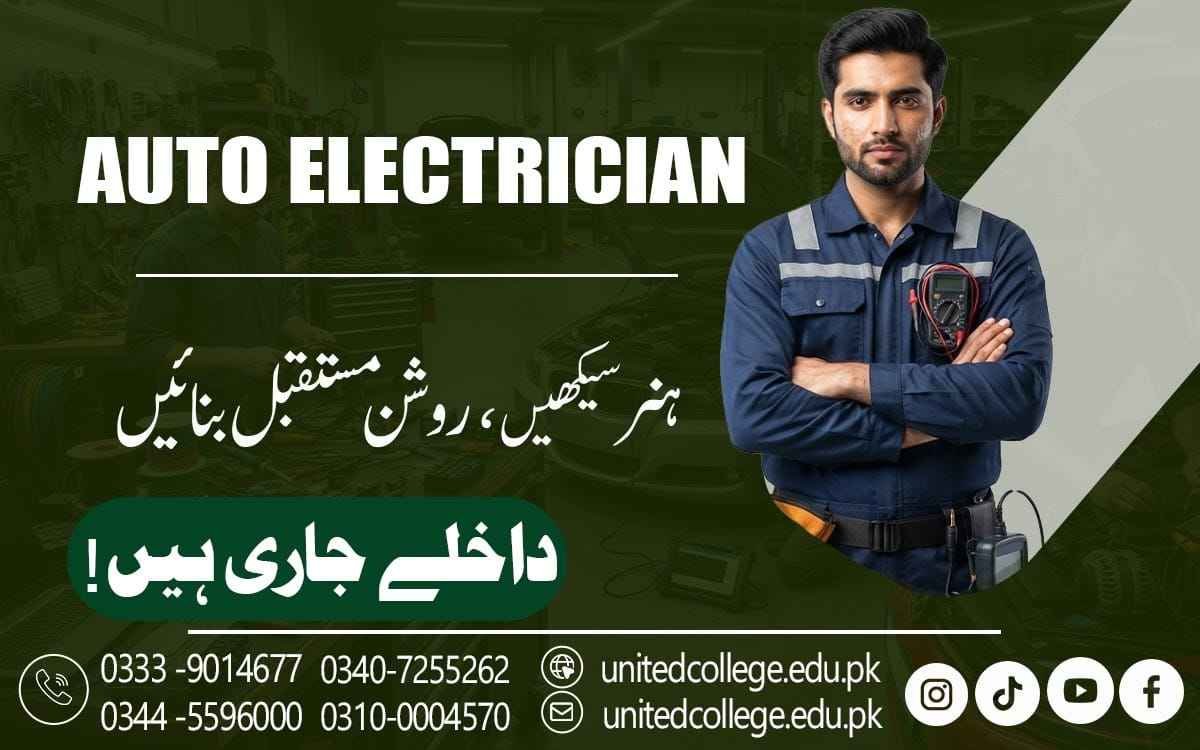

Auto Electrician Course in Khanewal | Practical Auto Training
Why Modern Vehicles Need Skilled Auto Electricians
A modern car may look like a simple machine from the outside, but a complete electrical network is working behind the scenes to keep it running properly. The Auto Electrician Course in Khanewal helps learners understand how the battery provides power, the starter motor helps start the engine, the alternator supports the charging system, and wiring connects different electrical components throughout the vehicle. Lights, indicators, dashboard functions, sensors, ignition-related systems, and other accessories also depend on electrical power.
When a small fault develops, a vehicle may refuse to start, or an important function may stop working. This is why people with proper automotive electrical knowledge can play an important role in today's vehicle repair industry. An Auto Electrician Course in Khanewal can give students, beginners, and job seekers an opportunity to learn these practical skills and understand how modern vehicle electrical systems work.
What Students Can Learn During Auto Electrician Training
An Auto Electrician Course in Khanewal introduces learners to the main electrical systems used in cars and other vehicles. Students can start with basic electrical concepts and gradually learn how power moves through a vehicle and how different components work together. The training can cover batteries, charging systems, alternators, starter motors, vehicle wiring, lighting systems, ignition systems, fuses, relays, switches, sensors, electrical accessories, and basic automotive diagnostics.
Beginners do not need to know everything about cars before starting because these subjects can be explained step by step. As learners understand each component and its purpose, they can develop a clearer picture of the complete car electrical system and become more comfortable identifying common electrical problems.
From Car Wiring to Electrical Fault Finding
Vehicle wiring is an important part of automotive electrical training because wires and connections carry electrical power and signals between different components. A loose connection, damaged wire, blown fuse, corroded terminal, or faulty switch can cause lights, indicators, accessories, or other vehicle systems to stop working. Through car wiring and vehicle wiring practice, learners can understand basic circuits and learn how to follow an electrical path from one component to another.
They can also become familiar with common electrical components and basic wiring diagrams. This knowledge becomes especially useful during troubleshooting because many electrical faults cannot be identified simply by looking at the outside of a vehicle. Learning how to inspect connections and identify possible causes can help students develop stronger auto electrician skills.
Understanding Batteries, Alternators, and Starting Systems
The battery, alternator, and starter motor are essential parts of a vehicle's electrical system, so they receive important attention during the Auto Electrician Course in Khanewal. The battery provides electrical power for starting the vehicle and supports different electrical functions, while the alternator generates electrical power while the engine is running and helps maintain the battery's charge. The starter motor uses electrical power to turn the engine during the starting process.
If any of these components or their connections develop a fault, the vehicle may experience starting problems, battery drainage, dim lights, or other symptoms. Students can learn how these systems work together and how suitable testing can help identify possible faults. Understanding these components gives learners a practical foundation for auto electrical repair and helps them approach common workshop problems more logically.
Practical Training That Builds Real Confidence
Auto electrical work is a practical skill, so hands-on learning is important for beginners. During practical auto electrician training, students can learn by identifying components, examining vehicle wiring, checking battery connections, understanding charging systems, studying starter motors and alternators, testing electrical circuits, and investigating common faults.
Practical activities can help learners understand concepts that may seem confusing when studied only through theory. For example, a student may read about an alternator in a lesson, but seeing how it connects to the charging system can make its function much easier to understand. Regular practice can also help learners become more comfortable with basic testing tools, electrical components, and troubleshooting procedures while developing safer and more organized working habits.
Learning Diagnostics Through Real Vehicle Problems
Imagine a customer brings a car to a workshop because it suddenly refuses to start. The battery appears to have power, but the engine does not turn as expected. A beginner might immediately assume that the starter motor needs replacement, but an experienced technician knows that several other possibilities should be checked first.
The problem could involve a connection, wiring, fuse, relay, switch, starter circuit, or another component. Automotive diagnostics teaches learners to investigate symptoms systematically rather than guessing. Students can learn how to inspect a problem, perform suitable basic tests, understand the results, and narrow down possible causes. This type of car electrical troubleshooting is one of the most useful skills for anyone who wants to work professionally with vehicle electrical systems.
Learning Modern Electrical and Electronic Vehicle Systems
Automotive technology continues to develop, and modern vehicles use many electronic components alongside traditional wiring. Through the Auto Electrician Course in Khanewal, students can learn basic concepts related to sensors, electronic components, and ECU systems. Sensors can monitor different vehicle conditions, while electronic control units can manage specific vehicle functions. This training can help learners understand how newer vehicles differ from older models and why modern auto electricians need knowledge of both traditional wiring and electronic systems.
This does not mean a beginner has to master advanced electronics immediately. The learning process can start with basic electrical principles and gradually introduce modern vehicle technology. Developing knowledge of both traditional wiring and newer electronic systems can help an aspiring vehicle electrical technician remain prepared for the changing needs of the automotive industry.
How United College of Technology Supports Skill-Based Learning
United College of Technology offers the Auto Electrician Course in Khanewal for learners who want to develop practical knowledge and skills related to automobile electrical systems. The course can provide a structured learning path for beginners who want to understand vehicle wiring, batteries, charging systems, starter motors, alternators, lighting, electrical components, testing, and basic diagnostics.
Demonstrations, practical activities, tools, vehicle components, and troubleshooting examples can help students connect theoretical concepts with real automotive situations. The purpose of this type of training is to build a strong foundation rather than make unrealistic promises about guaranteed jobs or salaries. Students can continue developing their abilities through practice, workshop experience, and further learning after completing their training.
Where Auto Electrician Skills Can Take Your Career
After developing suitable skills and gaining practical experience, learners can explore different career directions in the automotive field. Possible roles include Auto Electrician Course, Automotive Electrical Technician, Vehicle Electrical Technician, Car Diagnostic Assistant, Auto Repair Technician, and Workshop Technician. Skilled workers may find opportunities in automobile workshops, garages, vehicle service centers, dealerships, maintenance businesses, or other automotive workplaces depending on local demand and employer requirements.
Some experienced technicians may eventually consider starting a small auto electrical repair service, although independent work requires technical ability, suitable tools, customer service skills, experience, and business knowledge. Career growth depends on many factors, including skill level, practical experience, location, employer requirements, and continued learning. For someone in Khanewal who enjoys vehicles and wants to develop a practical trade, an Auto Electrician Course in Khanewal can be a useful starting point for building a foundation in automotive electrical work and moving toward a skilled automotive career.
Frequently Asked Questions (FAQs)
An Auto Electrician Course in Khanewal is a practical training program that teaches students how the electrical systems of cars and other vehicles work. It covers areas such as car wiring, batteries, alternators, starter motors, lighting, electrical components, and basic fault diagnosis.
What will I learn during the Auto Electrician Course?
Yes. Beginners can consider this course even if they have limited knowledge of automobiles. Training can start with basic electrical concepts and gradually move toward vehicle components, wiring, testing, and practical troubleshooting.
Auto electrical work is a hands-on skill, so practical training helps students understand how electrical systems actually work in vehicles. Working with components, wiring, testing tools, and common fault situations can help learners develop greater confidence and practical ability.
After gaining suitable training and practical experience, learners can explore roles such as Auto Electrician, Automotive Electrical Technician, Vehicle Electrical Technician, Auto Repair Technician, Workshop Technician,theCar Diagnostic Assistant. Career growth depends on skills, experience, location, and employer requirements.
Admission Open: Start Your Professional Journey Today!
Join United College of Technology and build a career with practical training, recognized certifications, and Gulf job support. Seats are limited.
Apply Now via WhatsAppContact Information
- Address: Rawalpindi: F-272 Main New Katarian Stop, Old IJP Road | Lahore Campus: Lahore, Pakistan
- Phone/WhatsApp: 0333-9014677 / 0344-5596000 / 0310-0004570 / 0301-5044340 / 0340-7255262
- Website: unitedcollege.edu.pk
















Leave a Comment