


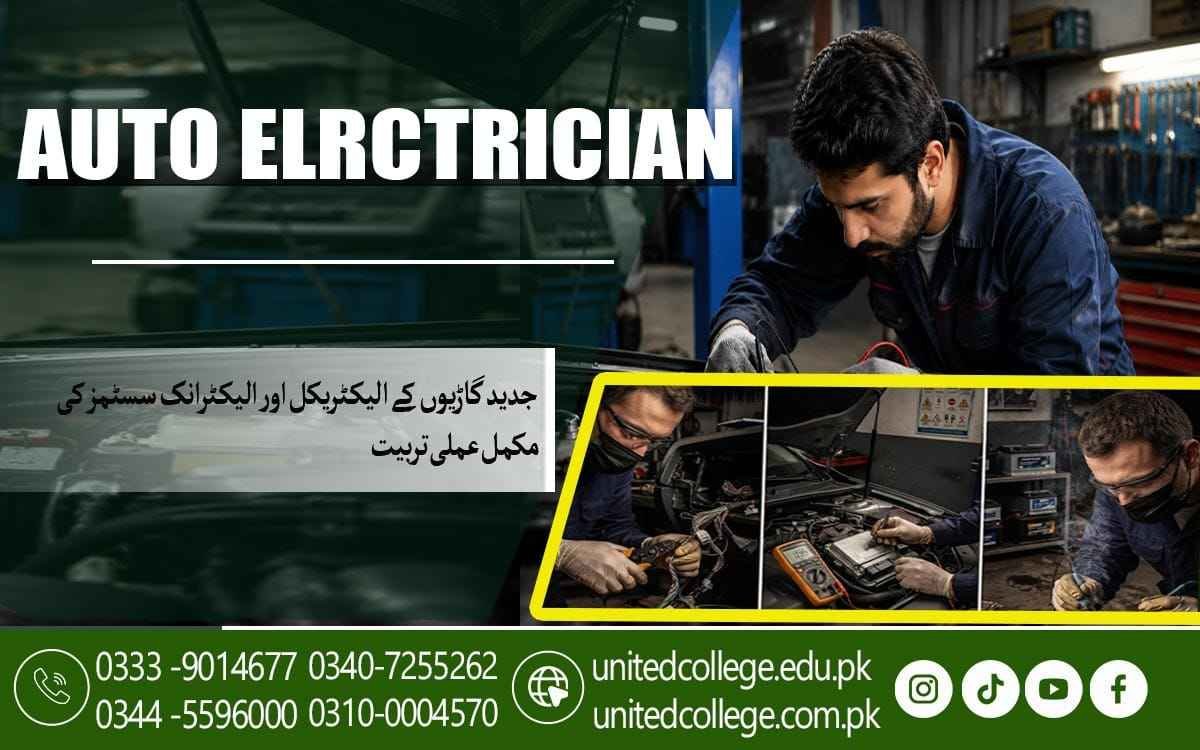

Auto Electrician Course in Lodhran for Modern Auto Electrical Work
Learning the Fundamentals of Auto Electrics
The Auto Electrician Course in Lodhran begins with the basic concepts of automobile electrical systems. Students learn how electricity is generated, distributed, and used in different parts of a vehicle, including the battery, alternator, starter motor, lights, and other electrical components.
Learners are introduced to important electrical terms, components, circuits, switches, fuses, relays, and connections. This foundation helps beginners understand how individual components work together to support the overall electrical performance of a vehicle.
The training focuses on developing practical understanding rather than relying only on theoretical information. Students gradually become familiar with vehicle electrical layouts and learn how to approach basic electrical problems in a systematic way.
Vehicle Wiring and Circuit Connections
Vehicle wiring is an essential part of automotive electrical work, and students learn how different wires and circuits connect various components. They study wiring layouts and understand the purpose of different cables, terminals, connectors, fuses, and relays.
Practical training helps learners identify damaged wires, loose connections, short circuits, and other common wiring issues. They learn how to inspect connections carefully and understand the importance of correct wiring for vehicle safety and performance.
Students also develop skills in making and checking basic electrical connections. This practical experience can help them become more confident when working on automobile wiring in garages, workshops, and service centers.
Working with Batteries and Alternators
The battery and alternator are important components of a vehicle's electrical system. Students learn how batteries provide electrical power for starting and operating different systems while understanding the role of the alternator in charging the battery.
The Auto Electrician course introduces learners to battery terminals, charging conditions, electrical connections, and common battery-related problems. They learn how to recognize signs that may indicate weak batteries or charging system issues.
Students also study basic alternator functions and inspection methods. Understanding these systems helps future auto electricians identify common charging problems and perform suitable initial checks before carrying out repairs.
Starting and Ignition Components Explained
Starting and ignition systems are important for getting an automobile engine running. Students learn about starter motors, ignition switches, relays, wiring, and other components involved in the starting process.
The training explains how electrical power reaches the starter system and how different components work together. The Auto Electrician Course students can use this knowledge to understand common problems such as clicking sounds, slow cranking, or failure to start.
Practical exercises help students develop a logical approach to starting-system troubleshooting. Instead of replacing components without inspection, they learn to check connections and electrical components systematically.
Repairing Vehicle Lights and Electrical Devices
Modern automobiles contain several lighting and electrical devices, including headlights, indicators, brake lights, parking lights, horns, dashboard lights, and other accessories. Students learn the basic operation and electrical connections of these systems.
Learners practice identifying common causes of lighting problems, such as blown fuses, damaged bulbs, loose connections, faulty switches, and wiring issues. They also learn why proper electrical connections are important for reliable vehicle operation.
The practical knowledge gained through this section can help students handle routine electrical maintenance tasks. It also prepares them to work with different types of vehicle accessories commonly found in automotive workshops.
Developing Effective Fault Finding Skills
Electrical fault finding is one of the most important skills for an auto electrician. Students learn how to observe symptoms, inspect electrical circuits, test components, and identify possible causes of vehicle electrical problems.
The Auto Electrician course introduces learners to basic testing methods and electrical tools used for troubleshooting. They learn how systematic testing can reduce unnecessary component replacement and help locate faults more efficiently.
With repeated practical exercises, students can improve their problem-solving abilities and develop a more professional approach to automotive electrical diagnosis. These skills are valuable when dealing with different vehicle electrical complaints.
Hands-On Training for Automotive Technicians
Practical training allows students to apply what they learn to actual automotive electrical systems. They can work with components and circuits to understand how electrical systems behave under different conditions.
Learners get opportunities to practice basic inspection, wiring checks, component testing, and fault identification. This practical exposure can improve their confidence and help them understand the difference between classroom concepts and real workshop situations.
Hands-on learning is especially useful for beginners because it allows them to develop technical skills through practice. With continued training and workshop experience, learners can gradually improve their efficiency and accuracy.
Building Professional Skills for Future Employment
The Auto Electrician Course in Lodhran can provide a foundation for individuals interested in entering the automotive repair industry. After completing their training, learners may explore opportunities in automobile workshops, garages, vehicle service centers, and maintenance businesses.
Students who gain additional practical experience can continue developing their skills in advanced automotive electrical and diagnostic technologies. Keeping up with modern vehicle systems can also help technicians adapt to changing industry requirements.
For individuals interested in self-employment, auto electrical skills can provide a starting point for establishing a small repair service after gaining sufficient experience. Professional behavior, technical knowledge, and practical ability can all contribute to long-term career development.
Frequently Asked Questions (FAQs)
The course covers vehicle wiring, batteries, alternators, starter motors, ignition systems, lighting circuits, electrical accessories, testing methods, and basic fault diagnosis.
Yes, beginners can join the course. Training starts with fundamental automotive electrical concepts and gradually introduces practical repair and troubleshooting skills.
Students can learn to inspect vehicle wiring, check electrical connections, understand battery and charging systems, identify common electrical faults, and work with basic testing tools.
Yes, the skills gained through the course can help learners seek opportunities in automobile workshops, garages, service centers, and vehicle maintenance businesses.
After completing the course, gaining sufficient practical experience can help learners consider starting their own auto electrical repair service or small workshop.
Admission Open: Start Your Professional Journey Today!
Join United College of Technology and build a career with practical training, recognized certifications, and Gulf job support. Seats are limited.
Apply Now via WhatsAppContact Information
- Address: Rawalpindi: F-272 Main New Katarian Stop, Old IJP Road | Lahore Campus: Lahore, Pakistan
- Phone/WhatsApp: 0333-9014677 / 0344-5596000 / 0310-0004570 / 0301-5044340 / 0340-7255262
- Website: unitedcollege.edu.pk
















Leave a Comment