


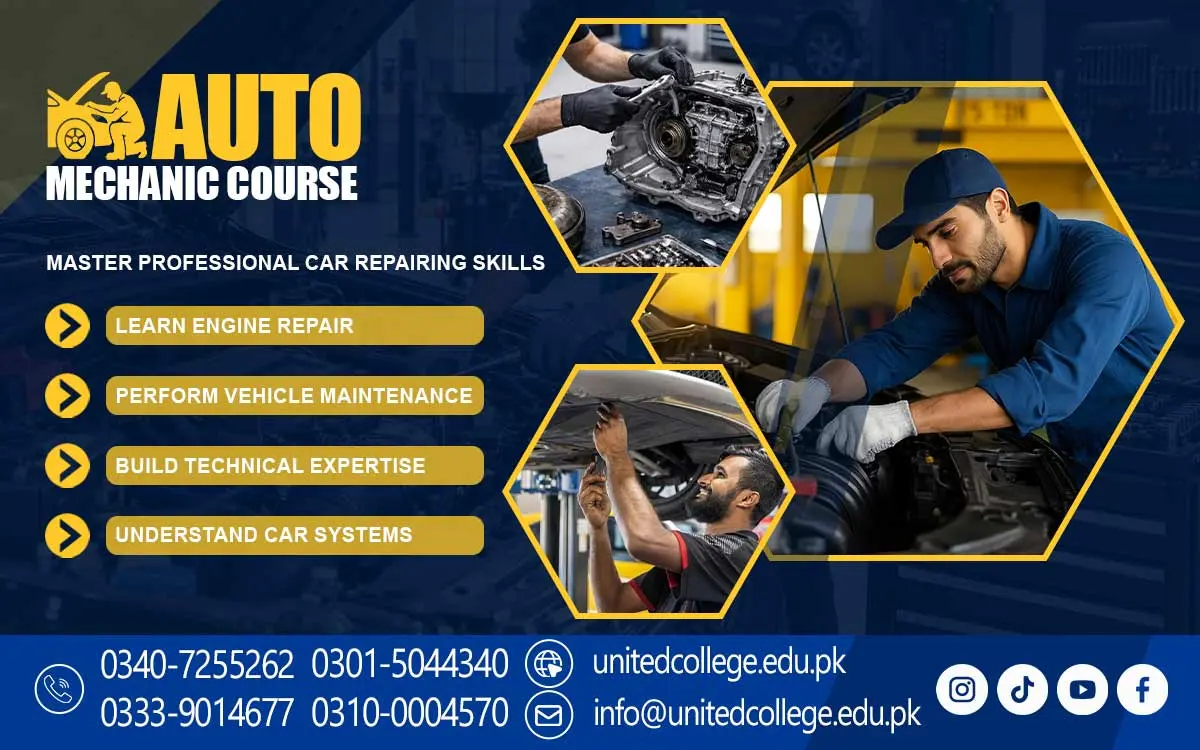

Auto Mechanic Course in Bannu to Develop Expert Vehicle Know How
Auto Mechanic Course in Bannu Builds Strong Foundations in Modern Vehicle Repair
The automobile industry depends on people who understand how vehicles work, how mechanical faults develop, and how repairs should be carried out safely. The Auto Mechanic Course in Bannu can be a useful starting point for students, beginners, job seekers, and anyone who wants to develop practical knowledge of vehicle maintenance. Instead of relying only on guesswork, learners can begin to understand the systems that keep cars running and the methods mechanics use to identify problems.
This knowledge is valuable for people who want to explore technical work, assist experienced mechanics, or prepare for further training. An interest in cars is a good beginning, but learning requires patience, regular practice, and a willingness to understand each component step by step. With a clear learning path, beginners can gradually build the confidence needed to approach common automotive tasks more carefully.
Build Automotive Knowledge by Understanding How Vehicles Work
A vehicle contains several connected systems that work together to ensure safe and reliable movement. The engine produces power, the transmission delivers that power to the wheels, and the braking system helps the driver control speed. Steering and suspension components support direction, stability, and driving comfort. Learning how these systems work together helps students develop a better understanding of automobile mechanics. An Auto Mechanic Course in Bannu can help beginners explore these essential vehicle systems and their functions.
An automobile repair course may also introduce basic concepts such as friction, pressure, heat, lubrication, and the movement of mechanical parts. For example, learners can understand why an engine requires the correct oil level and how a damaged hose can affect the cooling system. These fundamental concepts help students understand the reasons behind repair procedures rather than simply memorising instructions. For beginners in Bannu, building this foundation can make advanced automotive topics easier to understand and support the development of practical mechanical knowledge over time.
Engine and Transmission Skills That Explain Vehicle Performance
Engine repair training introduces learners to the parts responsible for producing power and keeping an engine operating properly. Students can study the purpose of pistons, valves, spark plugs in petrol engines, filters, belts, and cooling components. They can also learn why unusual noises, overheating, smoke, or difficulty starting may indicate a problem that needs further inspection. The correct response depends on the vehicle and the symptoms, so a mechanic must examine the situation rather than replace parts without evidence.
Transmission systems deserve similar attention because they transfer engine power to the wheels. Learners can develop an understanding of manual and automatic transmissions, clutch operation, gear selection, and signs of transmission trouble. A slipping clutch, difficult gear changes, or unusual vibration may have different causes and require careful diagnosis. Through structured instruction and supervised practice, students can learn the purpose of these components and understand when a repair requires specialist knowledge.
Brakes, Steering and Suspension Skills for Safer Driving
A vehicle needs more than a working engine to remain dependable on the road. Its braking, steering, and suspension systems also require proper inspection and maintenance. The braking system uses components such as pads, discs or drums, and hydraulic parts to slow or stop a vehicle. Learners can study common warning signs, including unusual brake noises, reduced braking response, or a soft brake pedal. These symptoms should never be ignored because braking faults can create serious safety risks.
Loose steering, uneven tyre wear, or repeated knocking sounds may suggest a problem that needs professional assessment. Auto Mechanic Course in Bannu can help beginners understand these systems, recognise possible faults, and learn why accurate inspection matters. Repairs involving safety-critical parts should follow the vehicle manufacturer's instructions and be completed only by people with suitable training and supervision.
Practical Fault Finding Through Tools and Workshop Discipline
Good mechanics do not rely on assumptions when a vehicle develops a problem. They gather information, inspect the affected system, and use suitable tools to narrow down possible causes. A basic diagnostic process may begin with asking about the symptoms, checking visible components, reviewing warning lights, and testing relevant parts where appropriate. Depending on the fault, mechanics may use spanners, sockets, screwdrivers, pliers, measuring tools, or diagnostic equipment.
Workshop safety is equally important. Students should understand how to secure a vehicle before working underneath it, keep tools organised, avoid contact with hot engine parts, and handle fluids carefully. Batteries, moving belts, lifting equipment, and electrical systems can present hazards when handled incorrectly. A well-planned learning environment encourages careful habits from the beginning. As learners gain experience, they can improve their ability to follow repair instructions, identify warning signs, and know when a task needs assistance from a qualified mechanic.
Regular Vehicle Maintenance That Prevents Avoidable Problems
Many vehicle problems become more difficult when routine maintenance is ignored. Regular checks can help drivers identify wear or changing conditions before they lead to a breakdown. Learners can explore the importance of engine oil, coolant, air filters, tyre pressure, battery condition, lights, belts, and fluid levels. They can also understand why maintenance schedules differ between vehicles and why the manufacturer's recommendations should guide servicing decisions.
Replacing a component without checking the underlying cause can allow the same problem to return. Students therefore need to learn the difference between routine servicing and fault repair. Vehicle maintenance also includes keeping useful service records and using suitable replacement parts. These habits can help workshops work more systematically and give vehicle owners a clearer picture of their cars' condition. For people learning automotive mechanical skills, maintenance knowledge provides a practical starting point before they move towards more complex repair work.
Training Choices in Bannu That Support Long-Term Skill Development
Selecting suitable auto mechanic training in Bannu requires more than looking at a course name. Prospective learners should consider whether the instruction covers essential vehicle systems, explains workshop safety, and provides opportunities to practise relevant tasks under appropriate supervision. It is also useful to ask how instructors explain technical topics to beginners and whether the learning approach includes fault identification as well as routine servicing.
These details should be confirmed rather than assumed. United College of Technology is a name learners can explore when comparing training options. Anyone considering an Auto Mechanic Training offered by United College of Technology should contact the institution to verify the current course information, training arrangements, and other details relevant to their needs. Comparing providers carefully can help learners choose a suitable starting point based on their goals, available time, and interest in practical automotive work.
Turning Mechanical Skills Into Workshop Experience and Career Options
Learning vehicle repair can create several possible routes for continued development. With suitable training, practice, and experience, learners may work towards roles in automobile workshops, independent garages, vehicle service centres, or maintenance businesses. Some may begin by assisting experienced mechanics and gradually take on more demanding tasks as their competence improves. Others may use their knowledge to maintain family vehicles or explore self-employment after gaining enough practical experience, understanding customer needs, and learning how to manage tools, parts, costs, and repair responsibilities.
Employers and customers often value reliable work, honest communication, problem-solving ability, and a strong commitment to safety. Learners should also understand that modern vehicles may include electronic controls, sensors, and computer-based diagnostic systems that require additional study. Building experience over time can help students identify the areas they enjoy most, whether engine servicing, brake maintenance, transmission work, or broader vehicle inspection.
A Confident Start With Consistent Practice and Curiosity
Beginners do not need to know every mechanical term before starting an auto mechanic course. A stronger approach is to learn basic concepts, ask clear questions, observe experienced workers, and practise tasks within the limits of their training. Reading vehicle manuals, learning component names, watching demonstrations from reliable educational sources, and reviewing common maintenance procedures can support classroom learning. Keeping notes about parts, symptoms, tools, and repair steps can also make technical information easier to remember.
Students should avoid attempting dangerous repairs without proper guidance, especially when a task involves lifting a vehicle, handling fuel, working with high temperatures, or dealing with electrical systems. Over time, repeated practice can improve accuracy and help learners recognise patterns in vehicle faults. The Auto Mechanic Course in Bannu offers an opportunity to begin exploring a practical technical field while developing the knowledge needed for further learning.
Frequently Asked Questions (FAQs)
Service records help a mechanic review earlier repairs, replaced parts, and maintenance dates before deciding what needs attention.
The exhaust system carries engine gases away from the engine and helps control noise. Leaks or unusual smoke should be checked carefully.
Engine compression relates to how pressure builds inside the cylinders. Understanding it helps mechanics investigate certain engine performance problems.
They can follow suitable inspection and testing procedures, compare results with the original symptoms, and confirm that the vehicle operates as expected.
Vehicles can use different parts, layouts, and repair procedures. Recognising these differences helps mechanics consult the correct service information.
Clear communication helps mechanics understand reported symptoms, explain repair findings, discuss required work, and avoid misunderstandings about the vehicle's condition.
Admission Open: Start Your Professional Journey Today!
Join United College of Technology and build a career with practical training, recognized certifications, and Gulf job support. Seats are limited.
Apply Now via WhatsAppContact Information
- Address: Rawalpindi: F-272 Main New Katarian Stop, Old IJP Road | Lahore Campus: Lahore, Pakistan
- Phone/WhatsApp: 0340-7255262 / 0333-9014677 / 0301-5044340 / 0310-0004570 / 051-8770756
- Website: unitedcollege.edu.pk
















Leave a Comment