


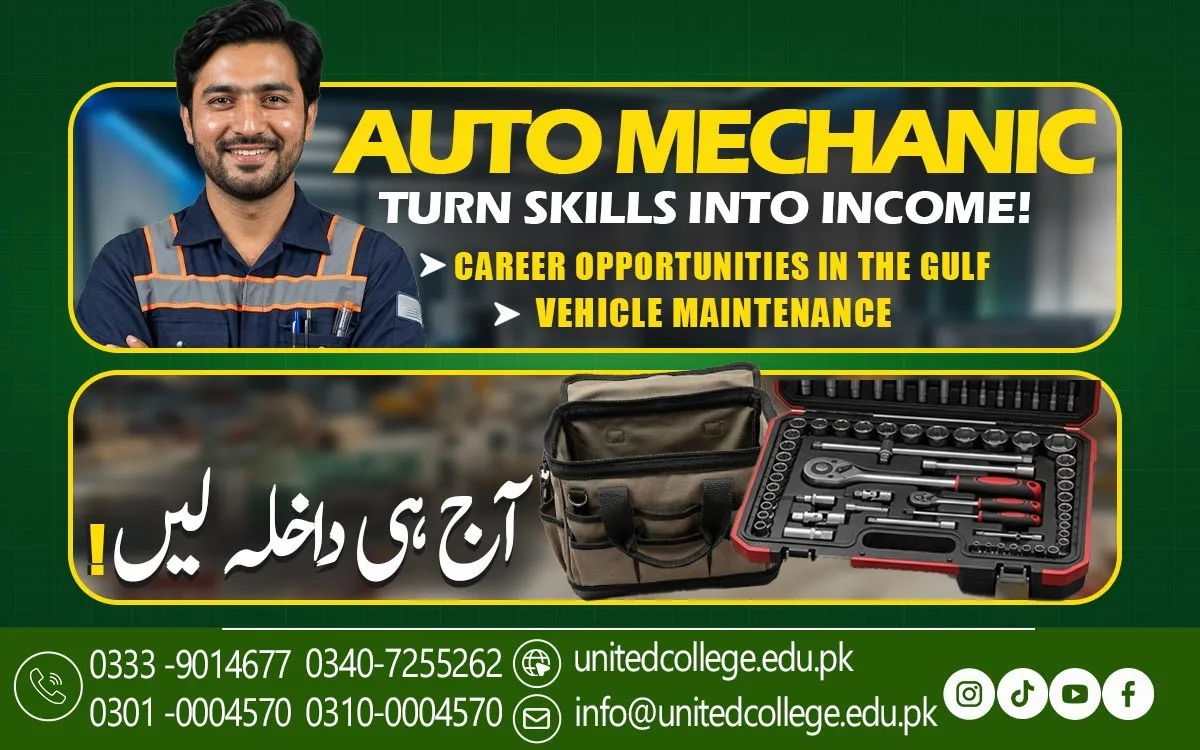

Auto Mechanic Course in Haripur – Learn Practical Car Repair Skills
Recognizing Common Vehicle Problems Before They Become Serious
A vehicle may show several warning signs before a major problem develops. For example, an engine that takes longer than usual to start may have a weak battery, a fuel delivery problem, or an issue with the ignition system. Similarly, a temperature gauge that rises above its normal range may indicate a cooling system fault. Mechanics must understand that similar symptoms can have different causes, so replacing parts without proper inspection can waste time and money. During auto mechanic training, learners can study how to observe these symptoms, ask relevant questions, and examine a vehicle systematically.
Each problem requires a suitable inspection process rather than a quick guess. For instance, a mechanic investigating poor fuel efficiency may consider tyre pressure, engine condition, air filters, and other possible factors. The Auto Mechanic Course in Haripur can help beginners understand the importance of identifying faults before attempting repairs. Learners can also explore how regular maintenance helps reduce avoidable breakdowns. However, some warning signs require immediate attention. Brake failure, severe overheating, fuel leakage, or a strong burning smell should never be ignored.
Understanding Engine Components and Essential Automotive Systems
A car engine contains many connected parts that work together to produce power. Pistons move inside cylinders, valves control the movement of air and exhaust gases, and the crankshaft converts the pistons' movement into rotational motion. The cooling and lubrication systems help the engine operate within suitable temperature and friction limits. Beginners who understand these relationships can more easily follow explanations of common engine problems. Through an Auto Mechanic Course, learners can understand the purpose of major engine components and how different systems affect overall vehicle performance. Alongside the engine, they can explore the transmission system, which transfers power from the engine to the wheels.
They can also study the fuel system, which supplies fuel to the engine, and the cooling system, which helps prevent excessive heat. Understanding these systems is important because one fault can affect several aspects of vehicle operation. For example, an engine that overheats may have insufficient coolant, a damaged hose, a faulty thermostat, or another cooling-related problem. A mechanic needs to investigate the cause instead of assuming that every overheating issue requires the same repair. Through automotive technician training, students can connect theoretical knowledge with real maintenance situations. This understanding provides a foundation for learning more advanced car engine repair procedures later.
Developing Practical Skills in Engine Inspection and Repair
When a customer reports that a vehicle is losing power, an experienced mechanic does not immediately dismantle the engine. The mechanic first gathers information, checks visible symptoms, and performs suitable tests to narrow down the possible causes. This methodical approach is an important part of engine troubleshooting. During practical auto mechanic training, learners can develop an understanding of engine inspection, routine servicing, and common maintenance procedures under appropriate supervision. They may study how to check engine oil levels, inspect visible hoses, recognize fluid leaks, and understand the purpose of air and oil filters.
They can also learn how oil changing and servicing support engine performance when carried out according to the vehicle manufacturer's recommendations. Another important area is recognizing unusual engine behaviour, including rough idling, difficult starting, excessive smoke, and unexpected noises. Each symptom needs careful investigation because several faults can produce similar results. Learners should also understand the difference between routine maintenance and complex engine repair. Tasks involving internal engine components, timing systems, or major disassembly require suitable tools, technical knowledge, and experienced supervision. The Auto Mechanic Course in Haripur provides a relevant learning pathway for beginners interested in understanding these processes.
Learning Automotive Electrical Systems and Basic Fault Diagnosis
A car can have a mechanically sound engine and still refuse to start because of an electrical problem. A weak battery, damaged cable, faulty starter motor, blown fuse, or malfunctioning alternator can affect the vehicle's operation. Understanding these components is therefore an important part of automotive repair. During auto mechanic training, beginners can study the purpose of the battery, starting system, charging system, fuses, wiring, and vehicle lights. They can learn how the battery supplies electrical power, how the starter motor helps turn the engine during starting, and how the alternator supports the electrical system while the engine runs.
A multimeter can measure electrical values such as voltage and resistance when used correctly, while a compatible diagnostic scanner can help retrieve fault codes from supported vehicle systems. However, a fault code does not always identify the exact failed component. The Auto Mechanic Course in Haripur can be a useful starting point for learners who want to explore automotive electrical systems alongside mechanical repairs. Through an auto mechanic course, students can develop an understanding of electrical testing methods and learn how mechanics investigate common vehicle faults. Safe working habits are essential because incorrect testing can damage components or cause injury.
Understanding Brakes, Steering, Suspension, and Vehicle Safety
Imagine driving on a wet road when you press the brake pedal and notice that the vehicle takes longer than expected to stop. This situation shows why brake inspection and maintenance are essential. A vehicle's braking system may include brake pads, discs, callipers, hydraulic components, and other parts that work together to slow or stop the wheels. If these components become worn or damaged, stopping performance can be affected. During automotive training, learners can study how braking systems operate and recognize common signs of wear or possible failure. Steering and suspension systems are equally important because they help the driver control the vehicle and maintain contact between the tyres and the road
Unusual vibrations, uneven tyre wear, pulling to one side, or knocking sounds may indicate a problem that requires inspection. Learners can also explore tyre condition, wheel alignment, and the importance of checking vehicle components according to manufacturer recommendations. The Auto Mechanic Course in Haripur can help students understand these systems as part of wider vehicle maintenance knowledge. However, brake, steering, and suspension repairs are safety-critical tasks that must be completed using suitable procedures, correct parts, and appropriate tools. Beginners should not attempt to repair these systems independently without the necessary competence and supervision.
Practising Routine Vehicle Maintenance and Proper Workshop Procedures
Many vehicle problems can be reduced through regular maintenance, although servicing cannot prevent every mechanical failure. An engine may run poorly because of overdue maintenance, while low coolant levels or a worn hose may contribute to overheating. Routine checks help identify certain issues before they become more serious. Vehicle maintenance training can introduce learners to oil and filter replacement, tyre inspection, battery condition checks, fluid-level monitoring, and scheduled servicing. Students can learn why the correct oil grade, coolant specification, and replacement parts matter for different vehicles.
Workshop practices are another important part of automotive learning. Keeping tools organized, selecting the correct equipment, and following repair instructions can improve accuracy and reduce avoidable mistakes. For example, a fastener tightened incorrectly may damage a component or create a safety risk. Similarly, working beneath a vehicle without approved lifting equipment and suitable supports can cause serious injury. Learners should understand the importance of protective equipment, proper ventilation, safe handling of automotive fluids, and responsible disposal of used oil and other waste. The Auto Mechanic Course in Haripur is relevant to people who want to develop an understanding of these practical maintenance activities.
Building Confidence Through Supervised Practical Automotive Training
Reading about a car engine is useful, but understanding its components becomes easier when learners can see how they work together. For example, a student may understand the purpose of a battery in theory but still need guided practice to check its condition correctly. Similarly, recognizing a worn component requires experience with inspection methods, measurements, and manufacturer guidelines. Practical auto mechanic training helps bridge this gap by connecting classroom knowledge with real repair situations. Depending on the training arrangements, suitable activities may include identifying engine components, observing routine servicing, learning tool selection, and following basic fault-diagnosis procedures under supervision.
Learners can also develop the habit of recording observations and explaining why they suspect a particular fault. This process encourages logical thinking rather than unnecessary parts replacement. At United College of Technology, students interested in the Auto Mechanic Course in Haripur should confirm the current practical training arrangements, available equipment, course content, and level of workshop supervision directly with the institution. These details should not be assumed without verification. Beginners should also understand that making mistakes is part of learning, but safety must always come first.
Exploring Realistic Career Paths in the Automotive Repair Industry
Some begin by assisting an experienced mechanic in an automobile workshop, where they can observe repair procedures and learn how customer complaints are investigated. Others may work toward vehicle servicing roles involving routine maintenance, inspections, and basic troubleshooting. With additional training and experience, some learners may choose to specialize in engine repair, automotive electrical systems, vehicle diagnostics, or other areas of automotive technology. These pathways require continued learning because vehicle designs and diagnostic systems can change over time. Modern vehicles may include electronic control units, sensors, advanced driver assistance systems, and specialized electrical components that require further knowledge.
Completing an auto mechanic course does not automatically qualify someone for every technical role, and employment depends on practical competence, employer requirements, experience, and any additional qualifications needed. People interested in self-employment must also understand the costs of tools, workshop space, replacement parts, safety equipment, and business operations before making financial decisions. The Auto Mechanic Course in Haripur can provide a starting point for individuals who want to explore this technical field and develop relevant knowledge. However, long-term progress depends on more than completing a course.
Starting Your Automotive Learning Journey in Haripur With UCT
For someone in Haripur who enjoys understanding how machines work, automotive repair can be an interesting field to explore. A vehicle that will not start, a cooling system that fails, or a warning light that appears on the dashboard presents a practical problem that requires observation and technical knowledge. Learning how mechanics investigate such issues can help beginners appreciate the value of systematic diagnosis and proper maintenance. The Auto Mechanic Course in Haripur, offered by United College of Technology (UCT), is relevant to students and job seekers who want to explore automotive systems and develop their understanding of vehicle repair.
Before enrolling, prospective students should contact UCT to confirm the current syllabus, admission requirements, course duration, fees, practical training arrangements, and any certificate details. They should also ask how much supervised practice is included and which automotive systems are covered. Having clear information makes it easier to decide whether the course matches personal learning goals. Students should remember that becoming a capable mechanic takes time, repeated practice, and a willingness to improve. Technical knowledge must be supported by safe working procedures, careful inspection, and respect for manufacturer guidelines.
Frequently Asked Questions (FAQs)
The Auto Mechanic Course in Haripur is a technical training program offered by United College of Technology (UCT) for learners interested in vehicle maintenance, car engine repair, and automotive troubleshooting.
Students can learn about engine components, oil changing, vehicle inspection, brake systems, automotive electrical systems, and basic fault diagnosis.
Yes, beginners interested in automotive repair can explore this course. Contact UCT to confirm the current admission requirements and eligibility criteria.
Training may cover engine maintenance, fuel systems, cooling systems, battery checks, vehicle servicing, and workshop safety. Contact UCT for the confirmed syllabus.
Depending on their skills and experience, learners may pursue opportunities as junior mechanics, workshop assistants, or vehicle service technicians.
Admission Open: Start Your Professional Journey Today!
Join United College of Technology and build a career with practical training, recognized certifications, and Gulf job support. Seats are limited.
Apply Now via WhatsAppContact Information
- Address: Rawalpindi: F-272 Main New Katarian Stop, Old IJP Road | Lahore Campus: Lahore, Pakistan
- Phone/WhatsApp: 0340-7255262 / 0333-9014677 / 0301-5044340 / 0310-0004570 / 051-8770756
- Website: unitedcollege.edu.pk
















Leave a Comment