


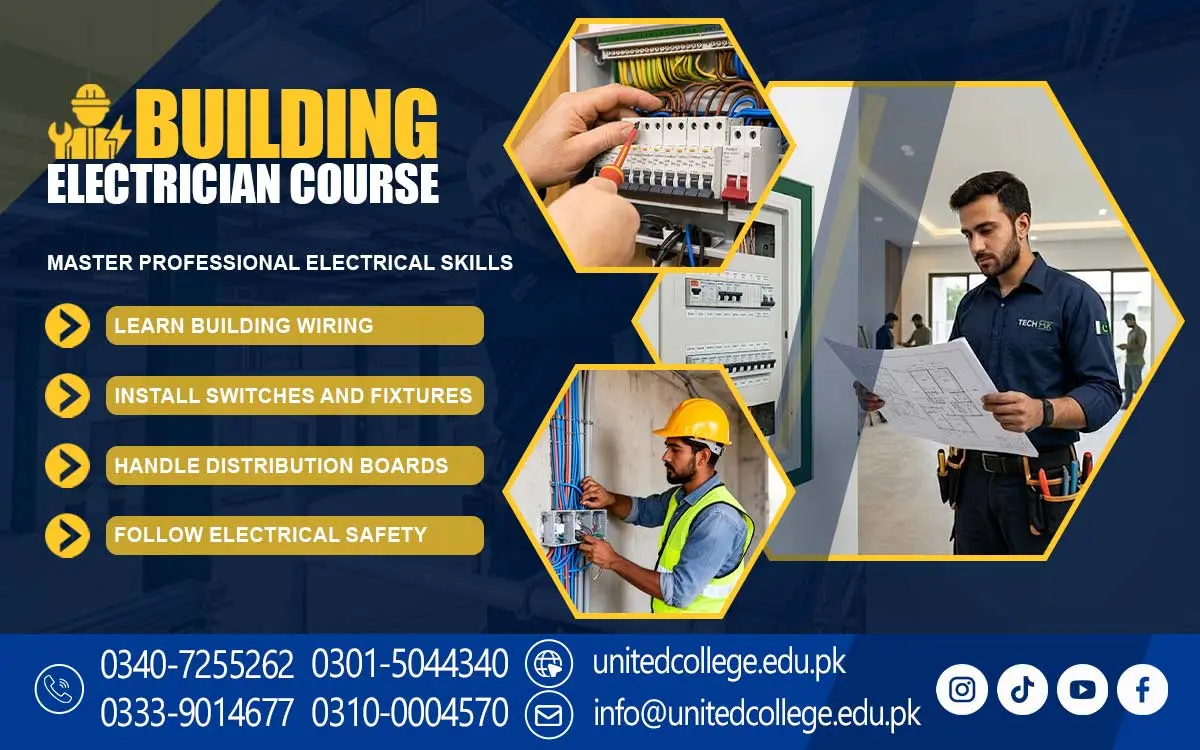

Building Electrician Course in Bannu to Learn Smart Electrical Work
Build Electrical Knowledge That Supports Modern Buildings
Electricity makes everyday life easier by powering lights, fans, appliances, computers, and many other devices used in homes, offices, shops, and commercial buildings. Behind these systems is a network of electrical connections that must be installed and maintained carefully. The Building Electrician Course in Bannu is relevant to students, job seekers, fresh learners, and people who want to explore electrical installation as a technical skill.
It introduces the concepts behind building wiring, electrical fittings, circuit protection, and maintenance. For someone starting from the beginning, learning these subjects can make electrical systems easier to understand and provide a foundation for further training. Instead of relying on guesswork, learners can begin to recognise the purpose of electrical components, understand basic diagrams, and appreciate why safe working procedures matter.
Understand the Responsibilities Behind Every Electrical Connection
A building electrician works with electrical systems that supply power to different parts of a property. Depending on their training and responsibilities, electricians may assist with installing wiring, connecting suitable fittings, checking circuits, maintaining equipment, and identifying faults. Their work requires more than knowing where to place a switch or socket. They must understand how circuits operate, how electrical loads affect a system, and why suitable protective devices are essential.
In a house, an electrician may work with lighting points, fans, sockets, and distribution boards. In an office or shop, the electrical arrangement may also need to support computers, display lighting, and other equipment. Each building has different requirements, so planning and careful inspection are important. Through the Building Electrician Course in Bannu, learners can explore the basic principles behind these responsibilities and understand how electrical systems support everyday activities.
Turn Wiring Theory Into a Clear Understanding of Building Systems
Electrical wiring is an essential part of building electrical work because it carries power to the places where it is needed. Learners need to understand conductors, insulation, cable identification, switches, sockets, lighting points, and the purpose of different circuit arrangements. An Electrical Wiring Course can also introduce common electrical symbols and explain how wiring diagrams represent the connections within a system.
Students should also learn why cable selection, suitable connections, and circuit protection must follow the relevant requirements rather than personal assumptions. Building Electrical Installation depends on accurate planning and attention to detail. Training can provide a useful learning direction for people who want to understand these concepts and gradually develop the technical vocabulary needed to discuss electrical systems with greater confidence.
Learn How Tools and Practical Exercises Support Technical Growth
Practical learning helps beginners connect classroom knowledge with the equipment and situations they may encounter during electrical work. By studying the purpose of basic electrician tools, learners can understand how different tools support measuring, preparing, inspecting, and installing electrical components. They can also become familiar with the appearance of common fittings and learn to recognise the difference between suitable and damaged components.
Under qualified supervision, practical exercises may help students understand how connections are arranged, how diagrams relate to real installations, and how an organised work process reduces mistakes. Fault detection is another useful area of study. A problem with a light or socket may have several possible causes, so a learner should understand the value of systematic inspection rather than immediately replacing a component.
Make Electrical Safety a Habit Before Handling Equipment
Electrical safety should guide every stage of installation, inspection, and maintenance. Even a task that appears simple can become dangerous when a circuit is energised, equipment is damaged, or the correct procedure is ignored. During a Building Electrician Course in Bannu, learners need to understand the importance of isolating the supply, preventing accidental reconnection, and verifying that equipment is safe before work begins.
Suitable protective equipment and correctly rated tools can reduce certain risks, but they cannot replace proper training or safe procedures. Circuit breakers and other protective devices serve important purposes, yet learners must understand their functions and limitations instead of assuming they prevent every possible accident.
Connect Electrical Training With the Needs of Buildings in Bannu
Buildings need electrical systems that suit their layout, intended use, and equipment requirements. In Bannu, people interested in technical work can study how electrical knowledge applies to homes, retail shops, offices, and other residential or commercial properties. A small house may require careful planning for lighting, fans, sockets, and essential appliances, while a commercial building may have more circuits and different electrical loads.
Understanding these differences helps learners see why each installation needs suitable planning instead of relying on one arrangement for every property. Electrical knowledge can also support maintenance activities, where workers must understand how to inspect equipment, recognise warning signs, and report faults accurately. The Course in Bannu offers a relevant subject area for people who want to learn about these practical requirements and strengthen their understanding of electrical systems used in buildings.
Explore a Learning Path Offered by United College of Technology
Selecting a technical course is an important decision, particularly for learners who are new to electrical work. The Building Electrician Training offered by United College of Technology is relevant to people interested in learning about wiring, electrical fittings, circuit protection, installation principles, and maintenance concepts. Before making an enrolment decision, prospective students should contact the institute directly to confirm current course details, including the subjects covered, admission requirements, duration, fees, and available practical learning arrangements.
These details should not be assumed without confirmation. Beginners can also consider their own learning goals and ask how the course addresses electrical safety, diagram reading, tool awareness, and the practical principles of building systems. People with some previous experience may want to strengthen their understanding of areas they have not studied in depth. Training is most useful when learners participate actively, revise unfamiliar concepts, and ask questions whenever an explanation is unclear.
Prepare for Technical Work Through Patience and Regular Practice
Electrical training can introduce learners to several possible areas of technical work, including residential wiring, commercial installation projects, building maintenance, and assisting experienced electricians. The responsibilities available to an individual depend on their skills, experience, local requirements, and level of supervision. Completing a course alone does not guarantee employment or authorise someone to carry out every type of electrical task independently.
They should also develop good work habits, such as checking instructions, organising tools, following safety procedures, and avoiding rushed decisions. Electrical Maintenance Training can help learners understand the importance of inspection, fault reporting, and careful upkeep of electrical systems. As their knowledge improves, they may explore further instruction or supervised experience in areas that match their interests.
Build a Stronger Technical Future Through Responsible Learning
Learning building electrical work requires curiosity, discipline, and respect for safety. Beginners do not need to understand every circuit immediately; they can make progress by mastering basic concepts before moving towards more complex systems. Understanding wiring diagrams, recognising electrical components, learning the purpose of protective devices, and following approved procedures all contribute to a stronger technical foundation.
The Building Electrician Course in Bannu can be a useful starting point for people who want to explore this field and develop knowledge that may support further technical learning. Before enrolling, learners should check the course details and consider how the subjects match their goals. Most importantly, they should remember that electrical work demands accuracy and responsible judgement.
Frequently Asked Questions (FAQs)
Voltage drop can reduce the voltage reaching equipment, so electricians must consider circuit length, conductor size, and electrical load during planning.
Inspection focuses on checking a system's condition, while maintenance includes suitable actions to keep equipment working properly and address identified issues.
Clear labels help identify circuits and connected areas, making it easier for qualified workers to locate the correct circuit during inspection or maintenance.
Damaged insulation can expose conductors and increase the risk of electric shock, short circuits, or fire, so faults require prompt attention from qualified personnel.
A schematic diagram uses symbols to explain how electrical components connect and operate, helping learners understand circuit logic without showing every physical detail.
Room layouts, equipment locations, expected electrical loads, and building use influence where circuits, lighting points, and sockets may be planned.
Admission Open: Start Your Professional Journey Today!
Join United College of Technology and build a career with practical training, recognized certifications, and Gulf job support. Seats are limited.
Apply Now via WhatsAppContact Information
- Address: Rawalpindi: F-272 Main New Katarian Stop, Old IJP Road | Lahore Campus: Lahore, Pakistan
- Phone/WhatsApp: 0340-7255262 / 0333-9014677 / 0301-5044340 / 0310-0004570 / 051-8770756
- Website: unitedcollege.edu.pk
















Leave a Comment