


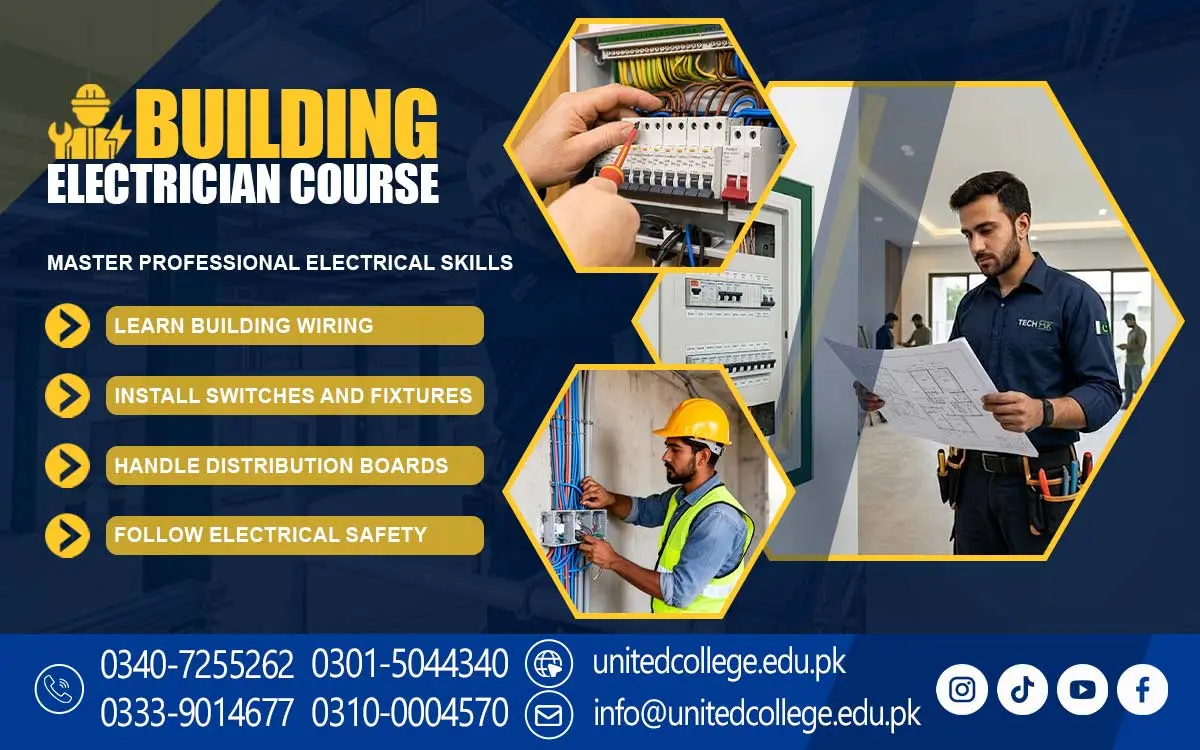

Building Electrician Course in Skardu for Fault Detection
Recognizing Signs of Electrical Wiring Faults
Electrical wiring faults can affect the safety and performance of a building. Students in the Building Electrician Course in Skardu can learn to recognize warning signs such as flickering lights, frequently tripping circuit breakers, burning smells, unusual sounds, and outlets that stop working. Identifying these signs early can help prevent further damage and reduce electrical risks.
Understanding the possible causes of wiring faults is another important part of electrical training. Damaged insulation, loose connections, overloaded circuits, and aging cables can create problems in electrical installations. Learners can develop basic knowledge of how these faults affect lighting systems, sockets, switches, and other electrical equipment used in buildings.
Early fault recognition helps electricians decide when a circuit needs inspection or professional repair. Students can learn to report dangerous conditions, isolate affected circuits using appropriate procedures, and avoid touching exposed wires. These practices support safer electrical maintenance in residential and commercial buildings throughout Skardu.
Using Testing Instruments for Electrical Checks
Testing instruments help electricians examine electrical circuits and identify possible problems. Through the Building Electrician Course in Skardu, learners can become familiar with tools such as digital multimeters, voltage testers, and continuity testers. Understanding the purpose of each instrument helps students select suitable equipment for different electrical inspection tasks.
Correct instrument handling is essential for obtaining reliable readings. Students can learn about selecting the appropriate measurement setting, checking test leads, inspecting equipment condition, and following manufacturer instructions. These basic skills help reduce measurement errors and improve the quality of electrical checks carried out during maintenance work.
Electrical testing must always be performed with suitable safety precautions. Learners should understand the importance of using correctly rated instruments and appropriate protective equipment. Practical instruction can help them recognize when a test requires a qualified supervisor and how to avoid unsafe contact with energized components.
Understanding Short Circuits and Overload Conditions
Short circuits and overloads are common electrical problems that can affect building wiring. A short circuit occurs when current takes an unintended low-resistance path, while an overload happens when a circuit carries more current than it is designed to handle. The Building Electrician Course in Skardu introduces students to these conditions and their possible effects on electrical installations.
Learners can study the warning signs of these problems, including tripping circuit breakers, overheated components, damaged insulation, and interruptions in power supply. They can also explore how unsuitable connections, damaged cables, and excessive electrical loads may contribute to circuit faults. This knowledge helps students understand why correct wiring design and circuit protection are important.
Preventing short circuits and overloads requires appropriate cable selection, properly rated protective devices, and careful installation practices. Students can learn why circuit breakers and fuses must match the requirements of the electrical system. These concepts help future electricians support safer electrical installations in homes, shops, offices, and other buildings in Skardu.
Examining Loose Connections and Damaged Cables
Loose electrical connections can cause intermittent power, excessive heat, and equipment malfunction. Damaged cables may also expose conductors and create a risk of electric shock or fire. In the Building Electrician Course in Skardu, students can learn how connection quality and cable condition influence the reliability of building electrical systems.
Training can introduce learners to common causes of connection problems, including poor installation, mechanical damage, unsuitable cable handling, and wear over time. Students can study the importance of checking accessible electrical components for visible signs of damage while following approved isolation procedures. They can also understand why improvised repairs may create additional hazards.
Proper maintenance involves using suitable connectors, correct termination methods, and cables that meet the requirements of the installation. Learners can develop an understanding of when damaged wiring must be replaced rather than repaired. These practices help maintain dependable electrical systems and improve safety in residential and commercial properties.
Learning Safe Voltage Measurement Procedures
Voltage measurement helps electricians understand the electrical conditions present in a circuit. Students enrolled in the Building Electrician Course in Skardu can learn the basic principles of voltage, measurement ranges, and the differences between alternating current (AC) and direct current (DC). This knowledge supports a better understanding of building power supplies and electrical equipment.
Learners can explore how voltage testers and multimeters are used for appropriate checks. They can study instrument ratings, correct test-lead placement, and the importance of following the manufacturer's instructions. Understanding these principles helps students recognize incorrect readings and avoid using unsuitable equipment for a particular electrical task.
Safety must remain the priority during every voltage-related activity. Students should learn that energized testing can be dangerous and must only be carried out by competent individuals using appropriate procedures and protective equipment. Where possible, circuits should be isolated and verified de-energized before work begins, following established electrical safety practices.
Checking Continuity in Electrical Circuits
Continuity testing helps determine whether an electrical path is complete. It can be useful when examining suitable disconnected wires, switches, conductors, and other circuit components. The Building Electrician Course in Skardu can introduce students to continuity testers and multimeters, helping them understand how an interrupted electrical path may affect the operation of a circuit.
Students can learn the basic difference between a complete circuit and one that contains a break. They can also explore how damaged conductors, poor connections, or faulty components may prevent current from following its intended path. These concepts help learners understand common reasons why lights, sockets, and other electrical devices may stop functioning.
Continuity testing must be performed on an isolated, de-energized circuit, with the absence of voltage verified using an appropriate method. Learners can study how to prepare the circuit safely, select the correct instrument setting, and interpret the result according to the equipment instructions. These skills provide a useful foundation for electrical inspection and troubleshooting.
Applying Preventive Measures to Reduce Electrical Faults
Preventive maintenance helps reduce the likelihood of electrical faults and unexpected equipment failures. Through the Building Electrician Course in Skardu, students can learn why routine inspections, suitable cable installation, secure connections, and correctly selected protective devices are important. Preventive practices can help improve the reliability of electrical systems in different types of buildings.
Learners can also study the importance of avoiding overloaded sockets, protecting cables from physical damage, and keeping electrical equipment suitable for its operating environment. Identifying visible warning signs before they develop into serious problems can support timely maintenance. Regular inspection records can also help building owners and electricians monitor the condition of electrical installations.
Following electrical standards and approved installation procedures is essential for long-term safety. Students can understand why repairs should be completed with appropriate materials and why damaged components should not be ignored. These preventive measures help future electricians contribute to safer homes, businesses, and commercial buildings in Skardu.
Developing Troubleshooting Knowledge for Building Systems
Electrical troubleshooting involves identifying a problem, examining possible causes, and determining an appropriate solution. The Building Electrician Course in Skardu can help students develop a systematic approach to investigating faults in lighting circuits, switches, sockets, and other building electrical systems. Learning to work step by step can make fault identification more organized and effective.
Students can learn to gather information about a problem, review circuit arrangements, inspect accessible components, and interpret test results. They can also learn why changing multiple components without identifying the cause may waste time or introduce additional risks. A logical troubleshooting process helps electricians make better decisions during maintenance activities.
Strong troubleshooting knowledge can support future employment in construction, building maintenance, and electrical service work. With appropriate practical training and supervision, learners can build confidence in recognizing faults and understanding suitable corrective measures. United College of Technology can provide a strong foundation for individuals interested in building electrical systems and pursuing opportunities in the electrical trade.
Frequently Asked Questions (FAQs)
Students can learn about building wiring, electrical fault identification, circuit testing, voltage measurement, continuity checks, and basic electrical safety procedures.
Troubleshooting helps electricians identify the possible causes of power interruptions, faulty switches, damaged cables, and other electrical problems.
Common instruments include digital multimeters, voltage testers, and continuity testers. Each instrument must be suitable for the task and used according to safety instructions.
Warning signs may include flickering lights, repeatedly tripping circuit breakers, unusual burning smells, overheated components, and sockets that stop working.
A short circuit creates an unintended path for current, while an overload occurs when a circuit carries more current than its designed capacity.
Admission Open: Start Your Professional Journey Today!
Join United College of Technology and build a career with practical training, recognized certifications, and Gulf job support. Seats are limited.
Apply Now via WhatsAppContact Information
- Address: Rawalpindi: F-272 Main New Katarian Stop, Old IJP Road | Lahore Campus: Lahore, Pakistan
- Phone/WhatsApp: 0340-7255262 / 0333-9014677 / 0301-5044340 / 0310-0004570 / 051-8770756
- Website: unitedcollege.edu.pk
















Leave a Comment