


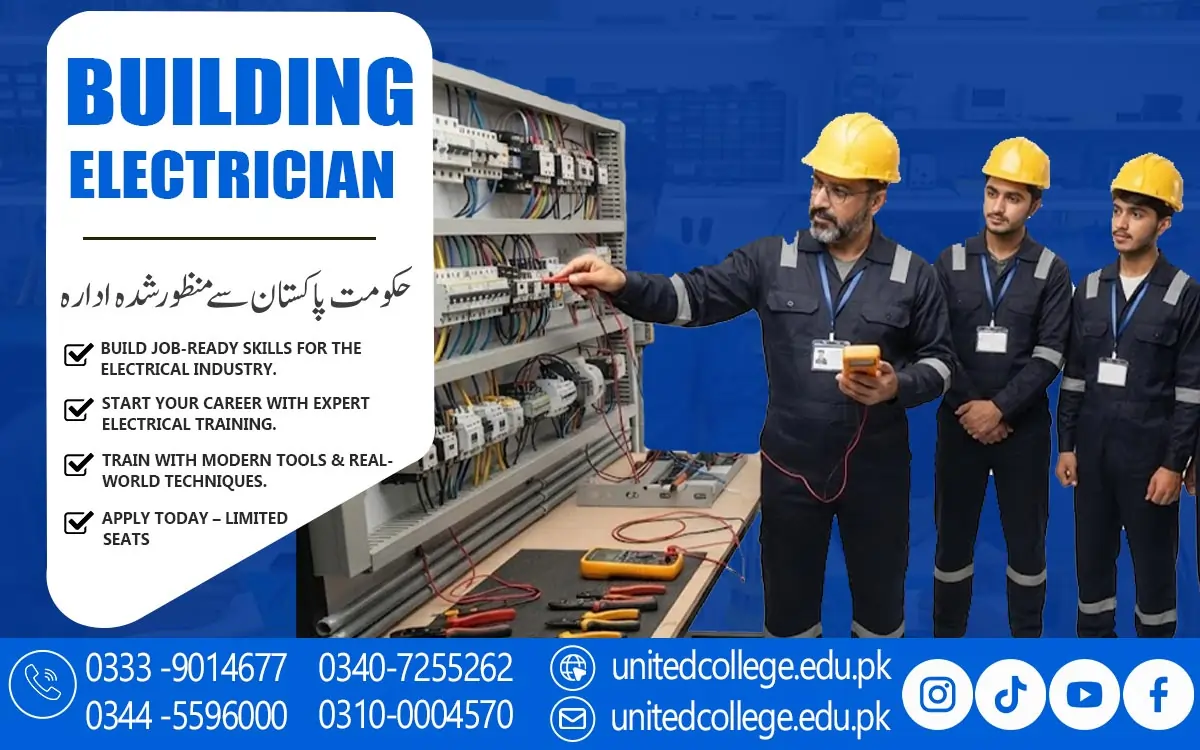

Building Electrician Course in Talagang for Electrical Installation
Introduction to Essential Building Electrical Concepts
Building electrical systems are an important part of modern homes, offices, shops, and other properties. A Building Electrician Course in Talagang introduces students to the basic concepts needed to understand how electricity is used inside a building. Learners start with fundamental electrical terms, components, circuits, and common installation practices.
Students become familiar with electrical wires, switches, sockets, circuit breakers, distribution boards, junction boxes, and other commonly used components. They learn the basic purpose of these items and how they work together within a building electrical system. This knowledge provides a useful starting point for students who are new to electrical work.
The course also emphasizes the importance of organized and careful working methods. Learners understand that electrical installation requires proper planning and attention to safety. Developing these basic concepts can help students feel more confident as they move toward practical electrical activities.
Understanding Circuits and Electrical Connections
Electrical circuits allow power to move to different points and electrical devices within a building. Building Electrician Course teaches the basic structure of electrical circuits and how connections are made between different components. This helps learners develop a clearer understanding of how building electrical systems operate.
Learners explore common circuit arrangements used for lighting, sockets, fans, and other electrical requirements. They also study basic wiring diagrams to understand how different electrical points are connected. This theoretical knowledge can make practical wiring exercises easier to understand.
Proper connections are important for the reliable operation of an electrical system. Students learn why connections need to be made carefully and checked before a circuit is used. These concepts can help learners develop better technical habits for future installation and maintenance work.
Exploring Installation Tools and Equipment
Electricians use different tools and equipment when carrying out installation and maintenance tasks. Students become familiar with common tools such as screwdrivers, pliers, wire strippers, testers, measuring tools, and other equipment used during basic electrical work. They learn about the purpose of each tool and the situations where it may be required.
Practical training helps learners understand how tools should be handled during electrical tasks. Students learn to select an appropriate tool instead of using unsuitable equipment for a particular job. Proper tool handling can improve accuracy and help maintain a more organized working environment.
Learners also develop awareness of maintaining and storing electrical tools properly. Keeping equipment in suitable condition can make practical work more efficient. This knowledge helps students build professional habits that can be useful when working on electrical projects in the future.
Learning Methods for Effective Wire Management
Wire management is an important part of building an electrical installation. Students learn how wires and cables are arranged, routed, supported, and organized within different areas of a building. Proper wire management can make electrical systems easier to inspect, maintain, and understand.
Learners explore how wiring routes can be planned for rooms, lighting points, switches, sockets, and other electrical connections. They understand why wires should be arranged systematically rather than placed without a clear layout. Organized wiring also helps technicians identify different circuits more easily during maintenance.
The Building Electrician Course encourages students to focus on neatness and accuracy during practical wiring activities. They learn to pay attention to cable routing, connections, and the overall appearance of an installation. With regular practice, learners can improve their ability to manage wiring more effectively.
Studying Lighting, Switches, and Socket Systems
Lighting systems provide illumination throughout residential and commercial buildings. Students learn how lighting points are connected with switches and electrical circuits. They become familiar with common lighting arrangements and understand the basic role of switches in controlling electrical loads.
Sockets are another important part of building electrical systems because they provide connection points for electrical appliances and equipment. Learners study the basic structure and purpose of sockets and related accessories. They also learn why electrical points need to be installed and connected carefully.
Through practical activities, students can gain experience with lighting points, switches, and sockets. They learn how these components fit into an overall electrical layout. This knowledge can help prepare learners for common residential and commercial electrical installation tasks.
Recognizing Electrical Problems During Inspection
Electrical systems can develop different problems because of loose connections, damaged components, incorrect wiring, or regular usage. Students learn about common signs that may indicate an electrical issue. They are introduced to the importance of inspecting electrical points before deciding how a problem should be addressed.
Learners study a systematic approach to basic fault identification. Instead of assuming the cause of a problem, they learn to examine relevant wiring, switches, sockets, and other components carefully. This approach can help them understand how electricians investigate electrical issues.
Inspection skills are useful for both new installations and existing buildings. Students learn why electrical systems should be checked carefully when unusual performance or faults are noticed. Developing these skills can strengthen their basic troubleshooting knowledge.
Building Practical Ability Through Technical Tasks
Hands-on practice gives students the opportunity to apply electrical concepts in practical situations. Learners can work on activities involving wiring, electrical fittings, switches, sockets, lighting points, and basic circuit testing. These exercises help connect classroom learning with actual electrical tasks.
Students gradually become more comfortable with tools, materials, and installation procedures as they complete different technical activities. Practical repetition can help improve their accuracy and confidence. Learners also understand the importance of completing each task according to a proper sequence.
Technical practice can play an important role in developing job-ready habits. Students learn that electrical work requires patience, concentration, safety awareness, and attention to detail. These qualities can support their development as they progress toward more advanced electrical responsibilities.
Creating a Foundation for Electrical Career Growth
A Building Electrician Course in Talagang can provide students with the foundational knowledge to enter the electrical trade. After gaining basic training, learners may explore opportunities in residential wiring, building maintenance, electrical installation, construction projects, and related technical work.
Students can also continue developing their skills through additional training and practical experience. As their knowledge improves, they may become familiar with more advanced electrical systems and professional working requirements. Continuous learning can help them adapt to changing technical needs.
For learners in Talagang, building a strong foundation in electrical concepts and practical work can be a useful step toward a technical career. Combining safety knowledge, wiring skills, inspection techniques, and hands-on experience can help students prepare for future opportunities in the electrical field.
Frequently Asked Questions (FAQs)
Students learn electrical circuits, building wiring, installation tools, wire management, lighting systems, switches, sockets, inspection, and basic troubleshooting.
Yes, students can practice wiring, fitting installation, circuit connections, testing, and other technical tasks to strengthen their practical electrical skills.
Yes, beginners can start with basic electrical concepts and gradually develop their knowledge through practical exercises and technical training.
Proper wire management keeps electrical connections organized and makes circuits easier to inspect, maintain, and troubleshoot when required.
Students may explore opportunities in residential wiring, building maintenance, electrical installation, construction work, and other electrician-related technical roles.
Admission Open: Start Your Professional Journey Today!
Join United College of Technology and build a career with practical training, recognized certifications, and Gulf job support. Seats are limited.
Apply Now via WhatsAppContact Information
- Address: Rawalpindi: F-272 Main New Katarian Stop, Old IJP Road | Lahore Campus: Lahore, Pakistan
- Phone/WhatsApp: 0340-7255262 / 0333-9014677 / 0301-5044340 / 0310-0004570 / 051-8770756
- Website: unitedcollege.edu.pk
















Leave a Comment