


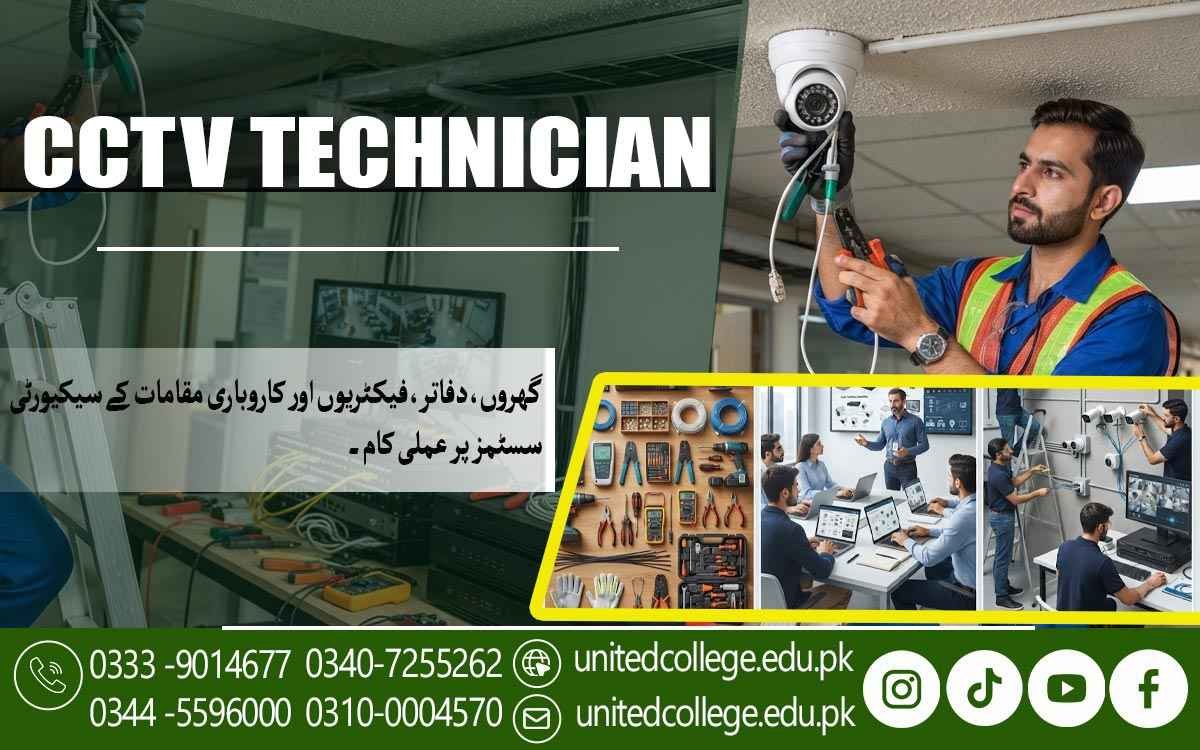

CCTV Technician Course in Mandi Bahauddin | Master CCTV Camera Setup
Turn Security Technology Into Practical Skills
A CCTV camera may be small, but the technology behind a reliable surveillance system involves several connected skills. The camera needs the right location, proper connections, suitable power, a recording system, and correct configuration before it can provide useful monitoring.
Today, CCTV systems are used across homes, shops, offices, schools, warehouses, educational buildings, factories, and commercial properties. This growing use creates a practical reason to understand how surveillance equipment works. The CCTV Technician Course in Mandi Bahauddin, offered by United College of Technology, introduces learners to the technical side of CCTV installation, configuration, maintenance, and troubleshooting.
Security Starts With Understanding What The Cameras Actually Need
A good CCTV setup begins before the first camera is installed. A technician needs to understand what an area requires and how different components can work together to meet that purpose. Beginners can start by learning the basic parts of a surveillance system. These may include CCTV cameras, cables, connectors, power components, recording devices, monitors, and network equipment.
For learners interested in professional training, a CCTV Technician Course in Mandi Bahauddin can provide an understanding of these essential components and their practical use. Each part has a specific role, and understanding these roles makes the entire system easier to manage. This foundation helps learners move beyond simply recognizing a camera.
From Lens to Screen, Every Connection Has a Purpose
The working journey of CCTV footage is easier to understand when the complete system is viewed as one process. A camera captures an area, the video signal travels through the appropriate connection, and a compatible recorder or network system handles the footage. During CCTV technician training, learners can explore the difference between common analog cameras and IP cameras.
Analog systems and network-based systems use different methods to communicate with recording equipment, making it important to understand their basic requirements. DVR and NVR systems are also important parts of this learning process. A DVR is commonly associated with analog CCTV systems, while an NVR is generally used with network cameras. Learners can understand how these devices support recording and monitoring without getting lost in overly advanced technical details.
The Installation Stage Is Where Small Details Matter
Installing a camera is not simply about fixing it to a wall. The location, direction, height, surrounding area, and purpose of the camera all influence the usefulness of its coverage. A technician may need to consider an entrance, counter, corridor, storage area, outdoor space, or another important location before deciding where a camera should face.
Poor positioning can leave blind spots or capture areas that are not useful. CCTV installation training can help learners understand these practical decisions. They can also explore how to keep equipment secure and connections organized while following appropriate safety practices during installation.
Reliable Wiring Keeps the System Working Together
Once camera locations are planned, the next challenge is creating reliable connections. CCTV cabling carries signals or network data between compatible components, while suitable power arrangements allow equipment to operate. Learners can become familiar with common cables, connectors, connection points, and basic wiring practices used in surveillance systems.
They can also understand why organized cable routing makes later inspection and maintenance easier. Power should be treated carefully during installation. Beginners can learn the basic purpose of power connections while avoiding unsafe electrical procedures. Good technical work combines correct connections with careful handling of equipment.
IP Cameras Add A New Technical Layer
Modern surveillance systems increasingly combine CCTV with networking. IP cameras communicate through a network, so learning their basic operation can introduce students to an additional area of technical knowledge. With IP camera setup, learners can explore concepts such as connecting network cameras, understanding compatible devices, and applying basic configuration settings. For students taking a CCTV Technician Course in Mandi Bahauddin, these concepts can provide a practical introduction to CCTV networking and modern surveillance technology.
CCTV networking does not have to begin with complicated networking theory. Simple practical examples can make the concept easier to understand. Remote CCTV monitoring is another useful area. Depending on the equipment and network arrangement, an authorized user may be able to access camera feeds through a computer or mobile device. Understanding this basic idea helps learners see how surveillance has developed beyond traditional local monitors.
Configuration Gives Every Device Its Place
After physical installation, the system needs appropriate configuration. Cameras, recorders, displays, and network devices must be connected and set up according to the requirements of the installation. Learners can explore basic camera configuration, recording options, monitor connections, and device communication.
They can also understand storage concepts and how recorded footage can be reviewed when needed. For example, a small shop may use several cameras connected to a recording system, with a monitor displaying live feeds. The technician's role is to ensure that compatible equipment communicates properly and that the system performs according to its intended setup.
Troubleshooting Turns Mistakes Into Technical Learning
Even a carefully installed CCTV system can develop problems. A camera may stop displaying video, a connection may become unreliable, a recorder may not receive a feed, or a display may fail to show the expected information. This is where CCTV troubleshooting becomes an important skill. Instead of guessing, a technician can examine the system logically and check relevant areas such as connections, power, cables, device settings, and communication between components.
Beginners can also learn about common installation mistakes. Incorrect camera placement, loose connections, poorly organized cables, unsuitable settings, and overlooked system checks can all affect performance. Learning to identify such issues builds useful problem-solving habits.
Practical Training Makes Technical Knowledge Easier to Use
CCTV skills become more meaningful when learners can connect theory with practical tasks. Handling equipment, identifying components, working with connections, arranging cameras, checking video feeds, and examining technical faults can make classroom learning more understandable. At United College of Technology, the CCTV Technician Course in Mandi Bahauddin gives learners a way to explore the practical side of surveillance technology.
Repeated practice can help beginners become more comfortable with the installation process and develop greater attention to technical details. Practical work also teaches learners that a technician's job involves patience. A small connection issue or configuration error may require careful checking before the actual cause becomes clear. Developing this approach can be useful when working with different types of security systems.
Build a Technical Foundation That Can Keep Growing
CCTV technology continues to develop, and learning the basics can provide a starting point for exploring related technical areas. Students can continue improving their knowledge of network cameras, surveillance equipment, system maintenance, basic networking, and other security technologies. CCTV skills can also be relevant in different environments, including homes, retail spaces, offices, schools, warehouses, factories, and commercial buildings.
A technician's exact responsibilities can vary by system, project, equipment, and experience level. For beginners, consistent practice matters more than trying to learn everything at once. The CCTV Technician Course in Mandi Bahauddin at United College of Technology can help learners develop an understanding of surveillance systems and build practical knowledge step by step. With continued learning, beginners can keep expanding their technical abilities as security technology changes.
Frequently Asked Questions (FAQs)
Yes. Training can help beginners recognize different system components and understand what each part does within a complete surveillance setup.
Basic knowledge of video transmission helps learners understand how footage moves from a camera toward the appropriate recording or viewing equipment.
They can explore how several cameras are arranged within one system, how their feeds are monitored, and how different camera locations serve different purposes.
Organized connections, accessible equipment placement, and clear identification of system components can make future inspection and maintenance more convenient.
Maintenance can include checking equipment condition, reviewing connections, examining camera operation, and identifying issues that may affect normal system performance.
Yes. Basic CCTV concepts can be learned step by step, while computer and networking skills can gradually be developed as learners move toward IP-based surveillance systems.
Admission Open: Start Your Professional Journey Today!
Join United College of Technology and build a career with practical training, recognized certifications, and Gulf job support. Seats are limited.
Apply Now via WhatsAppContact Information
- Address: Rawalpindi: F-272 Main New Katarian Stop, Old IJP Road | Lahore Campus: Lahore, Pakistan
- Phone/WhatsApp: 0333-9014677 / 0344-5596000 / 0310-0004570 / 0301-5044340 / 0340-7255262
- Website: unitedcollege.edu.pk
















Leave a Comment