


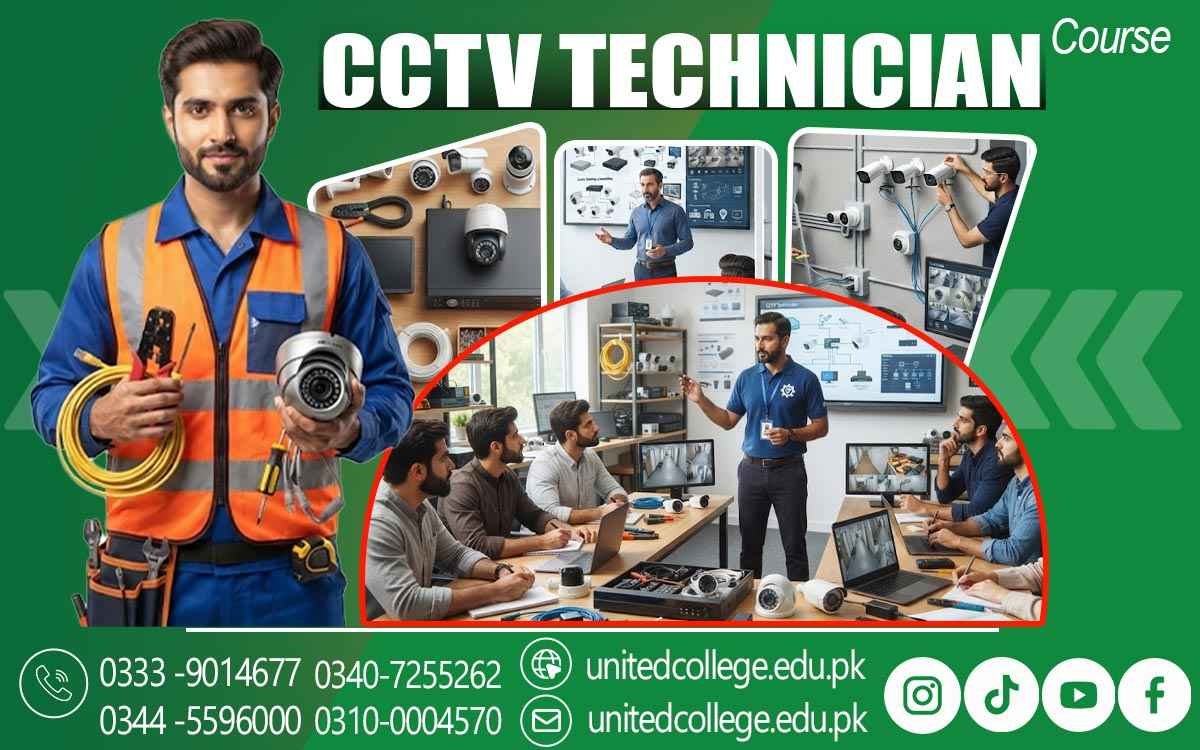

CCTV Technician Course in Pakpattan for CCTV Security Operations
Introduction to CCTV Equipment and Security Applications
CCTV technology is commonly used to monitor homes, offices, shops, schools, commercial buildings, and other locations where security observation is required. A surveillance system combines cameras with recording, power, display, and connection equipment to create a complete monitoring setup.
The CCTV Technician Course in Pakpattan helps learners understand the main components used in these systems. Students can explore CCTV cameras, DVRs, NVRs, monitors, cables, connectors, power supplies, and other equipment that technicians may handle during installation and maintenance.
Understanding how these components work together gives beginners a useful technical foundation. Learners can gradually become familiar with the purpose of each device and understand how a complete surveillance system is planned and operated.
Understanding Camera Designs and Their Functions
Different CCTV cameras are designed for different monitoring situations. Their shape, viewing range, installation method, and technical features can vary depending on where they are used. Learning these differences helps students understand how to select and handle suitable equipment.
Through the CCTV Technician Course in Pakpattan, learners can explore common camera designs and their basic functions. They can study factors such as image quality, viewing direction, indoor and outdoor applications, and the environmental conditions that may affect camera performance.
Understanding camera functions can also help students during installation. Instead of placing cameras randomly, learners can consider the required coverage, location, lighting, and viewing angle before deciding where equipment should be installed.
Exploring the Process of Installing Surveillance Cameras
CCTV installation involves several stages, including selecting a suitable position, preparing the mounting area, connecting the equipment, and testing the camera. Students can learn these basic steps to understand how a surveillance system is physically installed.
Learners can practice positioning cameras at appropriate locations and checking their viewing direction. They can also learn how to organize the equipment and connections so that the installation remains neat and accessible for future maintenance.
Testing is an important part of the installation process. Students can learn how to check the live camera feed after installation and make basic adjustments when the camera does not provide the required coverage or image quality.
Learning About CCTV Cables and Connection Methods
Cabling provides important connections between cameras, recording equipment, power sources, and network components. Students can learn about commonly used cables and connectors and understand their basic role within a CCTV system.
The CCTV Technician course can introduce learners to basic connection procedures and cable organization. Properly arranged wiring can make an installation easier to inspect and can help technicians locate connection problems during maintenance.
Students can also learn to check connections when a camera or recording device is not working correctly. Developing this basic understanding can help learners identify simple cable and power-related issues during routine CCTV work.
Studying DVR, NVR, and Video Storage Solutions
Recording equipment is an essential part of many surveillance systems because it allows camera footage to be stored and reviewed later. Students can learn about the basic functions of DVR and NVR systems and how they interact with CCTV cameras.
The CCTV Technician Course in Pakpattan can help learners understand the general differences between DVR and NVR solutions. They can explore how video signals are received, recorded, stored, and accessed through these systems.
Students can also learn basic concepts related to storage capacity and recorded footage. Understanding these functions can help learners become more familiar with the practical operation of CCTV recording systems.
Developing Knowledge of CCTV Viewing and Monitoring
Monitoring allows users to view live feeds from connected cameras and observe different areas through a centralized system. Students can learn how camera feeds are displayed and how technicians check the status of individual cameras.
Learners can explore basic methods for viewing one or several cameras through a monitoring device. They can also understand how a technician checks whether each camera is providing a clear and stable video feed.
Monitoring knowledge is useful during installation and maintenance. By checking live footage, learners can identify issues with camera positioning, connections, image quality, or system communication and then perform basic checks.
Identifying Basic Problems in Surveillance Equipment
CCTV equipment can experience different technical issues during regular use. Problems may involve power connections, cables, cameras, recording devices, network connections, or incorrect settings. Students can learn basic ways to identify these issues.
The CCTV Technician Course in Pakpattan can introduce learners to simple troubleshooting procedures. They can practice inspecting cables, checking power supplies, reviewing camera connections, and examining recording equipment when a system does not operate normally.
Developing a logical troubleshooting approach can make technical work more organized. Learners can understand the importance of checking individual components before deciding whether equipment needs adjustment, repair, or replacement.
Preparing for Routine CCTV Installation and Maintenance
CCTV technicians need practical knowledge to install, inspect, and maintain surveillance equipment. Training can help learners combine their understanding of cameras, wiring, recording systems, monitoring, and troubleshooting into practical technical skills.
The CCTV Technician Course in Pakpattan can provide a foundation for learners who want to understand the routine tasks involved in CCTV work. Students can gain familiarity with installation procedures and learn how different components are handled during system setup.
With regular practice and further learning, students can strengthen their technical confidence and expand their knowledge of surveillance technology. These skills can support basic CCTV installation, system checking, monitoring, and maintenance work in different environments.
Frequently Asked Questions (FAQs)
The CCTV Technician Course in Pakpattan provides learners with basic knowledge of CCTV cameras, installation, wiring, recording equipment, monitoring systems, and routine maintenance.
Students can learn about different CCTV camera designs and understand their basic functions, installation requirements, viewing areas, and suitable applications.
Yes, learners can study basic camera mounting, positioning, alignment, cabling, equipment connections, and testing procedures used during CCTV installation.
Yes, students can learn about commonly used cables, connectors, power connections, and basic cable-management techniques required for surveillance system installation.
Yes, beginners can learn how live camera feeds are viewed and monitored and how technicians check whether connected cameras are providing proper video.
Admission Open: Start Your Professional Journey Today!
Join United College of Technology and build a career with practical training, recognized certifications, and Gulf job support. Seats are limited.
Apply Now via WhatsAppContact Information
- Address: Rawalpindi: F-272 Main New Katarian Stop, Old IJP Road | Lahore Campus: Lahore, Pakistan
- Phone/WhatsApp: 0333-9014677 / 0344-5596000 / 0310-0004570 / 0301-5044340 / 0340-7255262
- Website: unitedcollege.edu.pk
















Leave a Comment