


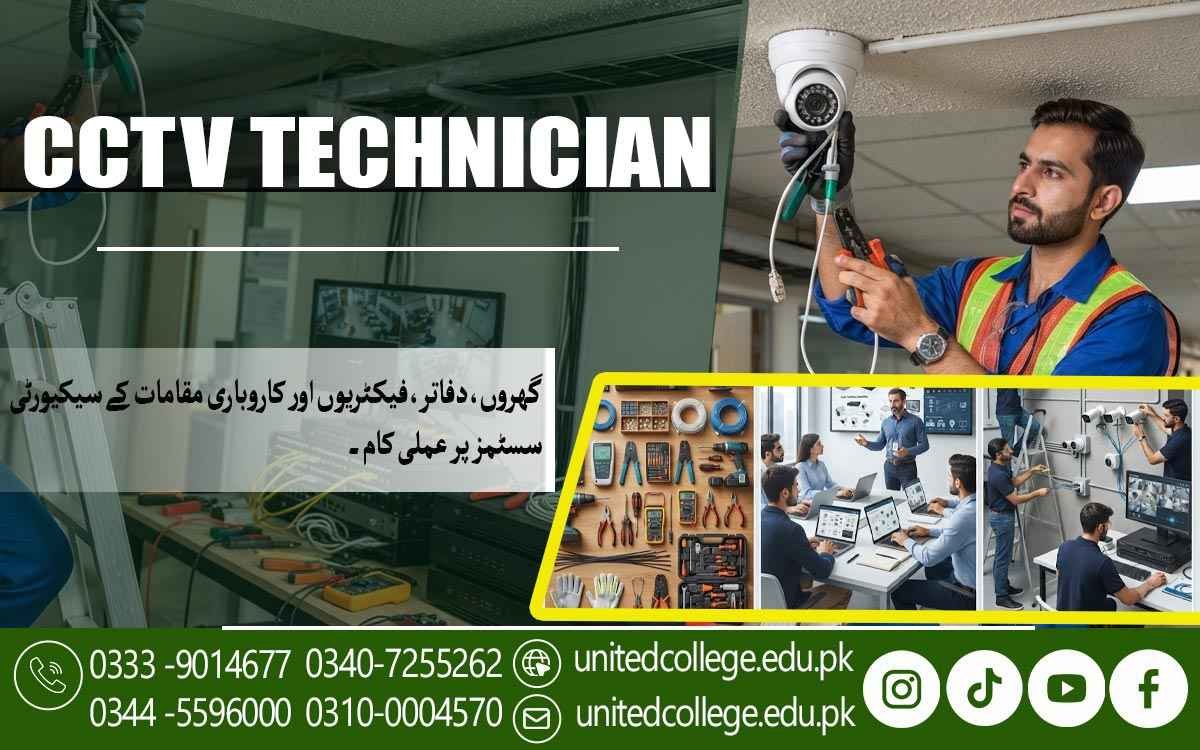

CCTV Technician Course in Poonch AJK for Camera Security Systems
Understanding Modern Surveillance Equipment and Systems
Modern surveillance systems combine cameras, recording devices, monitoring equipment, cables, power supplies, and other technical components. These devices work together to capture and manage video footage from different areas. Understanding their basic functions is important for anyone starting CCTV technician training.
The CCTV Technician Course in Poonch AJK introduces learners to the main equipment used in surveillance installations. Students can explore different types of cameras, DVRs, NVRs, monitors, cables, connectors, and supporting devices that form part of a complete CCTV setup.
Learning how these components interact can help beginners understand the complete working process of a surveillance system. This basic technical knowledge can also prepare learners for practical activities related to installation, monitoring, inspection, and maintenance.
Exploring CCTV Cameras for Different Security Needs
CCTV cameras are available in different designs and specifications to meet different surveillance requirements. The choice of camera can depend on factors such as location, lighting, viewing distance, coverage area, and environmental conditions.
Through the CCTV Technician Course in Poonch, AJK, learners can study common camera types and understand their general applications. Students can learn how indoor and outdoor environments may require different camera solutions and how camera features can influence their performance.
Understanding these differences can help students approach camera selection more carefully. Learners can develop awareness of the factors that should be considered before installing a camera in a particular area.
Learning Proper Methods for Camera Installation
Installing a CCTV camera involves more than simply attaching it to a wall or ceiling. The technician needs to consider the mounting location, viewing direction, cable route, power connection, and accessibility for future maintenance.
Students can learn basic installation procedures and practice identifying suitable locations for cameras. They can also study how to position cameras so that the required area can be observed without unnecessary obstructions.
After installation, testing is an important step. Learners can check the live video feed, review the camera angle, and make basic adjustments when the coverage is not suitable. These activities can help develop practical installation skills.
Studying Wiring, Connectors, and System Power
CCTV systems rely on suitable wiring and power connections for proper operation. Students can learn about commonly used cables, connectors, power supplies, and basic connection methods involved in surveillance installations.
The course can help learners understand how cables are connected between cameras, recording equipment, network devices, and power sources. They can also learn why organized wiring is important for a clean and maintainable installation.
Students can develop basic skills for checking connections when equipment does not work correctly. Understanding power and cable connections can help them identify simple issues before moving toward more advanced troubleshooting.
Exploring Recording Units and Video Management
Recording equipment allows CCTV footage to be stored and accessed when required. Students can learn how recording units fit into a surveillance system and why video storage is important for many security applications.
The CCTV Technician Course in Poonch AJK can introduce learners to DVR and NVR systems. They can study their basic functions and understand how these devices receive, record, and manage footage from connected cameras.
Learners can also explore basic playback and storage concepts. This knowledge can help students understand how recorded footage is reviewed and how recording equipment supports the overall operation of a CCTV system.
Learning Techniques for Effective CCTV Monitoring
CCTV monitoring allows users to observe live video from one or more cameras. Students can learn how monitoring screens are used to display camera feeds and how technicians check whether surveillance equipment is working properly.
Learners can become familiar with basic viewing arrangements and understand how multiple cameras may be monitored through a centralized system. They can also learn how to check image quality and camera status during routine inspections.
Monitoring skills can be useful during both installation and maintenance. If a camera feed is missing or unclear, a technician can begin checking possible causes such as camera positioning, power, cabling, or system connections.
Understanding Common Surveillance System Issues
Technical issues can occur in CCTV systems for several reasons. These may include loose connections, damaged cables, power problems, incorrect settings, network issues, or equipment faults. Learning basic fault identification can help students handle routine technical checks.
Students can learn a systematic approach to examining CCTV problems. They may inspect individual cameras, cables, power sources, recording units, and monitoring devices to determine where an issue may be occurring.
The CCTV Technician Course in Poonch AJK can help learners develop practical troubleshooting awareness. By learning to check components step by step, students can become more confident when dealing with common surveillance system issues.
Building Practical Expertise in CCTV Technology
CCTV technician work combines several technical areas, including camera installation, equipment handling, wiring, recording, monitoring, and basic troubleshooting. Developing knowledge in these areas can give learners a stronger foundation in surveillance technology.
The CCTV Technician Course in Poonch, AJK can provide learners with practical exposure to commonly used CCTV equipment and installation procedures. Students can strengthen their technical understanding by working with cameras, cables, recording systems, and monitoring equipment.
With regular practice and continued learning, students can build useful technical abilities for CCTV-related tasks. The knowledge gained can support basic installation, system inspection, monitoring, troubleshooting, and maintenance work in different surveillance environments.
Frequently Asked Questions (FAQs)
The CCTV Technician Course in Poonch AJK provides learners with practical knowledge of CCTV cameras, installation, wiring, recording systems, monitoring, troubleshooting, and basic maintenance.
Students can become familiar with surveillance cameras, DVRs, NVRs, monitors, cables, connectors, power supplies, and other components commonly used in CCTV installations.
Yes, beginners can start with the basic concepts of surveillance technology and gradually learn camera installation, equipment connections, monitoring, and maintenance procedures.
Yes, learners can study camera mounting, positioning, alignment, cable connections, power connections, and basic testing procedures involved in CCTV installation.
Yes, students can understand the basic functions of DVR and NVR recording systems and learn how they are used to record and manage CCTV footage.
Admission Open: Start Your Professional Journey Today!
Join United College of Technology and build a career with practical training, recognized certifications, and Gulf job support. Seats are limited.
Apply Now via WhatsAppContact Information
- Address: Rawalpindi: F-272 Main New Katarian Stop, Old IJP Road | Lahore Campus: Lahore, Pakistan
- Phone/WhatsApp: 0333-9014677 / 0344-5596000 / 0310-0004570 / 0301-5044340 / 0340-7255262
- Website: unitedcollege.edu.pk
















Leave a Comment