


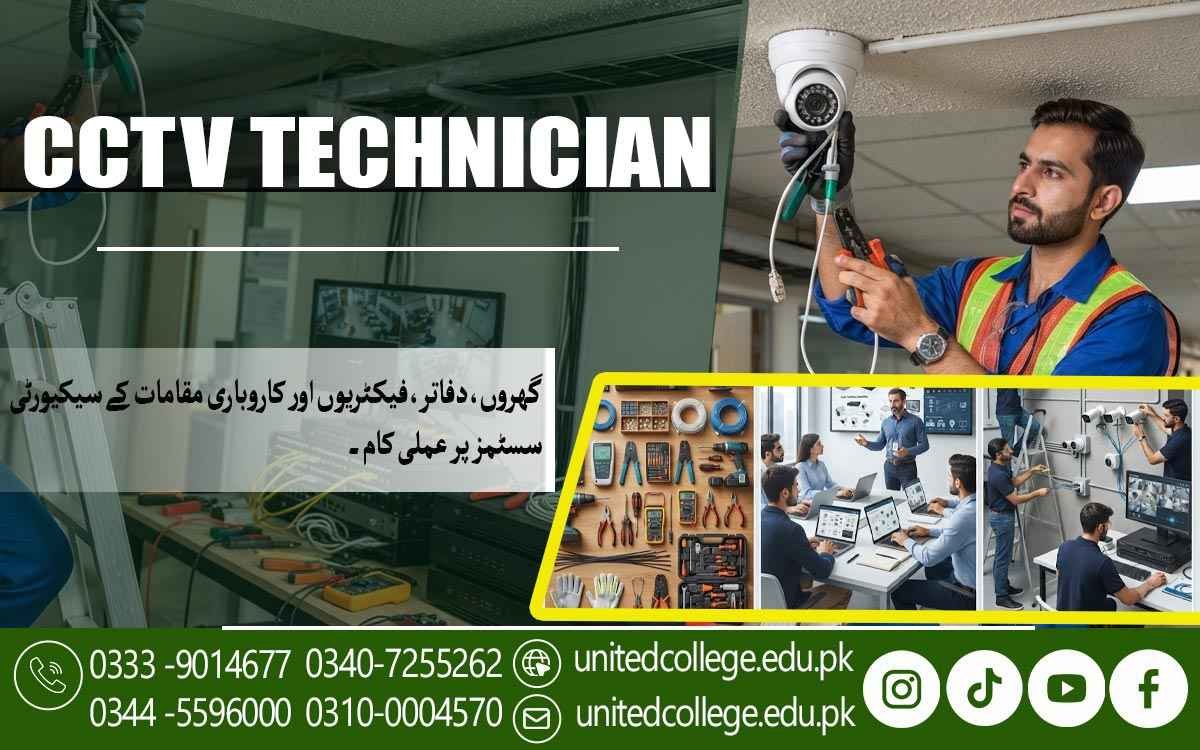

CCTV Technician Course in Sheikhupura: Master CCTV Installation Skills
Build Skills for Modern Surveillance Systems
A camera placed at the entrance of a shop can help monitor visitors. Cameras around a school can provide a view of important areas, while an office may use surveillance equipment to keep track of entrances, corridors, and workspaces. Today, CCTV systems are used in many different properties, making practical knowledge of surveillance technology increasingly useful.
However, installing a camera is not simply a matter of fixing it to a wall. A working CCTV setup involves camera selection, positioning, wiring, power, recording, configuration, and testing. The CCTV Technician Course in Sheikhupura offered by United College of Technology gives beginners a structured way to understand these practical areas and develop useful technical skills.
A Clear Look Inside Modern CCTV Systems
A CCTV system brings several pieces of equipment together to create video surveillance. Cameras capture images, cables or networks carry the required signals, and recording equipment stores the footage for later viewing. For someone new to the field, understanding this connection is an important first step.
A CCTV Technician Course in Sheikhupura can help learners recognize different components and understand the purpose of each one instead of treating the system as a single complicated machine. The same basic idea can be applied to different places. A small store may need only a few cameras, while a larger building may require several cameras, recording equipment, network connections, and carefully planned coverage.
From Camera Selection to the First Clear View
Choosing a CCTV camera should depend on where and how it will be used. Indoor areas, outdoor spaces, entrances, parking areas, and corridors can have different monitoring needs. Beginners can learn about common camera types, including analog cameras and IP cameras. They can also understand basic factors such as viewing distance, lighting, location, and the area that needs to remain visible.
This knowledge becomes useful during security camera installation. A technician who first studies the location can make more practical decisions about the equipment and its placement rather than installing cameras without proper planning.
The Small Details Behind a Successful Installation
A CCTV installation may appear straightforward until the technician starts dealing with cables and connections. A camera needs the correct connection, suitable power, and communication with the recording system. CCTV wiring training can introduce learners to cable routes, connectors, power arrangements, and basic connection practices. Neat cable management also makes the system easier to inspect when maintenance is required later.
Camera placement is equally important. A camera facing the wrong direction or positioned behind an obstacle may leave an important area outside its view. Learning to check angles and coverage helps beginners understand the practical side of CCTV installation.
DVR and NVR Bring the Footage Together
Recording equipment plays a central role in many surveillance setups. DVR and NVR are commonly used for storing and managing camera footage, although they are designed around different types of CCTV systems. A DVR is generally used with traditional analog camera systems, while an NVR commonly works with network-based cameras.
Beginners can learn this difference through practical examples rather than complicated technical definitions. Understanding recording equipment also introduces learners to storage, playback, monitor connections, and basic recording settings. These skills help connect the camera installation process with the actual use of recorded video.
Network Cameras Add a New Layer of Learning
Modern surveillance technology increasingly uses network connections. IP cameras can communicate through a network, which allows CCTV systems to support features such as remote viewing when correctly configured. For example, a business owner may want to check cameras from a phone while away from the premises.
A technician needs to understand the basic relationship between the camera, recording device, network, and viewing application. The CCTV Technician Course in Sheikhupura can introduce learners to these networking concepts in a beginner-friendly way. This creates a useful connection between traditional CCTV work and newer network-based surveillance systems.
Better Footage Starts With Better Configuration
Installing equipment is only part of the work. Cameras and recording devices also need suitable settings so that the system can perform according to the requirements of the location. Learners can explore basic camera configuration, recording settings, viewing options, and system checks. Image quality can also depend on factors such as lighting, camera angle, lens direction, and distance from the area being monitored.
This practical understanding helps students recognize that good surveillance is not always about using more cameras. Proper planning and configuration can make existing equipment more useful.
Troubleshooting Turns Technical Knowledge Into Real Skill
A CCTV system may sometimes develop a problem after installation. One camera might stop showing an image, recording may not work, a connection may become unstable, or a user may have difficulty accessing footage. Camera troubleshooting teaches learners to investigate these issues step by step.
They can check power, cables, connections, settings, recording equipment, and network-related factors instead of immediately assuming that the camera itself is damaged. CCTV maintenance follows the same practical approach. Regular inspection can help identify loose connections, damaged cables, storage concerns, or changes in camera performance before they become bigger problems.
Safe Installation Requires More Than Technical Knowledge
CCTV technicians may need to work with ladders, mounting tools, cables, electrical connections, and equipment installed at different heights. Safe working habits are therefore an important part of practical training. Beginners should learn to handle tools responsibly, avoid unsafe electrical work, secure mounted equipment properly, and keep installation areas organized.
Safety should remain part of the process rather than something considered after the work is finished. Hands-on practice can make these ideas easier to understand. Working through realistic installation tasks helps learners see how planning, tools, equipment, testing, and safety come together during actual CCTV work.
Keep Building Your Technical Skills Through Practice
CCTV technology continues to develop, from traditional camera systems to IP-based surveillance and network-connected equipment. For beginners, the most useful approach is to understand the basics first and then keep improving through practice. The CCTV Technician Course in Sheikhupura offered by United College of Technology provides a starting point for learners who want to explore camera installation, wiring, recording systems, configuration, monitoring, troubleshooting, and maintenance.
CCTV knowledge can also complement other technical subjects, especially areas involving networking, electronics, electrical work, and equipment maintenance. With regular practice and a willingness to learn newer surveillance technologies, students can continue expanding their technical abilities step by step.
Frequently Asked Questions (FAQs)
A beginner should have an interest in technical work and be ready to learn how surveillance equipment, connections, cameras, and recording systems function together.
Yes. Students can learn the basic role of storage devices and how recorded footage can be managed, reviewed, and retained within a surveillance setup.
The technician normally considers the required viewing area, available mounting point, lighting, cable route, power arrangement, and possible obstacles before installation.
Testing helps confirm that cameras display properly, connections are working, recording functions correctly, and the system provides the intended coverage.
Practical learning can give students experience with commonly used components and tools, helping them understand how equipment is handled during installation and checking.
CCTV work introduces learners to areas such as basic networking, wiring, electronics, equipment handling, and troubleshooting, which can support further technical study.
Admission Open: Start Your Professional Journey Today!
Join United College of Technology and build a career with practical training, recognized certifications, and Gulf job support. Seats are limited.
Apply Now via WhatsAppContact Information
- Address: Rawalpindi: F-272 Main New Katarian Stop, Old IJP Road | Lahore Campus: Lahore, Pakistan
- Phone/WhatsApp: 0333-9014677 / 0344-5596000 / 0310-0004570 / 0301-5044340 / 0340-7255262
- Website: unitedcollege.edu.pk
















Leave a Comment