


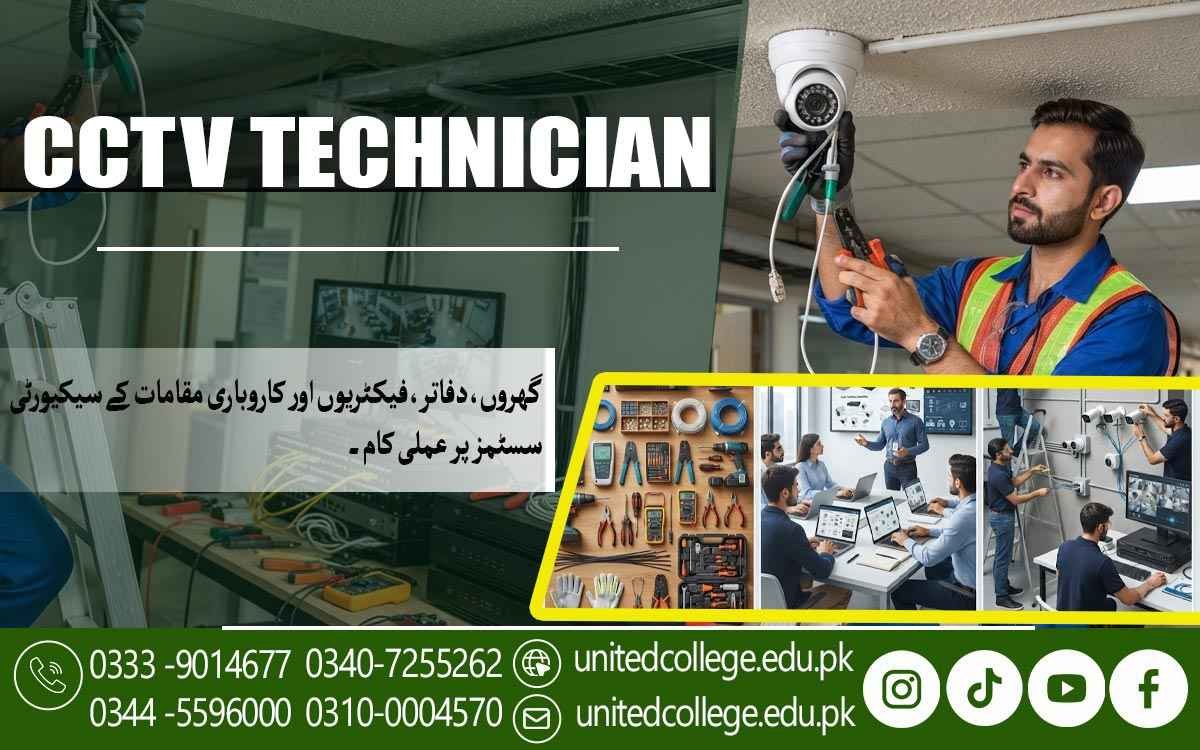

CCTV Technician Course in Talagang for Security System Expertise
Understanding the Fundamentals of CCTV Equipment
CCTV systems consist of different electronic and technical components that work together to provide video surveillance. Cameras capture footage, while other devices help transmit, display, record, and store that information. Understanding these basic components is important for anyone beginning a career in CCTV technology.
The CCTV Technician Course in Talagang introduces learners to commonly used surveillance equipment and explains the purpose of each component. Students can become familiar with cameras, recording devices, monitors, cables, connectors, power supplies, and other accessories used in CCTV installations.
Learning the function of each component can make practical work easier. Students can understand how different devices connect with one another and how a complete surveillance system operates. This foundation can help beginners develop confidence before moving toward more advanced technical tasks.
Exploring Camera Resolution and Viewing Angles
Camera quality is an important consideration when setting up a surveillance system. Resolution affects the clarity of captured footage, while the viewing angle determines how much of an area a camera can cover. Students can learn these basic concepts as part of their CCTV training.
Through the CCTV Technician Course in Talagang, learners can explore different camera specifications and understand why camera selection depends on the requirements of a particular location. They can study how lighting, distance, and the size of the monitoring area may influence camera performance.
Understanding viewing angles can also help students position cameras more effectively. By learning how different camera positions affect coverage, learners can develop a better approach to planning and installing surveillance equipment.
Learning Secure Methods of Camera Installation
Proper installation is essential for the reliable operation of a CCTV system. A camera needs to be mounted securely and positioned in a way that provides a useful view of the required area. Students can learn basic installation procedures and equipment-handling techniques.
Learners can practice selecting suitable mounting points and checking the camera's direction before finalizing the installation. They can also learn how to organize equipment and connections so that the completed setup remains neat and accessible for future maintenance.
Safety is another important part of technical installation work. Students can develop awareness of careful equipment handling, secure mounting, and proper connection procedures. This can help them approach CCTV installation tasks in a more organized manner.
Managing CCTV Cables and Electrical Connections
Cables and electrical connections form an important part of many CCTV installations. Cameras and recording equipment need suitable connections to operate correctly. Learners can study different types of cables, connectors, and power-related components used in surveillance systems.
The course can teach students how to identify basic connection requirements and organize cables during installation. Proper cable management can reduce confusion and make it easier to inspect or maintain the system later.
Students can also learn basic practices for checking connections when a camera or other device is not functioning correctly. Understanding the role of power and signal connections can help learners identify some common installation issues.
Studying Recording Devices and Storage Options
CCTV cameras capture video, but recording devices are responsible for storing footage for later access. Students can learn about different recording solutions and understand their role within a complete surveillance system.
The CCTV Technician Course in Talagang can introduce learners to DVR and NVR systems and their basic functions. Students can understand how these devices receive video from cameras and provide options for recording and reviewing surveillance footage.
Storage is another important consideration in CCTV systems. Learners can explore the basic concept of video storage and understand why recording requirements may differ depending on the number of cameras and the desired recording period.
Understanding Remote and Local Camera Monitoring
Monitoring allows users to view camera feeds and observe different areas through a centralized surveillance system. Students can learn how cameras are displayed through monitors and other compatible viewing devices.
Modern CCTV systems can also support remote viewing in suitable configurations. The CCTV Technician Course in Talagang can introduce learners to the basic concepts behind local and network-based monitoring without requiring them to begin with advanced technical knowledge.
Learners can also practice checking live camera feeds after installation. This allows them to identify whether cameras are displaying properly and whether the selected viewing position provides suitable coverage.
Handling Common CCTV Installation Problems
CCTV systems can develop different types of problems during installation or regular operation. These may include missing video, loose connections, power issues, cable faults, or problems with recording equipment. Basic troubleshooting knowledge can help technicians approach such issues systematically.
Students can learn simple inspection methods for checking cameras, cables, power connections, and recording devices. Instead of immediately replacing equipment, they can first examine the system to identify where the problem may be located.
Developing troubleshooting skills can improve a learner's practical ability. With regular practice, students can become more familiar with common CCTV faults and learn how to perform basic checks before seeking more advanced technical assistance.
Developing Skills for Surveillance System Maintenance
CCTV maintenance helps keep surveillance equipment operating properly over time. Regular inspection can help identify issues with cameras, cables, recording devices, and other components before they become more difficult to manage.
Students can learn basic maintenance activities such as checking connections, inspecting camera positioning, reviewing video quality, and examining recording equipment. These tasks can help learners understand how CCTV systems are maintained after installation.
The CCTV Technician Course in Talagang can provide a foundation for developing practical surveillance technology skills. With continued practice, learners can strengthen their understanding of installation, monitoring, troubleshooting, and maintenance and become better prepared for technical work involving CCTV systems.
Frequently Asked Questions (FAQs)
The CCTV Technician Course in Talagang is designed to teach learners about CCTV cameras, installation, wiring, recording equipment, monitoring systems, and basic maintenance procedures.
Students can become familiar with cameras, DVRs, NVRs, monitors, cables, connectors, power supplies, and other equipment commonly used in surveillance installations.
Yes, learners can study basic camera mounting, positioning, alignment, connections, and testing procedures to understand how CCTV cameras are installed correctly.
Camera resolution affects the clarity of recorded footage. Students can learn how resolution, viewing angles, lighting, and camera position can influence surveillance quality.
Yes, the course can introduce learners to commonly used CCTV cables, connectors, power connections, and basic cable-management practices.
Admission Open: Start Your Professional Journey Today!
Join United College of Technology and build a career with practical training, recognized certifications, and Gulf job support. Seats are limited.
Apply Now via WhatsAppContact Information
- Address: Rawalpindi: F-272 Main New Katarian Stop, Old IJP Road | Lahore Campus: Lahore, Pakistan
- Phone/WhatsApp: 0333-9014677 / 0344-5596000 / 0310-0004570 / 0301-5044340 / 0340-7255262
- Website: unitedcollege.edu.pk
















Leave a Comment