


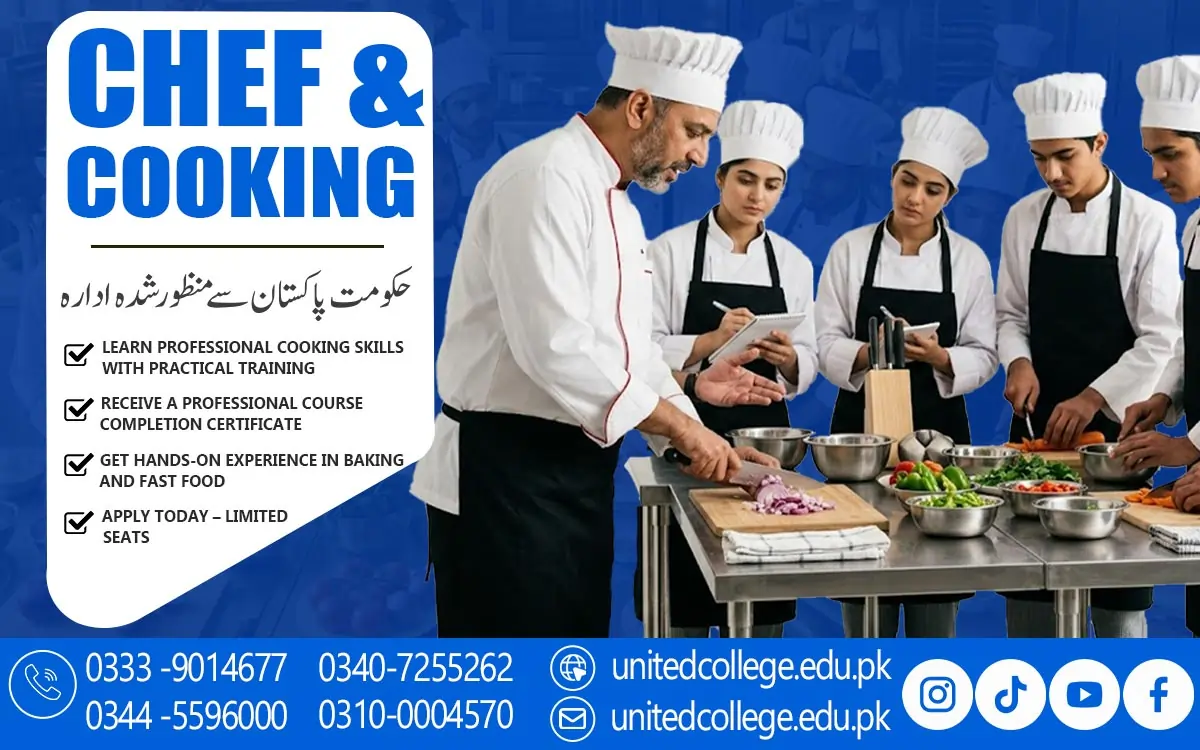

Chef and Cooking Course in Bhakkar for Commercial Kitchen Expertise
Introduction to Practical Chef Training
Chef and Cooking Course in Bhakkar offers practical training for individuals who want to learn the fundamentals of professional culinary work. The course introduces learners to kitchen routines, food preparation, cooking procedures, ingredient handling, and the responsibilities of a chef.
Students can begin with basic cooking activities before moving toward more structured kitchen tasks. They learn how to prepare ingredients, follow recipes, use kitchen equipment, and maintain an organized working area during food preparation.
The training can benefit beginners, students, cooking enthusiasts, and individuals interested in food-related careers. Practical learning gives participants an opportunity to improve their confidence and understand how professional kitchens operate.
Learning Core Techniques Used by Professional Cooks
Professional cooks use different techniques depending on the ingredients and type of dish being prepared. Students learn fundamental methods such as boiling, frying, grilling, steaming, roasting, sautéing, and simmering.
Learners practice controlling heat and cooking time to achieve suitable results. They also learn how seasoning, ingredient quantity, and preparation methods can affect the flavor and texture of a dish.
Recipe consistency is another important part of culinary work. Students learn to follow preparation steps carefully and organize ingredients before cooking. These habits can help them produce dishes more efficiently in professional kitchen environments.
Preparing Different Foods with Proper Methods
The Chef and Cooking course provides learners with opportunities to work with different categories of food. Students can practice preparing vegetables, meat, poultry, rice, sauces, soups, snacks, and other commonly served dishes.
Different foods require different preparation methods. Learners discover how ingredients should be cleaned, cut, seasoned, marinated, and cooked according to the recipe. This knowledge helps them become more flexible when handling different kitchen assignments.
Students also learn the importance of timing during food preparation. Coordinating multiple ingredients and cooking stages can help ensure that meals are ready at the appropriate time. This is particularly useful when working in restaurants and catering environments.
Exploring Baking, Pastry, and Dessert Making
Baking and pastry preparation provide learners with additional culinary experience. Students can explore the preparation of breads, cakes, biscuits, pastries, cookies, and different types of desserts.
Accurate measurement is essential when working with bakery ingredients. Learners practice measuring flour, sugar, eggs, fats, and other ingredients while following suitable preparation procedures. They also learn how oven temperature and baking time affect the final product.
Dessert preparation can encourage creativity through decoration and presentation. Chef and Cooking Course Students can practice basic finishing techniques and learn how to make sweet dishes visually appealing. These abilities may be useful in bakeries, cafés, hotels, restaurants, and catering businesses.
Applying Hygiene Rules in Food Preparation
Food hygiene is an important responsibility in every professional kitchen. Students learn the importance of clean hands, sanitized surfaces, clean utensils, and proper handling of ingredients throughout the cooking process.
Learners also understand how to reduce the risk of cross-contamination. Raw food and ready-to-eat products need appropriate handling and storage. Following these basic principles can help maintain better food quality and kitchen cleanliness.
Personal hygiene and workplace cleanliness are also emphasized. Students learn to keep their clothing, tools, preparation areas, and equipment clean. Developing these habits can help them meet the expectations of professional food service environments.
Understanding Portioning and Food Presentation
Portion control is an important part of professional food service. Students learn how to serve suitable quantities while considering the type of dish and customer requirements. Consistent portions can also help kitchens manage ingredients more effectively.
Food presentation is another area of culinary training. Learners explore basic plating techniques involving arrangement, spacing, garnishing, and suitable plate selection. They practice making dishes look clean and appealing without unnecessary decoration.
A well-presented meal can improve the customer's overall dining experience. Students learn that presentation should complement the food and maintain a professional appearance. These skills can be particularly useful in restaurants, hotels, cafés, and catering services.
Working Efficiently in a Commercial Kitchen
Commercial kitchens often require staff to complete several tasks within limited time. Students learn how preparation, cooking, plating, cleaning, and storage activities can be organized to maintain a smooth workflow.
Time management helps kitchen workers complete orders efficiently. Learners practice preparing ingredients in advance and prioritizing tasks according to cooking times and service requirements.
Teamwork is also essential in a busy kitchen. Students become familiar with how cooks, assistants, chefs, and other staff coordinate their responsibilities. Good communication and cooperation can help reduce delays and maintain an organized working environment.
Preparing for Careers in Restaurants and Catering
A chef and Cooking Course in Bhakkar can provide a useful foundation for individuals interested in restaurant and catering careers. Learners can explore opportunities in restaurants, hotels, cafés, bakeries, catering companies, and other food service establishments.
Entry-level kitchen roles can provide valuable workplace experience. Individuals may begin with preparation or kitchen support duties and gradually develop their abilities through practical work. Continued learning can help them take on more responsibilities over time.
Catering can also provide opportunities for culinary workers and entrepreneurs. Individuals with suitable cooking knowledge may work with catering teams or consider starting a small food service venture. With experience, creativity, and good planning, culinary training can support different professional pathways.
Frequently Asked Questions (FAQs)
The course covers practical chef training, professional cooking techniques, food preparation, baking, pastry and desserts, hygiene, portion control, food presentation, and commercial kitchen practices.
Yes, beginners can enroll and learn cooking from the fundamentals. Practical training helps learners gradually become familiar with recipes, ingredients, kitchen tools, and cooking procedures.
Yes, learners can practice preparing bakery and dessert items while learning basic techniques related to measuring, mixing, baking, decoration, and presentation.
Proper portioning helps maintain consistency and manage ingredients, while attractive presentation improves the visual appeal of meals and contributes to a better dining experience.
Learners can explore opportunities in restaurants, hotels, cafés, bakeries, catering companies, and commercial kitchens. They can also consider developing a small food-related business.
Admission Open: Start Your Professional Journey Today!
Join United College of Technology and build a career with practical training, recognized certifications, and Gulf job support. Seats are limited.
Apply Now via WhatsAppContact Information
- Address: Rawalpindi: F-272 Main New Katarian Stop, Old IJP Road | Lahore Campus: Lahore, Pakistan
- Phone/WhatsApp: 0333-9014677 / 0344-5596000 / 0310-0004570 / 0301-5044340 / 0340-7255262
- Website: unitedcollege.edu.pk
















Leave a Comment