


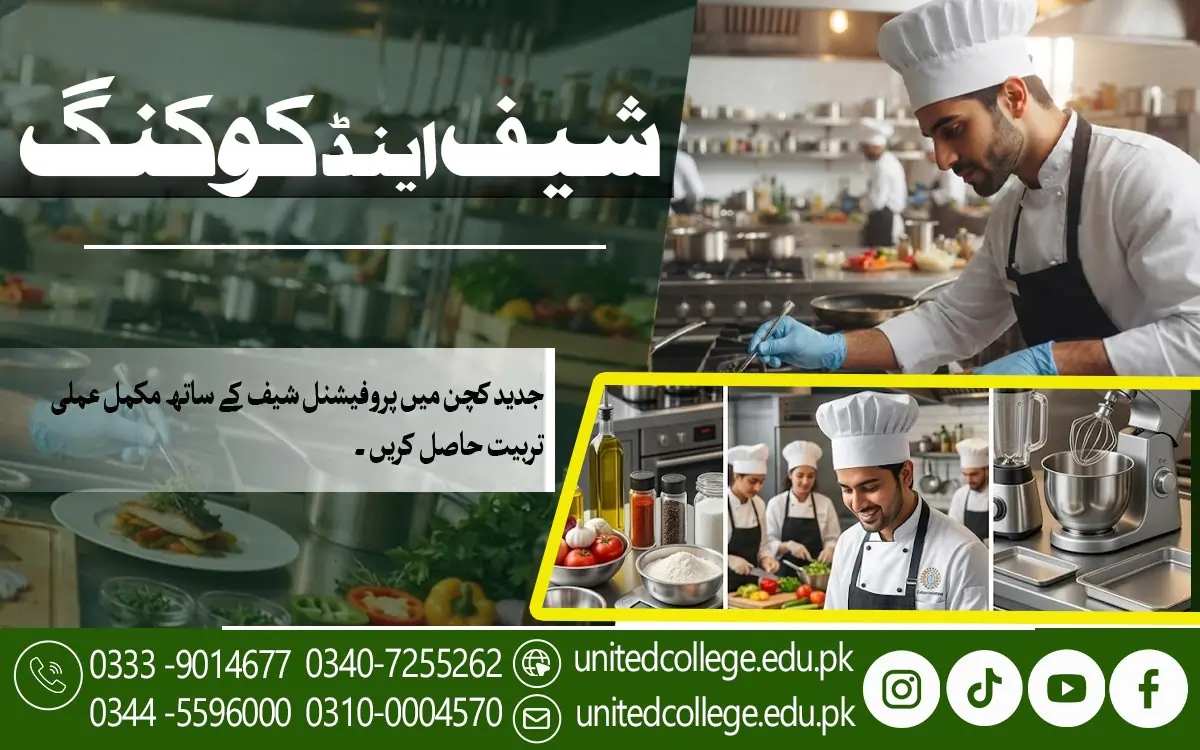

Chef and Cooking Course in Poonch AJK for Food Service Opportunities
Discovering the Fundamentals of Culinary Education
Chef and Cooking Course in Poonch, AJK, provides learners with an opportunity to understand the basic concepts of culinary education. The course introduces students to food preparation, cooking procedures, kitchen equipment, ingredient selection, and essential practices followed in professional food environments.
Learners are gradually introduced to different stages of culinary work. They can understand how ingredients are selected, prepared, cooked, presented, and served. This step-by-step approach makes it easier for beginners to understand the responsibilities involved in professional cooking.
The training can be useful for students, beginners, cooking enthusiasts, and individuals planning to enter the food and hospitality sector. Practical activities allow learners to become familiar with kitchen routines while developing a better understanding of culinary work.
Learning Step-by-Step Food Preparation
Proper food preparation begins before cooking starts. In the Chef and Cooking Course in Poonch, AJK, students learn how to clean, peel, cut, slice, chop, measure, and organize ingredients according to the requirements of different recipes. These basic preparation techniques help learners work more confidently and efficiently in the kitchen.
Learners also practice arranging ingredients and kitchen tools before beginning a cooking task. Preparing everything in advance can make the cooking process more organized and help reduce unnecessary delays. This practical approach allows students to understand how professional cooks prepare their workstations before starting the actual cooking process.
As students gain experience, they can become more comfortable with different preparation techniques. They learn to follow recipes in sequence and understand how preparation quality can influence the taste, texture, and appearance of the finished dish.
Practicing Regional and Popular Cuisine
Regional cuisine introduces learners to food traditions and ingredients commonly used in local cooking. Students can explore popular dishes while understanding how spices, herbs, vegetables, meat, and other ingredients are combined to create distinctive flavors.
The course can also expose learners to commonly served dishes from broader culinary traditions. Practicing different recipes allows students to understand variations in cooking methods, seasoning, preparation time, and presentation.
Working with a variety of cuisines can make learners more adaptable in professional kitchens. Restaurants and catering businesses may serve different types of food, so familiarity with varied recipes can be useful when handling changing menu requirements.
Exploring Professional Baking Techniques
Baking is an important area within culinary education. Students can learn basic techniques for preparing breads, cakes, biscuits, pastries, cookies, and selected dessert items.
Learners practice important baking procedures such as measuring ingredients, mixing mixtures, preparing baking trays, setting suitable oven temperatures, and monitoring baking time. Following each stage carefully can help improve the consistency of bakery products.
Professional baking also involves attention to finishing and appearance. Students can explore basic decoration, shaping, and presentation methods. These techniques can be valuable for learners interested in bakeries, cafés, hotels, restaurants, or catering services.
Understanding Food Quality and Hygiene
Food quality depends on the condition of ingredients and the way they are handled during preparation. In the Chef and Cooking Course in Poonch, AJK, students learn how to identify suitable ingredients and understand the importance of freshness, proper storage, and careful handling. This knowledge helps learners maintain better food quality throughout the preparation process.
Hygiene is equally important when preparing food for customers. Through the Chef and Cooking Course in Poonch, AJK, learners are introduced to clean hands, sanitized surfaces, properly washed utensils, and suitable food handling procedures. These practices can help maintain a hygienic cooking environment and prepare students for professional kitchen responsibilities.
Students also learn about responsible kitchen habits, including separating raw and cooked foods, cleaning equipment, and managing waste properly. Developing these routines can help learners understand the standards expected in professional food service workplaces.
Developing Creative Plating Approaches
Plating gives chefs an opportunity to present food in an attractive and organized manner. Students learn basic principles related to portion size, plate selection, spacing, color, garnishing, and arrangement.
Learners can practice different ways of placing food components on a plate. They discover how the arrangement of ingredients can influence the visual appearance of a dish while keeping the presentation practical and clean.
Creative plating can be particularly useful in restaurants, hotels, cafés, and event catering. A well-presented meal can create a positive impression on customers and contribute to the overall dining experience.
Learning Kitchen Organization and Team Practice
A professional kitchen requires proper organization to keep daily activities running smoothly. Students learn how ingredients, utensils, equipment, preparation areas, and finished dishes can be managed efficiently.
Teamwork is another important part of kitchen operations. Learners become familiar with how chefs, cooks, assistants, and other staff members coordinate their responsibilities during food preparation and service.
Good communication can help kitchen teams avoid confusion and complete tasks on time. Students learn the importance of following instructions, supporting team members, and keeping their assigned work areas organized throughout the working process.
Exploring Opportunities in the Food Service Industry
Chef and Cooking Course in Poonch, AJK, can provide a practical foundation for individuals interested in the food service industry. After completing their training and gaining experience, learners can explore opportunities in restaurants, hotels, cafés, bakeries, catering businesses, and other food establishments.
Individuals can also choose an area of culinary work that matches their interests. Some may focus on general cooking, while others may develop further abilities in baking, pastry, regional cuisine, desserts, or restaurant food preparation.
Self-employment can be another option for people with culinary knowledge. Learners may consider catering, home-based food services, bakery products, or specialty meal preparation. With continued practice and suitable business planning, culinary education can support different career and business opportunities.
Frequently Asked Questions (FAQs)
The course covers culinary fundamentals, food preparation, regional and popular cuisine, baking techniques, food quality, hygiene, creative plating, kitchen organization, and teamwork.
Yes, beginners can join the course. The training follows a step-by-step approach, allowing learners to understand basic cooking concepts before progressing to practical kitchen activities.
Yes, learners can practice regional and popular recipes while understanding different ingredients, spices, preparation methods, cooking procedures, and presentation styles.
Yes, students can learn basic baking techniques and practice preparing items such as cakes, breads, biscuits, pastries, cookies, and selected desserts.
Learners can explore opportunities in restaurants, hotels, cafés, bakeries, catering services, and other food establishments. They can also consider starting a small food-related business.
Admission Open: Start Your Professional Journey Today!
Join United College of Technology and build a career with practical training, recognized certifications, and Gulf job support. Seats are limited.
Apply Now via WhatsAppContact Information
- Address: Rawalpindi: F-272 Main New Katarian Stop, Old IJP Road | Lahore Campus: Lahore, Pakistan
- Phone/WhatsApp: 0333-9014677 / 0344-5596000 / 0310-0004570 / 0301-5044340 / 0340-7255262
- Website: unitedcollege.edu.pk
















Leave a Comment