


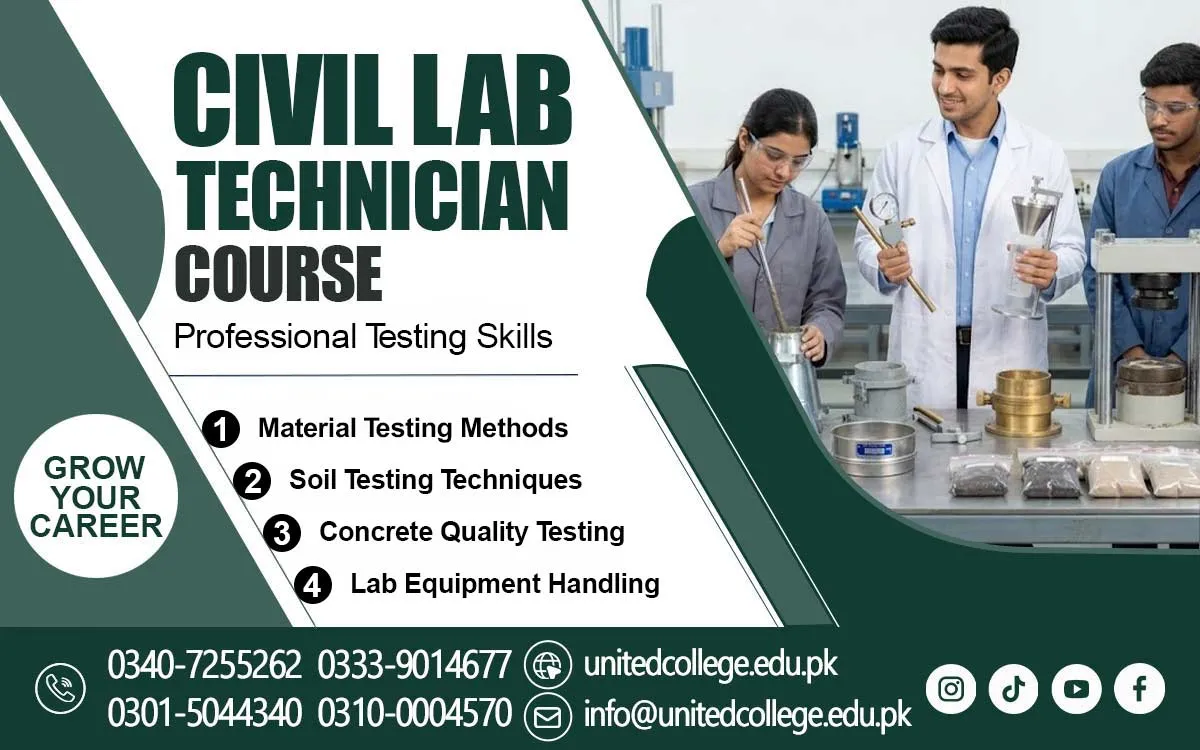

Civil Lab Technician Course in Haripur – Build Technical Skills
The Role of Civil Lab Technicians in Modern Construction Projects
Every construction project depends on the quality of the materials used during building work. Before concrete is poured, roads are developed, or foundations are prepared, different materials need to be checked to ensure they meet the required standards. Civil lab technicians support this process by collecting samples, performing laboratory tests, recording results, and helping engineers understand material quality. Their work is important because even materials that look strong may have hidden weaknesses. For example, two samples of concrete may appear similar, but their strength can be different when tested with proper equipment.
A trained technician helps identify such differences through construction material testing. In Haripur, where residential construction, commercial buildings, roads, and infrastructure projects require reliable materials, civil laboratory skills can be useful in different working environments. Students joining the Civil Lab Technician Course in Haripur can learn about the connection between laboratory testing and construction quality. They can also understand how technicians work with engineers, site supervisors, and quality control teams. This knowledge helps beginners recognise that civil lab work is not simply about using machines; it also involves careful observation, correct measurements, and responsible handling of test results.
Practical Responsibilities Inside a Civil Engineering Laboratory
A civil lab technician performs several important tasks before, during, and after material testing. One of the first responsibilities is collecting samples from construction sites or receiving them from site teams. These samples may include soil, cement, sand, gravel, concrete, and bricks. The technician must label and prepare each sample correctly so that testing results remain organised and reliable. After preparation, the technician follows specific testing procedures using suitable instruments. For example, a concrete sample may be placed inside a compression testing machine to measure its ability to withstand pressure. Soil samples may be tested to understand their moisture content, density, and compaction characteristics.
Technicians also record measurements, maintain laboratory registers, clean equipment, and prepare basic testing reports. Accuracy is extremely important because engineers may use these reports when making construction decisions. During the Civil Lab Technician Course in Haripur, beginners can become familiar with these responsibilities and understand the working environment of a material testing laboratory. They can learn the importance of following instructions, checking equipment, maintaining clean work areas, and avoiding mistakes during sample preparation. These responsibilities require patience and attention to detail because incorrect measurements or poorly handled samples can affect the final testing results.
Essential Construction Material Testing Skills for Students
Construction materials have different properties, so each material requires a suitable testing method. Soil testing helps engineers understand whether the ground can support a building or road. A soil compaction test checks how effectively soil can be compressed to achieve a suitable density. Concrete testing helps assess the quality and strength of concrete used in structural work. The concrete slump test is commonly used to check its workability, which means how easily fresh concrete can be mixed, placed, and handled. Cement testing examines important properties such as consistency and setting time. Aggregate testing checks materials such as sand and crushed stone for size, grading, and other quality characteristics.
Brick testing helps assess strength and water absorption, while bitumen testing is useful in road construction. Students also learn about field density tests, which help check the compaction of soil at construction sites. The Civil Lab Technician Course in Haripur introduces learners to these construction testing procedures and their practical importance. Understanding these tests allows students to see how engineers identify unsuitable materials before they become part of a construction project. For example, if a soil sample does not meet the required compaction level, the site team may need to improve the soil before continuing with further work.
Laboratory Equipment and Instruments Used in Material Testing
A civil engineering laboratory contains different instruments designed to measure the properties of construction materials. Learning how to handle these tools is an important part of developing civil lab technician skills. A compression testing machine is used to measure the compressive strength of concrete and certain other materials. A weighing balance helps technicians measure sample weights accurately, while laboratory sieves are used to separate soil and aggregate particles according to their sizes. A slump cone is used during the concrete slump test to check the workability of fresh concrete. Measuring cylinders help measure liquids, and moisture-testing equipment is used to examine the water content of soil and other samples. Other tools may include moulds, trays, thermometers, measuring scales, and sample containers.
Each instrument has a specific purpose, so students need to understand its correct operation and handling requirements. During the Civil Lab Technician Course in Haripur, learners can develop familiarity with commonly used laboratory testing equipment and understand the importance of following testing instructions. For instance, an incorrectly prepared concrete sample may produce an unreliable strength result even when the machine is working properly. Therefore, equipment handling, sample preparation, calibration awareness, and accurate measurements are important parts of laboratory training. Regular practice helps beginners become more comfortable with these instruments.
Quality Control Procedures and Accurate Laboratory Reporting
Quality control is an essential part of construction because it helps ensure that materials meet the required specifications before being used in a project. A civil lab technician supports quality control by examining samples and recording their test results. During the Civil Lab Technician Course, students learn how to carry out these procedures through material inspection and proper sample collection. The technician checks sample identification, prepares the material according to the relevant procedure, and performs the required test. Once testing is complete, the readings are recorded carefully for further review. For example, when concrete is tested for compressive strength, the technician records the relevant measurements and calculates the result using the appropriate method.
Testing reports should be clear, organised, and based on actual observations rather than assumptions. Laboratory safety is equally important during this process. Technicians may work with heavy equipment, cement dust, chemicals, hot materials, and concrete samples, so they should follow safety instructions and use suitable personal protective equipment such as gloves, safety shoes, and protective eyewear. Civil Engineering Laboratory training also introduces learners to responsible working habits, including maintaining clean workstations, handling samples carefully, and storing equipment properly. These practices help reduce testing errors and create a safer laboratory environment.
The Importance of Material Testing in Buildings, Roads, and Bridges
Material testing is not limited to one type of construction project. It plays an important role in residential buildings, commercial structures, highways, bridges, drainage systems, and other infrastructure developments. During building construction, soil testing helps determine whether the ground is suitable for the planned foundation. Concrete testing provides information about the strength and quality of concrete used in columns, beams, slabs, and other structural elements. In road construction, soil compaction and aggregate testing help assess the materials used in different road layers. Bitumen testing is also important because bitumen is commonly used in asphalt road surfaces.
Bridge construction requires careful checking of concrete and other structural materials because these structures must withstand heavy loads and changing environmental conditions. A civil lab technician supports these projects by performing tests and providing accurate results to the engineering team. For students interested in construction quality control, understanding these applications makes laboratory training more meaningful. The Civil Lab Technician Course in Haripur helps beginners explore the relationship between material properties and construction performance. It also introduces the importance of following testing standards and project specifications.
Technical Knowledge and Practical Learning at United College of Technology
Learning civil laboratory work requires more than memorising the names of different tests. Students need to understand construction materials, measurements, testing procedures, and the purpose of each laboratory activity. For example, knowing how to perform a soil test is useful, but understanding why soil density matters during foundation preparation makes that knowledge more practical. Similarly, learning the concrete slump test becomes more meaningful when students understand how concrete workability affects placement and handling at a construction site. United College of Technology (UCT) offers the Civil Lab Technician Course in Haripur for learners interested in developing knowledge of material testing and civil laboratory procedures.
The training focuses on helping beginners become familiar with important concepts and practical tasks related to this field. Students can learn about sample collection, equipment handling, material inspection, technical measurements, and basic testing reports. They can also develop an understanding of laboratory discipline and safe working practices. Practical learning is particularly useful for fresh students who have limited experience with construction materials and testing instruments. By practising different procedures and reviewing their results, learners can gradually improve their confidence and become more comfortable with the responsibilities of a civil laboratory environment.
Career Opportunities in Construction and Material Testing Fields
Civil lab technicians can work in different areas of the construction and engineering industry, depending on their knowledge, practical skills, and experience. Construction companies may require technicians to assist with material inspection and quality control activities. Material testing laboratories need staff who can prepare samples, operate testing equipment, and maintain records. Engineering firms may also work with laboratory technicians when checking soil conditions, concrete strength, and aggregate quality for different projects. Some technicians work on construction sites where they help collect samples and coordinate testing activities with engineers and site supervisors. Road development and infrastructure projects may also involve material testing as part of their quality control procedures.
The Civil Lab Technician Course in Haripur can help beginners understand these possible career pathways and the skills commonly required in such workplaces. However, employment opportunities depend on several factors, including practical ability, educational background, experience, and employer requirements. Completing a training course does not automatically guarantee a job, but relevant technical knowledge can provide a useful starting point for further learning and professional development. Students can strengthen their understanding by gaining supervised practical experience, improving their measurement skills, learning to prepare clear reports, and becoming familiar with commonly used testing procedures.
Building Confidence Through Regular Laboratory Practice
Working in a civil laboratory becomes easier when students have regular opportunities to practise different testing procedures. At the beginning, a weighing balance, compression testing machine, soil sample, or slump cone may seem unfamiliar. However, repeated practice helps learners understand the purpose of each instrument and the correct steps involved in testing. For example, a student who practises preparing soil samples can gradually become more confident in measuring moisture content and understanding compaction results. Similarly, repeated concrete testing activities can improve familiarity with sample preparation, machine operation, and result recording.
These small learning habits can make a significant difference in technical work. The Civil Lab Technician Course in Haripur at United College of Technology provides a learning opportunity for beginners who want to explore construction material testing and understand the responsibilities of civil laboratory technicians. With consistent effort, proper guidance, and practical learning, students can build a stronger foundation in this field. For anyone interested in civil engineering, construction quality control, and laboratory testing, developing these skills can be a meaningful step towards understanding the technical side of the construction industry.
Frequently Asked Questions (FAQs)
It is a technical training course that teaches students how to test construction materials such as soil, cement, concrete, bricks, and aggregates.
Students learn soil testing, concrete testing, cement testing, aggregate testing, laboratory equipment handling, and construction quality control.
Yes, beginners and fresh learners interested in civil engineering and construction material testing can join and develop basic technical knowledge.
Common equipment includes compression testing machines, weighing balances, laboratory sieves, slump cones, measuring cylinders, and soil testing instruments.
Soil testing helps engineers understand soil strength, moisture content, and compaction to assess its suitability for construction projects.
Admission Open: Start Your Professional Journey Today!
Join United College of Technology and build a career with practical training, recognized certifications, and Gulf job support. Seats are limited.
Apply Now via WhatsAppContact Information
- Address: Rawalpindi: F-272 Main New Katarian Stop, Old IJP Road | Lahore Campus: Lahore, Pakistan
- Phone/WhatsApp: 0340-7255262 / 0333-9014677 / 0301-5044340 / 0310-0004570 / 051-8770756
- Website: unitedcollege.edu.pk
















Leave a Comment