


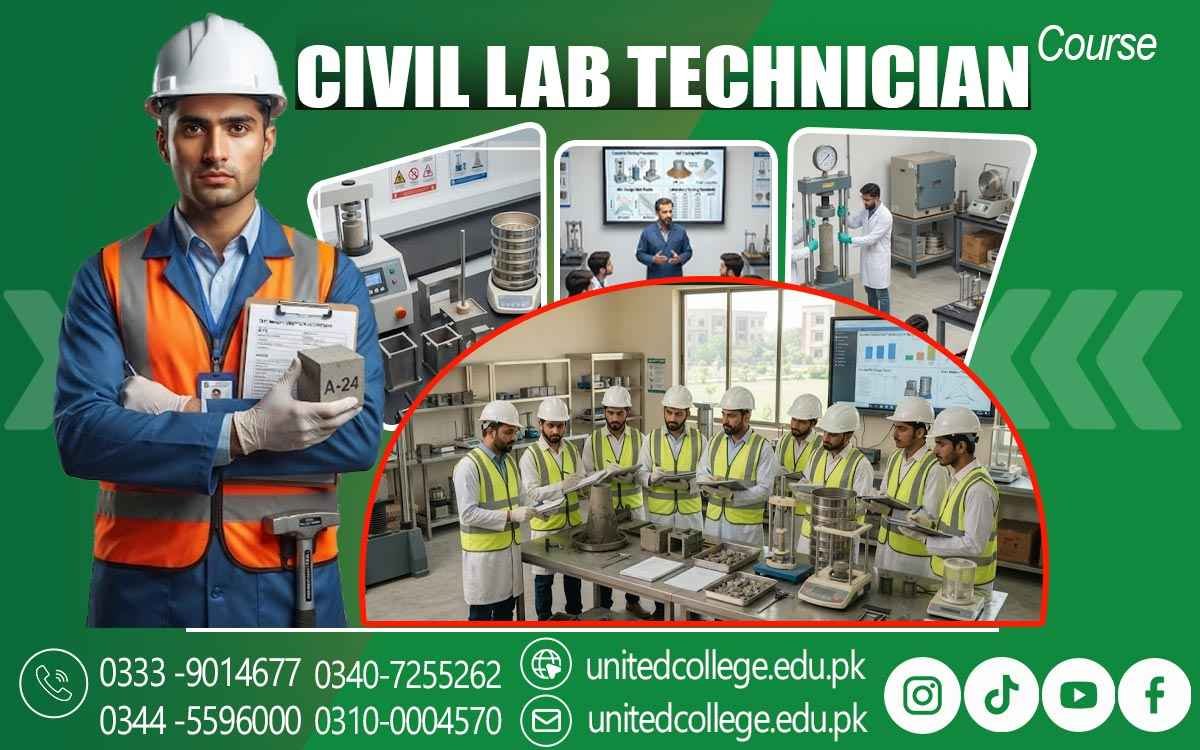

Civil Lab Technician Course in Pakpattan for Lab Techniques
Exploring the Fundamentals of Civil Laboratory Testing
Civil laboratory testing is an important part of construction and civil engineering work. Before construction materials are used in buildings, roads, bridges, foundations, and other structures, they need to be checked through proper testing procedures. Laboratory testing helps technical teams understand the basic properties and quality of different materials.
The Civil Lab Technician Course in Pakpattan introduces students to the fundamental concepts of civil laboratory work. Students learn how samples are received, prepared, tested, observed, and recorded. They also become familiar with the importance of accuracy and proper procedures during laboratory activities.
Understanding these fundamentals helps students develop a better technical approach toward construction material testing. They learn why every testing step needs attention and how proper laboratory practices can support quality control in construction projects.
Learning How Construction Materials Are Evaluated
Construction projects use different materials, including soil, concrete, cement, and aggregates. Each material has specific properties that can affect the strength and performance of a structure. Laboratory evaluation helps identify these properties before materials are used for important construction activities.
During the Civil Lab Technician Course, students learn about basic methods used to examine construction materials. They develop knowledge of sample handling, measurement, observation, and testing procedures. This provides them with an understanding of how laboratory technicians support engineers and construction teams.
Material evaluation also requires careful comparison of test observations and expected requirements. Students learn to work systematically and understand the importance of following established procedures while examining construction materials.
Understanding Soil and Aggregate Testing Methods
Soil testing is an important area of civil laboratory work because ground conditions can affect foundations, roads, and other structures. Laboratory examination can provide information about soil characteristics such as moisture, density, composition, and other relevant properties.
Students learn basic soil sample preparation and testing procedures during their training. They understand how samples are collected, identified, prepared, and examined under suitable laboratory conditions. Accurate observations help technical teams better understand the condition of the soil.
Aggregate testing is also introduced as part of construction material evaluation. Aggregates are commonly used in concrete, road construction, and other civil works. Learning how to examine aggregate samples gives students useful knowledge about material quality and laboratory testing practices.
Studying Concrete Examination and Testing Processes
Concrete is one of the most widely used materials in construction. Its quality can be affected by cement, aggregates, water, mixing methods, curing, and handling. Because of this, laboratory testing plays an important role in examining concrete properties.
The Civil Lab Technician Course in Pakpattan helps students understand basic concrete testing procedures and sample handling. They learn how concrete samples are prepared and examined while paying attention to measurements and test observations.
Students also develop an understanding of why proper testing procedures are important for construction quality. Careful examination and accurate documentation can help technical teams identify material behavior and maintain appropriate quality-control practices.
Developing Proper Techniques for Sample Preparation
Sample preparation is an important step in civil laboratory testing. A test can only provide useful information when the sample has been collected, identified, prepared, and handled correctly. Poor preparation or incorrect handling may affect the reliability of laboratory observations.
Students learn how different construction material samples are prepared for testing. This includes basic practices related to identification, measurement, labeling, storage, and handling. They also learn to keep samples organized throughout the testing process.
Developing proper sample preparation techniques helps students become more careful during laboratory activities. Attention to small details is important because laboratory work depends on accurate procedures and organized handling of construction material samples.
Working with Common Civil Laboratory Instruments
Civil laboratories use different instruments and tools for examining construction materials. Each instrument has a specific purpose, and technicians need to understand how equipment should be handled during testing activities.
Through the course, students become familiar with common laboratory equipment and their basic uses. They learn about safe handling, correct operation, cleaning, and proper storage of laboratory tools. These practices help maintain an organized and safe working environment.
Proper equipment handling is also connected with accurate laboratory work. Students are encouraged to follow instructions, avoid careless use, and maintain equipment properly. This technical awareness can support their development as responsible laboratory workers.
Understanding Test Reports and Result Documentation
Recording laboratory results is an essential part of civil testing work. Test information may include sample details, measurements, observations, dates, and other relevant findings. Proper documentation makes it easier for technical teams to review and understand laboratory activities.
Students learn how to organize testing information and maintain clear records. They understand that even a simple laboratory test should be documented carefully. Clear records can help engineers, supervisors, and quality-control teams review the information when required.
Good documentation also develops professional discipline. Students learn to write observations clearly and maintain organized records instead of depending only on memory. This practice can become useful in different laboratory and construction environments.
Applying Technical Laboratory Skills in Construction Work
Civil laboratory knowledge has practical importance in construction projects. Material testing, sample preparation, equipment handling, and result documentation are connected with the quality-control process followed on construction sites and in laboratories.
The Civil Lab Technician Course in Pakpattan gives students a foundation in these technical areas. By learning about soil, concrete, aggregates, laboratory instruments, testing procedures, and documentation, students can develop a broader understanding of civil laboratory responsibilities.
Practical knowledge can also help students become more confident when working with technical tasks. With continued practice and proper guidance, they can improve their laboratory awareness and prepare themselves for opportunities related to civil testing, construction support, material inspection, and quality-control activities.
Frequently Asked Questions (FAQs)
The Civil Lab Technician Course in Pakpattan is a technical training program that introduces students to construction material testing, laboratory procedures, sample preparation, equipment handling, and result documentation.
Students learn about the testing and evaluation of common materials such as soil, concrete, cement, and aggregates used in different civil construction projects.
Yes, students learn basic soil testing methods, including sample preparation, handling, measurement, observation, and understanding important soil properties.
The course introduces students to basic concrete examination and testing procedures. They learn about sample handling, observations, measurements, and the importance of maintaining proper testing practices.
Proper sample preparation helps create suitable conditions for testing and supports reliable laboratory observations. Students learn how to identify, prepare, label, and handle samples correctly.
Admission Open: Start Your Professional Journey Today!
Join United College of Technology and build a career with practical training, recognized certifications, and Gulf job support. Seats are limited.
Apply Now via WhatsAppContact Information
- Address: Rawalpindi: F-272 Main New Katarian Stop, Old IJP Road | Lahore Campus: Lahore, Pakistan
- Phone/WhatsApp: 0333-9014677 / 0344-5596000 / 0310-0004570 / 0301-5044340 / 0340-7255262
- Website: unitedcollege.edu.pk
















Leave a Comment