


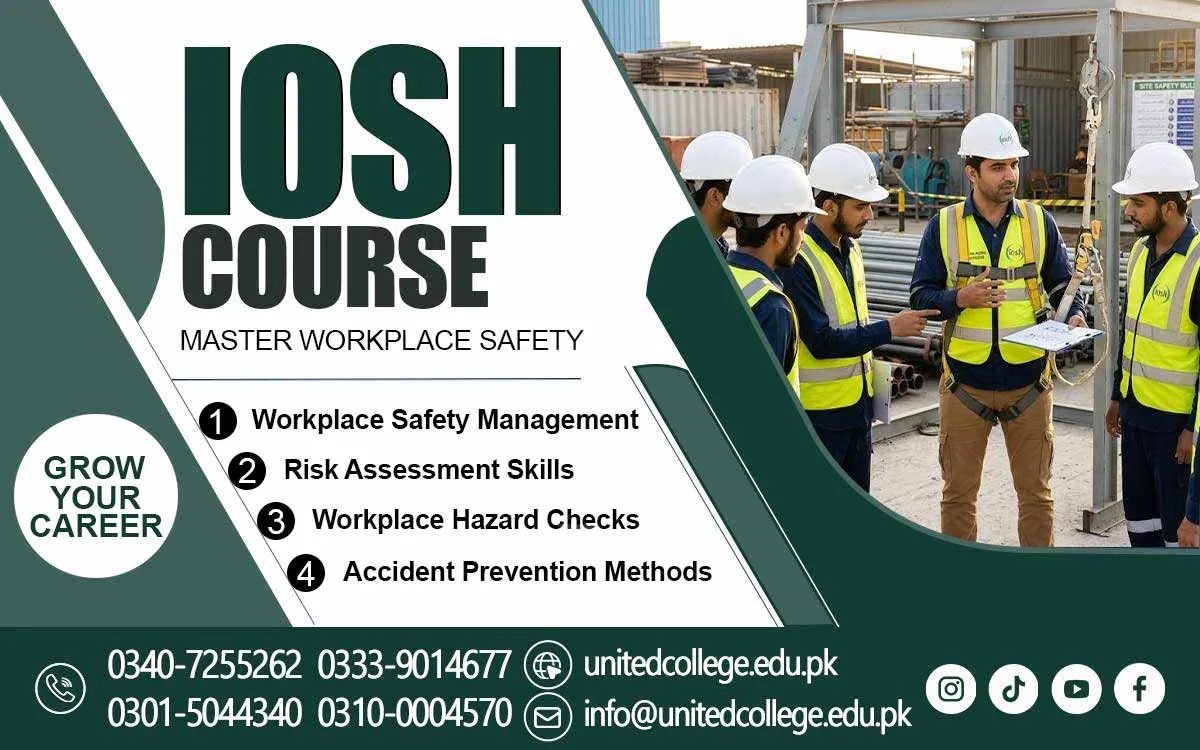

IOSH Course in Hangu to Learn Effective Accident Prevention Methods
IOSH Course in Hangu for Sharper Hazard Awareness and Safer Work Decisions
Workplace safety often depends on the decisions people make before a task begins. A loose cable, an unguarded machine, a blocked exit, or an incorrectly stored chemical can create serious risks when workers fail to notice the danger. Learning how to recognize these problems and respond responsibly is an important part of maintaining a safer working environment.
The IOSH Course in Hangu introduces learners to essential workplace health and safety principles and helps them understand how everyday actions can influence the well-being of others. For beginners, students, job seekers, and working professionals, IOSH Safety Training offers an opportunity to build safety awareness and understand the responsibilities that come with different workplace activities. This knowledge can help learners approach routine tasks more carefully and recognize the value of preventing accidents before they happen.
Understand the Safety Principles Behind Everyday Tasks
Workplace health and safety involves identifying dangers, controlling risks, and protecting people from avoidable harm. It applies to almost every working environment, although the hazards and precautions differ from one industry to another. Workers may face risks from machinery, electrical equipment, heavy materials, chemicals, poor housekeeping, or unsafe working methods. Understanding these risks helps people recognize why safety procedures matter.
The IOSH Course in Hangu can be a useful learning option for people who want to understand these principles before entering a new workplace or while improving their existing knowledge. Rather than treating safety rules as instructions to follow without thought, learners can develop a clearer understanding of the reasons behind them. This foundation can support better judgement when dealing with everyday workplace situations.
Recognize Hidden Dangers Before They Cause Harm
Many accidents begin with hazards that appear small or familiar. Workers may become accustomed to stepping over objects in a walkway, using tools without checking their condition, or working near equipment that needs attention. When people overlook these warning signs, a manageable problem can develop into an injury or operational disruption.
Learning to identify hazards also involves understanding when to report a problem and when work should stop until the danger is addressed. Workers should follow their workplace procedures and avoid attempting repairs or handling dangerous materials without appropriate training or authorization. Early reporting allows responsible personnel to investigate the issue and take suitable action.
Apply Risk Assessment to Real Workplace Situations
Recognizing a hazard is important, but understanding the level of risk helps people decide what action may be needed. Risk assessment involves identifying possible dangers, considering who could be harmed, evaluating the likelihood and seriousness of an incident, and selecting appropriate control measures. For example, imagine a workplace where employees move heavy boxes through a narrow corridor.
A risk assessment could identify safer storage arrangements, clearer walking routes, or suitable handling methods as possible ways to reduce the danger. The IOSH Course in Hangu may introduce learners to the basic principles of risk assessment and explain how they relate to accident prevention. Effective control measures depend on the situation. Some hazards may be removed entirely, while others require safer equipment, improved procedures, protective measures, or closer supervision.
Build Safer Habits Across Different Working Environments
Safety awareness becomes especially valuable when learners understand how it applies to different industries. Construction sites may involve work at height, moving vehicles, falling materials, and electrical hazards. Factories may present risks related to machinery, noise, chemicals, and repetitive tasks. Workshops often require careful tool handling, equipment checks, and organized work areas.
Safe working practices include following instructions, using equipment correctly, keeping access routes clear, and wearing suitable protective equipment when required. Employees should also understand emergency arrangements and know how to raise concerns through the proper channels. IOSH Safety Training can help learners understand why these habits matter.
Strengthen Communication and Shared Safety Responsibilities
A safe workplace depends on more than individual knowledge. Workers need to communicate clearly, cooperate with colleagues, and understand how their actions may affect other people. Even when someone recognizes a hazard, the risk may remain if they fail to report it or assume another person has already taken responsibility. Hazard reporting helps workplaces address problems before they lead to serious incidents.
Teamwork also matters during emergencies. Workers should understand the relevant alarm procedures, evacuation routes, and instructions provided for their workplace. They should not put themselves or others at additional risk by attempting actions beyond their training. The IOSH Training in Hangu can help learners appreciate these responsibilities and understand the importance of timely communication.
Find a Learning Opportunity That Fits Your Needs in Hangu
For students, beginners, and job seekers in Hangu, occupational safety training can provide a starting point for understanding the responsibilities that different workplaces expect from their staff. People already working in practical environments may also want to improve their awareness of risk assessment, safe working methods, and incident reporting. People considering a programme offered by United College of Technology should contact the institution to confirm the available IOSH course and review its learning objectives.
Before enrolling, learners should also consider the type of work they want to understand better. Someone interested in construction may need to focus on site hazards, while a person considering factory work may want to learn more about machinery and equipment risks. General safety training can develop awareness, but some occupations require additional technical qualifications or specialized instruction. Making an informed choice helps learners understand what a course can realistically offer.
Turn Safety Knowledge Into a Lasting Professional Strength
Learning about workplace health and safety is most valuable when it influences everyday behaviour. A person who understands hazard identification may become more careful about the condition of tools. Someone familiar with risk assessment may think more clearly about possible dangers before starting an unfamiliar task. Another learner may become more confident about reporting unsafe conditions instead of ignoring them.
The IOSH Course in Hangu may suit people who want to develop a stronger foundation in safety awareness and understand how prevention works in practice. By learning to recognize hazards, assess risks, communicate concerns, and follow safe procedures, learners can prepare themselves to take a more responsible approach to workplace activities. A safer working environment begins when people pay attention to the details others might overlook.
Frequently Asked Questions (FAQs)
It explains the purpose behind workplace safety procedures, helping learners understand why certain actions are required instead of following instructions without awareness.
Clean and organized work areas reduce problems such as slips, trips, falling objects, and blocked access. Good housekeeping also makes it easier to notice damaged equipment or unusual conditions.
Yes. It can encourage workers to review instructions, identify possible hazards, assess risks, and seek guidance before performing tasks they do not fully understand.
Recognizing alarms and warning signals helps employees respond promptly, follow evacuation instructions, and avoid confusion during unexpected situations.
Supervisors can provide clear instructions, explain safety expectations, listen to concerns, and address unsafe practices consistently. Their example can also influence workplace behaviour.
Depending on the programme, learners may explore how inspections help identify unsafe conditions, check workplace arrangements, and highlight issues that need corrective action.
Admission Open: Start Your Professional Journey Today!
Join United College of Technology and build a career with practical training, recognized certifications, and Gulf job support. Seats are limited.
Apply Now via WhatsAppContact Information
- Address: Rawalpindi: F-272 Main New Katarian Stop, Old IJP Road | Lahore Campus: Lahore, Pakistan
- Phone/WhatsApp: 0340-7255262 / 0333-9014677 / 0301-5044340 / 0310-0004570 / 051-8770756
- Website: unitedcollege.edu.pk
















Leave a Comment