


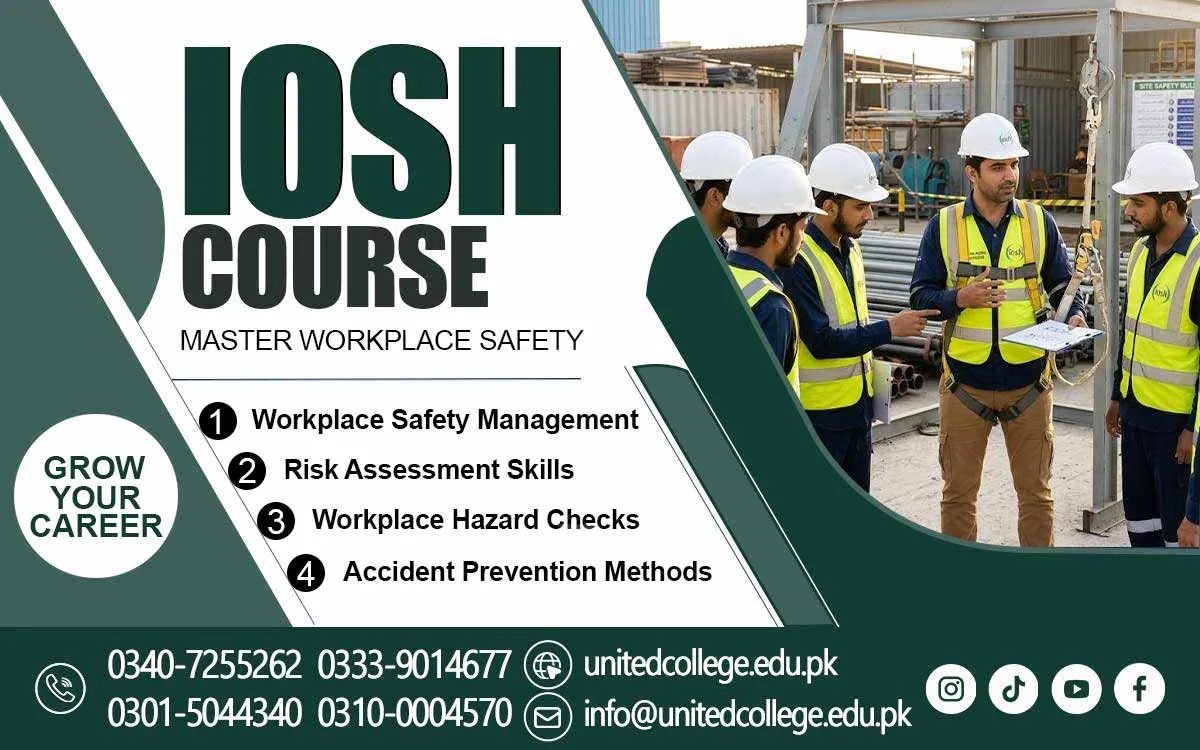

IOSH Course in Sibi to Strengthen Essential Safety Knowledge
IOSH Course in Sibi for Smarter Decisions Around Workplace Hazards
Workplace safety often depends on small decisions made throughout the day. A worker who notices a damaged cable, a student who understands a fire exit sign, or a supervisor who corrects an unsafe working method can help prevent a serious incident. In offices, construction sites, workshops, and industrial environments, understanding possible dangers is an important part of working responsibly. The IOSH Course in Sibi can help beginners, students, fresh learners, and job seekers develop a clearer understanding of workplace health and safety.
Through relevant safety concepts, learners can explore how hazards develop, why accidents happen, and what people can do to reduce risks. This knowledge can help them approach workplace tasks with greater awareness, follow instructions more carefully, and understand their responsibilities towards colleagues. For anyone interested in learning about occupational safety, suitable training can provide a useful starting point for personal and professional development.
Develop the Ability to Recognize Workplace Dangers Early
IOSH Course in Sibi introduces learners to the basic principles of occupational health and safety and explains why preventing workplace accidents is essential in every industry. IOSH, which stands for the Institution of Occupational Safety and Health, provides training programmes that help individuals develop safety awareness and understand their responsibilities at work. Depending on the selected course, learners may study common workplace hazards, risk prevention, safe working procedures, and effective ways to report unsafe conditions.
Particular attention is given to everyday dangers such as poor housekeeping, electrical faults, improper lifting techniques, and blocked emergency exits. By learning how to identify these problems at an early stage, participants can take responsible actions before an incident occurs. This training is particularly beneficial for beginners who want to develop good safety habits, while experienced workers can use the knowledge to improve their existing practices and contribute to a safer working environment in Sibi.
Turn Risk Assessment Into a Practical Safety Skill
Risk assessment is an important part of workplace health and safety because it helps people understand how a hazard could cause harm. A hazard is something that can cause injury or damage, while risk relates to the likelihood and possible consequences of that harm. During relevant training, learners may study how to identify hazards, consider who could be affected, and understand which control measures can reduce danger. Imagine a worker preparing materials in a workshop where equipment is poorly arranged.
The worker should recognize the possible danger, follow workplace procedures, and inform the responsible person when corrective action is needed. Similar thinking applies to construction activities, electrical work, storage areas, and manual handling tasks. Accident prevention also requires workers to use appropriate protective equipment, respect warning signs, and avoid shortcuts that put people at risk. Understanding these principles can help learners make more informed decisions instead of relying on assumptions.
Build Readiness for Fires, Emergencies, and Unexpected Incidents
A safe workplace needs more than hazard recognition. Workers must also understand how to respond when something goes wrong. IOSH Course in Sibi may cover emergency arrangements, fire prevention, incident reporting, and other safety responsibilities, depending on the selected syllabus. Fire prevention begins with recognizing possible ignition sources, following rules for electrical equipment, keeping escape routes clear, and reporting unsafe conditions. If a fire alarm sounds, workers should follow the established evacuation procedure rather than wasting time collecting personal belongings.
Learners may also explore why organizations record accidents and near misses. A near miss is an event that could have caused harm but did not result in injury or damage on that occasion. Reporting such events can help an organization identify weaknesses and introduce preventive measures. For example, repeated reports about slippery floors may reveal the need for better cleaning practices or clearer warning signs. Understanding these procedures can help learners appreciate the importance of preparation, communication, and calm decision-making during emergencies in Sibi.
Connect Occupational Safety Training With Sibi's Workplaces
Sibi has a range of working environments where safety awareness can be relevant, including shops, offices, workshops, construction activities, transport operations, and other commercial or industrial settings. Each environment presents different challenges, which makes practical safety knowledge useful across several types of work. In a workshop, a worker may need to recognize moving machinery, damaged tools, or unsafe electrical connections. On a construction site, workers may face risks involving falling materials, uneven surfaces, ladders, and equipment movement.
In an office or shop, blocked walkways, overloaded electrical connections, and poorly arranged storage can also create hazards. The IOSH Course in Sibi can introduce learners to general safety principles that help them understand these situations and respond responsibly. Local workplaces may have additional requirements based on their activities, equipment, and applicable regulations. Therefore, learners should not assume that one course covers every technical risk in every industry.
Strengthen Professional Awareness Through Responsible Work Habits
Workplace safety knowledge can be useful for students preparing to enter employment, fresh learners exploring technical fields, and workers who want to improve their understanding of safety responsibilities. It can help individuals recognize why procedures matter, how communication supports accident prevention, and when they should seek guidance from an authorized person. For example, a new employee may learn to ask for proper instructions before using unfamiliar equipment instead of attempting the task without guidance. A team member may become more attentive to housekeeping, protective equipment, and the reporting of unsafe conditions. People interested in safety-related responsibilities may also use introductory learning to decide whether further occupational safety training suits their goals.
However, the value of a qualification depends on the specific programme, its recognition, the learner's experience, and the requirements of the intended role. Completing an IOSH course does not guarantee employment, a promotion, or eligibility for every safety position. Employers may request additional qualifications, practical experience, or industry-specific knowledge. Treating safety training as one part of a broader development plan can help learners make realistic decisions about their next steps.
Choose Training That Matches Your Learning Goals
Selecting an appropriate programme requires more than comparing course names. Learners considering the IOSH Training offered by United College of Technology should first confirm the exact programme available and review its learning objectives. They should check whether the syllabus covers the topics they want to understand, how the training is delivered, what assessment method applies, and what support is available during learning. Practical examples can make unfamiliar concepts easier to understand, especially for people who have never worked in a formal industrial environment. Trainer experience and the relevance of the teaching approach are also worth considering.
Before making a decision, learners should verify the qualification's recognition, certificate arrangements, and any applicable requirements directly with the provider and the relevant awarding or professional body. They should not assume that every programme carries the same recognition or provides identical outcomes. Asking clear questions before enrollment can help them choose training that fits their experience and intended direction. A suitable course should explain what learners can expect to study without relying on unsupported promises about career results.
Prepare for IOSH Learning With a Practical Mindset
Beginners can prepare for safety training by developing curiosity about the way people work and the dangers they may encounter. They can start by learning common workplace safety signs, understanding the purpose of protective equipment, and observing how people keep working areas organized. During training, learners should pay attention to unfamiliar terms, take useful notes, and ask for clarification whenever an explanation is unclear. Connecting each concept with a real situation can make the material easier to remember.
They should also understand the importance of following instructions, reporting hazards promptly, and respecting the limits of their training. Safety awareness does not mean trying to solve every problem independently. In many situations, the correct action is to keep away from danger and inform the appropriate supervisor or safety representative. These habits can help learners approach IOSH training with a responsible attitude and apply relevant lessons more effectively in future working environments.
Make Workplace Safety a Lasting Part of Your Growth
A safer workplace develops when people understand their responsibilities and make thoughtful decisions every day. Recognizing hazards, assessing risks, following emergency procedures, and reporting incidents can all contribute to better safety awareness. The IOSH Course in Sibi may suit learners who want to build a foundation in occupational safety and understand how these principles apply to different working environments. Before enrolling, they should review the course content, confirm its suitability, and verify any qualification-related details with the appropriate organizations.
They should also remember that learning is only the beginning; effective safety practice requires consistent attention, cooperation, and a willingness to follow workplace procedures. Whether someone is preparing for a first job, improving existing knowledge, or exploring further training, understanding workplace health and safety can support more responsible decisions. By taking safety education seriously, learners can strengthen their awareness, contribute positively to their teams, and develop habits that help protect both themselves and the people working around them.
Frequently Asked Questions (FAQs)
Yes. Relevant training can help learners understand warning, prohibition, mandatory-action, and emergency signs so they can recognize instructions and respond appropriately.
It can help workers discuss safety expectations, understand shared responsibilities, follow agreed procedures, and communicate concerns when they notice potentially dangerous conditions.
Keeping work areas organized reduces avoidable hazards, such as blocked walkways, misplaced tools, falling objects, and obstacles that can cause slips or trips.
Yes. It can introduce the idea that safety depends on shared attitudes, consistent behavior, clear communication, and cooperation between workers and management.
Workers should follow applicable instructions, use equipment correctly, avoid unsafe shortcuts, and report hazards instead of assuming someone else will address them.
Yes. Comparing course objectives and syllabuses helps learners select a programme that matches their existing knowledge, intended responsibilities, and professional development goals.
Admission Open: Start Your Professional Journey Today!
Join United College of Technology and build a career with practical training, recognized certifications, and Gulf job support. Seats are limited.
Apply Now via WhatsAppContact Information
- Address: Rawalpindi: F-272 Main New Katarian Stop, Old IJP Road | Lahore Campus: Lahore, Pakistan
- Phone/WhatsApp: 0340-7255262 / 0333-9014677 / 0301-5044340 / 0310-0004570 / 051-8770756
- Website: unitedcollege.edu.pk
















Leave a Comment