


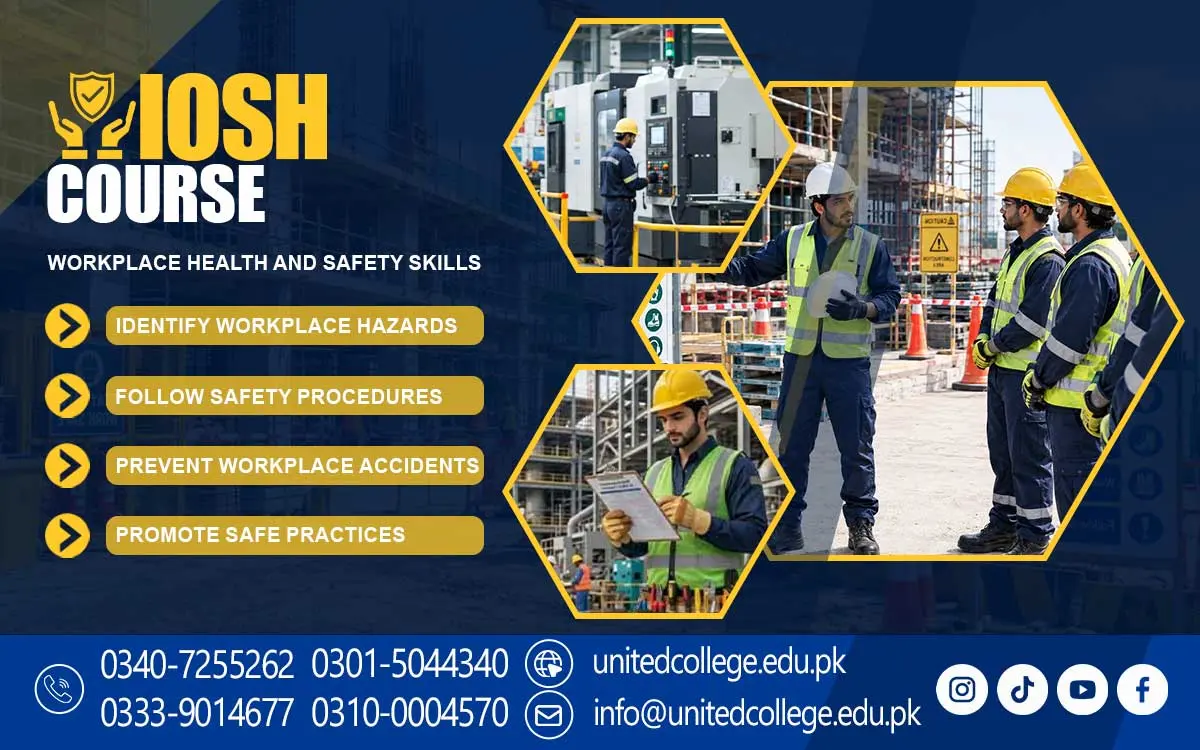

IOSH Course in Swabi for Occupational Health and Safety
Understanding the Fundamentals of Occupational Safety
The IOSH Course in Swabi helps learners understand the basic principles of occupational health and safety and their importance in different working environments. These principles are useful in construction sites, factories, workshops, warehouses, and offices where employees may face potential hazards. Occupational safety focuses on protecting workers from injuries, preventing workplace incidents, and maintaining suitable working conditions. By learning these fundamentals, students can understand why safety procedures are necessary for every organization.
Occupational safety also involves identifying responsibilities and following established workplace rules. Employees need to understand how their actions can affect their own safety and the well-being of their colleagues. Proper equipment handling, workplace cleanliness, suitable protective equipment, and clear safety instructions all contribute to a safer environment. The course introduces learners to these important practices and explains how they can be applied during daily activities.
Understanding safety fundamentals can help individuals develop a responsible approach to their work. Learners become more aware of the importance of following instructions, reporting unsafe conditions, and cooperating with supervisors. This knowledge provides a useful foundation for people who want to improve their safety awareness and explore occupational health and safety as a professional field.
Recognizing Unsafe Conditions in the Workplace
Recognizing unsafe conditions is an essential part of preventing workplace accidents. Through the IOSH Course in Swabi, learners explore how to identify potential dangers before they cause injuries or damage. Common examples include wet floors, damaged electrical cables, unguarded machinery, blocked emergency exits, poor lighting, and incorrectly stored materials. Understanding these hazards helps workers recognize when a workplace requires corrective action.
Different industries have different safety challenges. Construction workers may face risks associated with falling objects and working at heights, while factory employees may encounter moving machinery or hazardous substances. Office environments can also contain risks related to loose cables, unsuitable seating, and obstructed walkways. Learning to recognize these conditions allows employees to follow appropriate precautions according to their work environment.
Workers should report unsafe conditions to the responsible supervisor and follow the organization's reporting procedures. Hazards should not be ignored simply because they have not caused an accident previously. Regular observation and timely reporting help organizations address problems before they become more serious and support a stronger workplace safety culture.
Learning Practical Techniques for Hazard Prevention
Hazard prevention involves taking suitable actions to remove dangers or reduce the possibility of workplace harm. The IOSH course introduces learners to practical methods such as maintaining equipment, following safe operating instructions, improving housekeeping, and using appropriate protective measures. These practices are important in workplaces where employees handle tools, operate machinery, or work with potentially hazardous materials.
An important part of hazard prevention is understanding the hierarchy of controls. Eliminating a hazard is generally preferable to relying on personal protective equipment alone. Other methods may include replacing dangerous materials, installing engineering controls, improving work procedures, and providing suitable protective equipment. For example, installing an appropriate machine guard can help prevent contact with dangerous moving parts.
Effective prevention also depends on regular inspections and employee awareness. Workers should check equipment before use, follow approved procedures, and report defects or unusual conditions. By understanding these techniques, participants in the IOSH Course in Swabi can develop better awareness of how workplace hazards are managed and controlled.
Exploring Risk Control Measures for Employees
Risk control measures are designed to protect employees from hazards that cannot always be completely eliminated. During the IOSH course, learners explore how workplaces assess risks and select precautions that match the nature of a task. This process involves considering the likelihood of harm, the possible consequences, and the effectiveness of available control measures.
Different situations require different controls. For example, employees working around machinery may need properly installed guards and clear operating procedures. Workers handling chemicals may require suitable ventilation, safe storage arrangements, and appropriate protective equipment. Employees performing manual handling tasks may benefit from proper lifting techniques, mechanical aids, and arrangements that reduce unnecessary physical strain.
Risk controls must be monitored to ensure they remain effective. Changes in equipment, work processes, or workplace conditions may introduce new hazards. Employees should follow safety instructions and inform supervisors when existing precautions appear inadequate. Understanding risk control helps workers contribute to safer operations and encourages organizations to review their safety arrangements regularly.
Understanding Workplace Safety Communication
Effective communication is essential for maintaining workplace safety. The IOSH Course in Swabi helps learners understand how clear instructions, warning signs, safety meetings, and reporting systems can reduce misunderstandings. When workers understand the hazards associated with their tasks, they are better prepared to follow the correct procedures and avoid unnecessary risks.
Safety communication should work in both directions. Supervisors need to provide understandable instructions, while employees should report hazards, ask questions, and communicate concerns. For example, if a worker notices damaged equipment or an unsafe working condition, informing the appropriate person can help prevent an incident. Clear communication is especially important when several teams work together or when tasks involve machinery and hazardous materials.
Organizations can strengthen safety communication through regular briefings, practical training, emergency instructions, and accessible reporting channels. Information should be provided in a way that employees can understand and apply. Good communication supports teamwork, encourages responsible behaviour, and helps everyone understand their role in maintaining a safe working environment.
Developing Safe Behaviour During Daily Operations
Safe behaviour means making responsible decisions and following workplace safety procedures during everyday tasks. Learners studying the IOSH course explore why consistent safety habits are important in construction, manufacturing, maintenance, and other working environments. Wearing required protective equipment, checking tools before use, keeping work areas clean, and following instructions are examples of behaviours that can reduce workplace risks.
Unsafe shortcuts can increase the possibility of injuries and equipment damage. Employees should not remove safety guards, operate unfamiliar machinery without authorization, or ignore warning signs. They should also avoid using damaged tools and should seek guidance when a task presents risks they do not understand. Following established procedures helps workers complete their duties more safely and consistently.
Developing safe behaviour requires training, awareness, and support from supervisors. Organizations can encourage good habits by providing clear instructions, addressing unsafe practices, and recognizing responsible conduct. Through the IOSH Course in Swabi, learners can build an understanding of how everyday decisions influence workplace safety and employee well-being.
Learning Basic Emergency Preparedness Procedures
Emergency preparedness helps employees understand what to do when unexpected incidents occur. The IOSH course introduces learners to important procedures involving fire alarms, evacuation routes, emergency communication, first-aid arrangements, and designated assembly points. Knowing these procedures can reduce confusion and help employees respond more appropriately during an emergency.
Workplaces should maintain emergency plans that reflect their specific risks. A factory may need procedures for machinery incidents or chemical spills, while a construction site may require arrangements for injuries, fires, or other site-related emergencies. Employees should understand how to raise an alarm, where to evacuate, and whom to contact for assistance. Emergency exits and access routes should remain clear and usable.
Training and emergency drills help employees become familiar with the actions they may need to take. Workers should follow instructions from designated emergency personnel and avoid actions that could place themselves or others at greater risk. Understanding basic emergency preparedness supports workplace readiness and contributes to a more organized response when incidents occur.
Exploring Opportunities in Workplace Safety Roles
The IOSH Course in Swabi can help learners develop foundational knowledge of occupational health and safety principles. This knowledge may be useful for people working in construction, manufacturing, engineering, logistics, maintenance, and other industries where employees must follow safety procedures. It can also benefit workers who want to improve their understanding of risk management and workplace responsibilities.
Depending on their education, previous experience, and additional qualifications, learners may explore opportunities involving safety assistance, workplace inspections, safety coordination, or other entry-level safety-related responsibilities. Employers may value individuals who understand hazard prevention, incident reporting, emergency procedures, and safe working practices. However, particular positions may require further training, recognized qualifications, or relevant practical experience.
United College of Technology offers a learning pathway for individuals interested in improving their occupational safety knowledge. Before enrolling, students should confirm the course syllabus, duration, fees, and certification arrangements. Building practical experience and continuing professional development can help learners work toward their long-term goals in workplace health and safety.
Frequently Asked Questions (FAQs)
The IOSH Course in Swabi introduces learners to occupational safety fundamentals, hazard prevention, risk control, workplace communication, and emergency preparedness.
Common topics include workplace hazards, risk assessment, accident prevention, safe working practices, safety communication, employee responsibilities, and emergency procedures.
Occupational safety helps protect employees from injuries, reduces workplace risks, improves safety awareness, and supports better working conditions.
Employees, supervisors, team leaders, and individuals interested in occupational health and safety may benefit from the course, depending on their career goals.
The course may support development toward safety assistance, inspection, coordination, and other safety-related responsibilities. Specific opportunities depend on additional qualifications, experience, and employer requirements.
Admission Open: Start Your Professional Journey Today!
Join United College of Technology and build a career with practical training, recognized certifications, and Gulf job support. Seats are limited.
Apply Now via WhatsAppContact Information
- Address: Rawalpindi: F-272 Main New Katarian Stop, Old IJP Road | Lahore Campus: Lahore, Pakistan
- Phone/WhatsApp: 0340-7255262 / 0333-9014677 / 0301-5044340 / 0310-0004570 / 051-8770756
- Website: unitedcollege.edu.pk
















Leave a Comment