


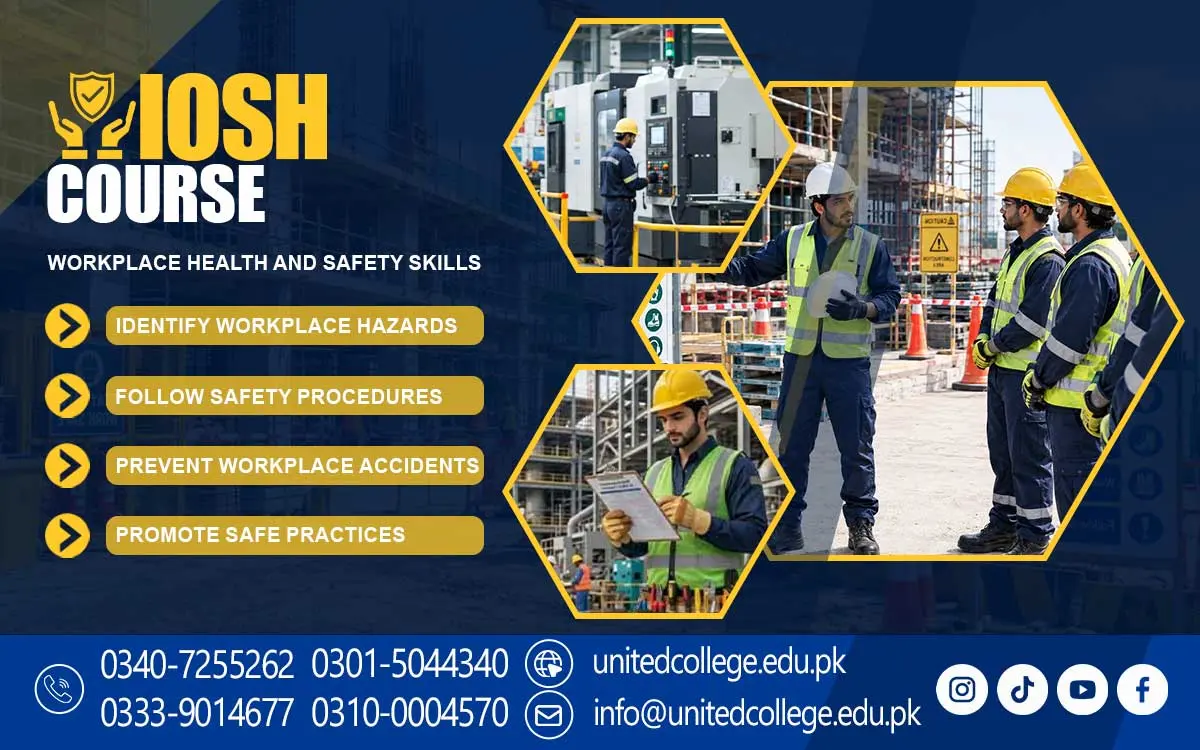

IOSH Course in Upper Dir for Workplace Hazard Control
Understanding Essential Occupational Safety Guidelines
The IOSH Course in Upper Dir helps learners understand essential occupational safety guidelines and their importance in maintaining a safe working environment. These guidelines are useful in construction sites, factories, workshops, warehouses, and offices where employees may face different workplace hazards. Occupational safety focuses on protecting workers from injuries, reducing potential risks, and ensuring that daily activities are completed according to established procedures. Understanding these principles helps learners recognize how safety guidelines contribute to better working conditions.
Workplace safety guidelines cover several important areas, including the correct use of equipment, proper housekeeping, hazard identification, and the use of personal protective equipment. Employees must understand the instructions relevant to their duties and follow the precautions established by their organization. Clear warning signs, suitable equipment maintenance, and effective communication can also help reduce the likelihood of workplace incidents.
By learning essential safety guidelines, participants can develop a responsible approach to their work. They can understand why following procedures consistently is important and how reporting unsafe conditions can protect everyone. This knowledge provides a useful foundation for individuals interested in occupational health and safety and professional development.
Identifying Workplace Hazards and Unsafe Practices
Identifying workplace hazards is an important step in preventing accidents and injuries. During the IOSH Course in Upper Dir, learners explore common dangers such as slippery floors, exposed electrical wires, unguarded machinery, falling objects, excessive noise, and unsafe material storage. Recognizing these conditions helps employees understand which situations may cause harm and why appropriate precautions are necessary.
Unsafe practices can increase workplace risks even when equipment and facilities are properly maintained. Examples include ignoring warning signs, using damaged tools, removing machine guards, and operating equipment without authorization. Workers should understand the potential consequences of these actions and follow approved work procedures. Different industries may also present specific hazards that require additional precautions and training.
Regular observation and communication help workers identify unsafe conditions before they result in serious incidents. Employees should report hazards to supervisors and follow the organization's established procedures for addressing them. Developing these habits can improve workplace awareness and support a safer environment for everyone.
Learning Risk Assessment for Everyday Work Tasks
Risk assessment helps workers and organizations identify hazards, evaluate potential harm, and determine suitable safety measures. The IOSH course introduces learners to the importance of assessing risks before beginning tasks that involve machinery, electrical equipment, manual handling, or hazardous materials. This process allows employees to understand the dangers associated with their duties and take appropriate precautions.
An effective risk assessment considers how likely an incident is to occur and how serious its consequences could be. For example, carrying heavy materials through a cluttered walkway may create risks of falling or physical strain. Removing obstructions, using suitable handling equipment, and following approved procedures can help reduce these risks. More serious hazards may require additional controls or assessment by a competent person.
Risk assessments should be reviewed when tasks change, new equipment is introduced, or unsafe conditions are identified. Employees should also communicate concerns when existing safety measures appear inadequate. Through the IOSH Course in Upper Dir, learners can develop a better understanding of how risk assessment supports informed decisions and safer daily operations.
Exploring Methods for Reducing Workplace Accidents
Reducing workplace accidents requires effective safety planning, employee awareness, and consistent application of safe working procedures. Learners studying the IOSH course explore how equipment inspections, hazard controls, workplace organization, and appropriate protective measures can reduce the likelihood of injuries. These practices are important in construction, manufacturing, maintenance, and other industries where workers encounter occupational risks.
One effective approach is to control hazards at their source whenever possible. Organizations may eliminate dangerous conditions, replace hazardous materials, install protective guards, or improve work procedures. Personal protective equipment can provide an additional layer of protection when required by the risk assessment. Employees should also receive appropriate instructions before using machinery or performing unfamiliar tasks.
Learning from accidents and near misses is another important method of accident prevention. Reporting these events allows organizations to investigate what happened and identify weaknesses in equipment, communication, or training. Appropriate corrective action can help prevent similar incidents from occurring again and encourage a stronger safety culture.
Understanding Employee Duties in Workplace Safety
Every employee has an important role in maintaining workplace safety. The IOSH Course in Upper Dir helps learners understand their responsibilities, including following safety instructions, using equipment correctly, wearing required protective gear, and reporting hazards. These actions help protect individual workers as well as colleagues who may be affected by unsafe conditions.
Supervisors and managers also have responsibilities for organizing safety arrangements, providing suitable instructions, monitoring working conditions, and ensuring that identified hazards receive attention. Employees should understand how to communicate with supervisors when they encounter unsafe equipment, unclear procedures, or tasks that require additional training. Cooperation between workers and management supports more effective safety management.
Employees should avoid unsafe shortcuts and must not operate equipment beyond their training or authorization. If a task appears dangerous, they should follow the workplace procedure for raising concerns and obtaining guidance. Understanding these duties helps learners appreciate how individual responsibility contributes to a safer and more productive workplace.
Learning Emergency Preparedness and Response
Emergency preparedness helps employees understand how to respond when unexpected workplace incidents occur. The IOSH course introduces learners to basic emergency arrangements, including fire alarms, evacuation routes, assembly points, emergency communication, and first-aid provisions. Knowing these procedures can reduce confusion and help workers follow appropriate instructions during an emergency.
Different workplaces may need different emergency plans depending on their activities and potential hazards. Construction sites may require arrangements for injuries, fires, or equipment-related incidents, while industrial facilities may also need procedures for hazardous substance releases. Employees should know how to raise an alarm, where to evacuate, and whom to contact for assistance. Emergency exits and access routes should remain clear.
Regular training and emergency drills help employees become familiar with their responsibilities. Workers should follow instructions from designated emergency personnel and avoid taking actions that could put themselves or others at risk. Understanding emergency preparedness supports workplace readiness and helps organizations improve their response arrangements.
Developing Awareness of Workplace Health Protection
Workplace health protection focuses on reducing exposure to conditions that may affect employees' physical well-being. Through the IOSH Course in Upper Dir, learners explore how factors such as excessive noise, poor ventilation, hazardous substances, repetitive movements, and unsuitable working conditions can create occupational health concerns. Recognizing these risks helps employees understand why preventive measures are important.
Organizations can improve health protection through suitable ventilation, safe handling procedures, appropriate workstation arrangements, equipment maintenance, and protective measures based on workplace risks. Workers should follow relevant instructions and report conditions that may affect their health. Where necessary, employers may need to arrange additional assessments or specialist advice to control occupational exposures.
Health protection also depends on awareness and communication. Employees should understand the importance of following safety procedures and reporting problems rather than allowing unsafe conditions to continue. By developing this awareness, learners can contribute to healthier working environments and support the long-term well-being of employees.
Exploring Career Opportunities in Safety Supervision
The IOSH Course in Upper Dir can help learners develop foundational knowledge of workplace safety, risk assessment, hazard identification, and accident prevention. These subjects may be useful for people working in construction, manufacturing, engineering, maintenance, logistics, and other industries where occupational safety is important. The course can also benefit employees who want to improve their understanding of workplace safety responsibilities.
Depending on their education, experience, and additional qualifications, learners may explore opportunities involving safety assistance, workplace inspections, safety coordination, and junior safety-related responsibilities. People interested in safety supervision may need to develop further practical experience and obtain qualifications that meet the requirements of their intended roles. Employers may also look for knowledge of incident reporting, risk management, and emergency procedures.
United College of Technology provides a learning pathway for individuals interested in occupational health and safety. Before enrolling, students should confirm the course syllabus, duration, fees, certification arrangements, and recognition relevant to their professional goals. Additional training and practical experience can help learners prepare for greater responsibilities in workplace safety management.
Frequently Asked Questions (FAQs)
The IOSH Course in Upper Dir introduces learners to occupational safety guidelines, workplace hazards, risk assessment, accident prevention, and emergency preparedness.
Common topics include hazard identification, risk control, employee safety responsibilities, workplace health protection, incident prevention, and emergency response.
Risk assessment helps identify hazards, evaluate potential harm, and determine suitable precautions to reduce the likelihood of accidents and injuries.
Employees, supervisors, team leaders, and individuals interested in occupational health and safety may benefit from the course, depending on their career goals.
Yes. It can provide foundational safety knowledge, but specific supervision roles may require additional qualifications, relevant experience, and employer-recognized certifications.
Admission Open: Start Your Professional Journey Today!
Join United College of Technology and build a career with practical training, recognized certifications, and Gulf job support. Seats are limited.
Apply Now via WhatsAppContact Information
- Address: Rawalpindi: F-272 Main New Katarian Stop, Old IJP Road | Lahore Campus: Lahore, Pakistan
- Phone/WhatsApp: 0340-7255262 / 0333-9014677 / 0301-5044340 / 0310-0004570 / 051-8770756
- Website: unitedcollege.edu.pk
















Leave a Comment