
Every plaza, every bridge, every factory rising across Lahore needs one thing in common: a skilled welder behind it. Construction, manufacturing, and oil & gas projects across Pakistan — and across the Gulf — are all chasing the same thing: trained welders who actually know what they're doing.
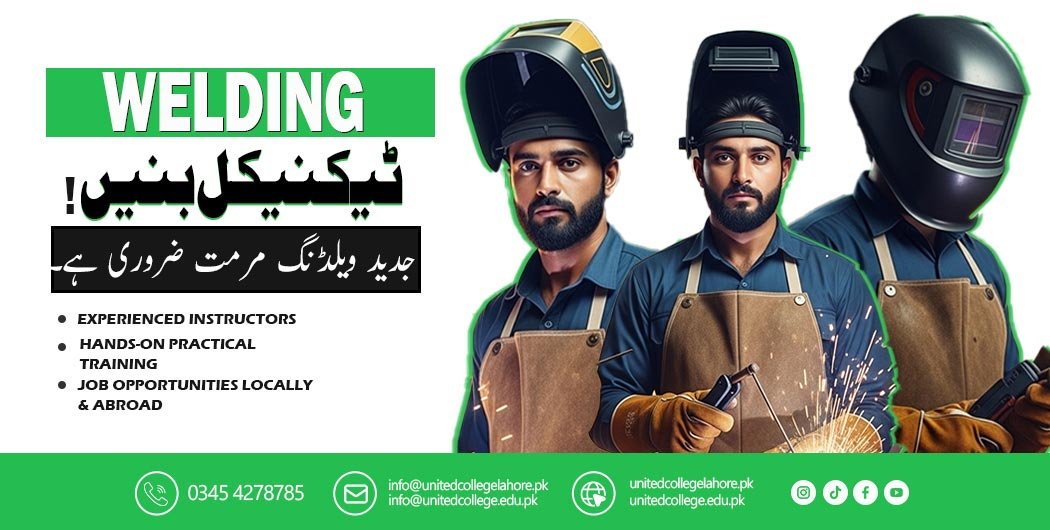
If you've ever thought about learning a trade that pays well, travels well, and never really goes out of demand, welding is one of the smartest moves you can make. The Welding Course in Lahore at United College of Technology (UCT) is built to turn complete beginners into job-ready welders in just a few months — through real workshop training, not just lectures.
Why a Trade Skill Beats a Degree (For a Lot of People)?
A university degree can take four years and still leave you job-hunting. A welding certificate can take three months, and put a tool in your hand the same week you finish. That's the real appeal of vocational training in Pakistan right now — fast, practical, and directly tied to a paycheck.
Welding also travels. Once you're certified, that skill works in Lahore, in Karachi, or in a refinery in Saudi Arabia. Few trades open that many doors at once.
What You'll Actually Be Doing in This Course?
Forget the confusing jargon for a second. Here's what the different welding styles really mean, in plain language:
Stick Welding (SMAW) — The Starting Point Every Welder Learns First
This is the classic, no-frills welding method. A coated metal rod (electrode) melts and joins metal using electric current. It's used everywhere — gates, grills, building frames, heavy construction. If you're brand new to welding, this is where you begin.
Wire Welding (MIG) — Fast, Clean, and in High Demand at Factories
Here, the machine feeds the wire automatically, which makes the work faster and cleaner. Factories and fabrication workshops love MIG welders because they get more done in less time. If speed and efficiency are your passions, this is the right lane for you.
Precision Welding (TIG) — Harder to Learn, Higher to Earn
TIG welding takes patience and a steady hand, but it pays the most. It's used on thin metals, stainless steel, and anywhere finish quality really matters — especially in oil & gas pipeline work. Welders who master TIG are usually the highest earners in the field.
Gas Welding & Cutting — The Skill Every Small Workshop Relies On
Using oxy-acetylene gas, you'll learn to join thin metals and cut through thick steel plates cleanly. It's a staple skill in repair shops and small fabrication businesses across the country.
Safety First — Because a Careless Welder Doesn't Last Long in This Trade
A good welder isn't just fast — they're safe. This course covers:
- Proper use of PPE: helmets, gloves, and protective aprons
- Operating both inverter and transformer-type welding machines
- Spotting and fixing common welding defects like porosity, undercut, and slag inclusion
- Reading basic engineering drawings and blueprints
This isn't filler — these are the exact skills that separate a hobbyist from someone an employer actually trusts with expensive material.
The Course at a Glance
- Duration: 3 months (short course) or a 1-year diploma for stronger international credibility
- Eligibility: Matric or Middle pass — no prior experience required
- Training Mode: Hands-on, workshop-based, with weekend batches available
- Language: Taught in both Urdu and English
- Certification: Recognized by NAVTTC, PSDA, and TEVTA Punjab
- Fee: PKR 45,000
- Timing: Morning and evening batches to fit your schedule
Who Should Actually Enroll for This?
- Matric or Middle pass students who want a fast, practical career path
- Anyone planning to work in the Gulf who needs a recognized trade certificate
- Workshop owners who want to sharpen their own technical skills
- People looking to switch out of office jobs into hands-on, in-demand work
What This Certificate Is Actually Worth in the Job Market?
A welding certificate is only as good as who recognizes it. UCT's diploma is backed by NAVTTC, PSDA, and TEVTA Punjab — meaning it isn't just a piece of paper, it's a credential employers and visa officers actually accept, both in Pakistan and across the Gulf.
Note: These figures reflect general market averages. Actual pay depends on your skill level, employer, and location.
What Sets UCT Apart From Every Other Welding Institute in Lahore?
- Government-Recognized Certification — backed by NAVTTC, PSDA, TEVTA Punjab, and PBTE, so your diploma actually holds weight.
- Real Workshop Hours, Not Just Theory — most of your time is spent on the machine, not in a classroom chair
- Trainers Who've Actually Worked the Job — our instructors have field experience both locally and in the Gul.f
- Job & Visa Support — placement assistance and documentation guidance after you graduate
How to Get Started?
- Message or call us on WhatsApp to reserve your seat
- Visit the branch for a free workshop demo
- Submit your documents and pick an installment plan
- Choose your batch — morning or evening — and start training
For full enrollment details and online admission, visit UCT's dedicated Lahore campus page:
Your Next Step Starts in the Workshop, Not the Classroom
Lahore's industries aren't slowing down, and neither is the demand for certified welders. With a government-recognized diploma, real hands-on training, and a clear path to both local and Gulf jobs, the Welding Course in Lahore at UCT gives you a head start most people never get.
Reserve your seat today and start building a skill that actually builds your future.
Ready to Enroll in Best Welding Course in Lahore | UCT – Govt. Recognized?
Apply now at UCT Lahore — morning and evening batches available.
Training Gallery