


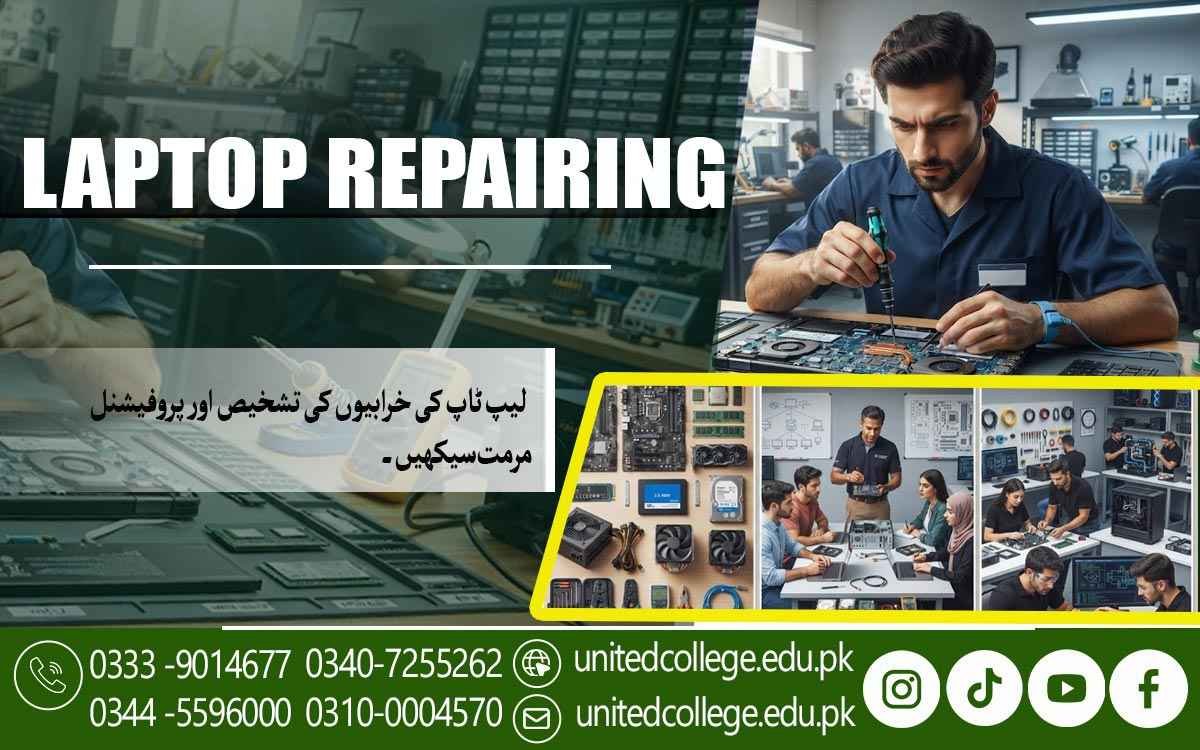

Laptop Repairing Course in Kotli AJK: Make Skills Your Strength
Turn Technical Curiosity into a Skill That Works
A laptop suddenly refuses to start, the screen stays black, or the battery stops charging. For the owner, it is a frustrating problem. For someone who understands laptop repair, however, the same situation can become a practical technical challenge to solve. Learning what causes these faults and how to approach them can turn an interest in computers into a useful skill.
The Laptop Repairing Course in Kotli AJK allows beginners to explore this practical field through knowledge of laptop components, fault diagnosis, maintenance, and basic repair procedures. Instead of simply using computers, learners can begin understanding what happens inside them and how common problems can be investigated. For students and aspiring technicians in Kotli, this can provide a foundation for developing practical technical abilities.
From Everyday Laptop Problems to Skills You Can Actually Use
Learning laptop repair is not limited to knowing the names of internal components. A useful technician needs to understand how different parts work together and how a fault can affect the entire device. Through the Laptop Repairing Course in Kotli AJK, learners can gradually develop the ability to examine common problems and understand possible causes. Students can learn how to identify hardware-related faults, understand basic software issues, and perform suitable maintenance procedures.
These skills can become useful when dealing with devices used by students, offices, businesses, freelancers, and individual users. The learning journey can also introduce beginners to computer repair skills that go beyond simply replacing damaged parts. Understanding the reason behind a problem is an important part of becoming a capable technician.
Reading the Signs Behind Common Laptop Faults
A laptop problem does not always announce its exact cause. When a device does not turn on, for example, the issue could be connected to power, the battery, charging components, or another internal fault. A technician needs to investigate rather than immediately assume which part is damaged. During a Laptop troubleshooting course, learners can become familiar with different types of faults.
These situations help students understand that similar symptoms can sometimes have different causes. Software can also create problems. Operating system errors, driver issues, unwanted software behavior, or incorrect settings may affect performance without any physical component being damaged.
Building a Strong Technical Foundation Through Laptop Repairing Course in Kotli AJK
A good repair foundation begins with understanding the hardware. Students can learn about essential laptop components and their functions before moving toward more detailed troubleshooting and repair work. The Laptop Repairing Course in Kotli AJK can introduce learners to areas such as RAM, storage devices, batteries, displays, keyboards, cooling systems, charging sections, and motherboard basics.
Learners can also develop knowledge related to Laptop hardware repair and component replacement. The purpose is not simply to memorize technical terms but to understand what each component does and what kind of symptoms may appear when something goes wrong. Alongside hardware, students can develop Laptop maintenance skills. Cleaning, careful handling, appropriate ventilation, and responsible use can help reduce avoidable problems and support better device care.
Practical Training Makes the Difference Between Knowing and Doing
There is a major difference between seeing a laptop component in a textbook and handling an actual device. A learner may know what RAM or a motherboard is, but practical experience helps create a much clearer understanding of how components are positioned, connected, removed, and handled. This is why Laptop repair training can be particularly valuable for beginners.
It can also help students understand why technicians need to work patiently instead of rushing through a repair. Practical exercises allow learners to experience the process of finding a fault and thinking about an appropriate solution. Over time, this can improve confidence and help transform theoretical information into practical laptop repair skills.
Learning to Diagnose Before Replacing Any Part
One of the most important habits in repair work is learning not to replace components without first investigating the problem. Unnecessary replacement can increase costs and may fail to solve the actual issue. Through Laptop diagnostic skills, learners can develop a more organized approach to technical problems. They can observe symptoms, inspect relevant components, consider possible causes, and perform appropriate checks before deciding what action may be required.
For instance, if a laptop becomes unusually slow, the solution may not always be replacing the storage drive. The issue could involve software, insufficient system resources, background processes, or another factor. Learning to investigate these possibilities helps a technician approach repair work more logically.
United College of Technology Provides a Starting Point for Practical Learning
For beginners, having a structured learning environment can make technical subjects easier to understand. Instead of trying to learn every repair technique independently, students can progress from basic concepts toward more practical areas of laptop servicing. United College of Technology offers the Laptop Repairing Course in Kotli AJK for learners who want to develop practical knowledge in laptop repair.
The course can introduce students to computer hardware, troubleshooting, maintenance, and repair-related concepts in a way that is suitable for people beginning their technical learning journey. The value of training depends heavily on practice and continued learning. Students can use the knowledge gained through structured training as a foundation and strengthen it through further experience with different laptop problems and components.
Turning Repair Knowledge into Real Technical Experience
Once learners develop a basic understanding of laptop repair, they can explore different ways to apply their skills. Some may seek experience in a computer repair shop or service environment where they can observe how technicians handle different customer devices and technical problems. Others may become interested in laptop servicing or technical support work. With enough practical experience, a learner may eventually consider providing independent repair services or developing a small repair setup.
Such a path requires more than course knowledge because professional work also depends on accuracy, customer communication, responsibility, and continued practice. Potential Laptop repair career opportunities should therefore be viewed realistically. Training can provide a foundation, but building a career as a professional laptop technician takes time and experience. A strong reputation is usually developed through reliable work and the ability to solve problems carefully.
A Practical Skill for People Starting from the Basics
Laptop repair can be explored by students, beginners, computer enthusiasts, and people who enjoy practical technical work. Previous advanced knowledge is not necessarily required to begin learning the fundamentals. Someone who regularly uses computers may already have an interest in understanding how devices function. A structured course can help turn that curiosity into organized learning.
Instead of only knowing how to operate software, learners can begin exploring the physical and technical side of computers. For beginners in Kotli, this can also provide exposure to broader Computer hardware training. Over time, learners may choose to expand their knowledge into areas connected with computer repair skills, networking, or other technical fields.
Combining Hardware and Software Knowledge for Broader Repair Ability
Modern laptop problems can come from both physical components and software. A technician who understands only one side may find some problems difficult to investigate. Developing knowledge of both areas can therefore create a stronger technical foundation. Hardware-related learning may involve components, connections, maintenance, and Laptop parts. Software-related learning can cover operating system issues, drivers, basic system configuration, and troubleshooting.
Bringing these areas together creates useful Hardware and software troubleshooting abilities. This combination can also make training more practical because real repair situations do not always fit into a single category. A device may have a hardware problem, a software issue, or a combination of both. Learning how to separate these possibilities can improve a technician's diagnostic approach.
Where Can Consistent Learning Take Your Technical Journey?
A technical skill becomes more valuable when it continues to improve after formal training ends. Laptop models, components, operating systems, and repair methods can change, so technicians need to remain willing to learn. After completing a Laptop servicing course, learners can continue practicing with different devices, improving their diagnostic approach, and becoming familiar with new hardware.
They can also strengthen their broader computer hardware and networking skills if they want to expand their technical direction. For someone interested in computer repair, this continuous learning can create a pathway from beginner-level knowledge toward more confident technical work. Progress may be gradual, but each repair problem can provide another opportunity to learn something new.
Give Your Interest in Computers a Practical Direction
Learning laptop repair can be more than understanding how to open a device or replace a component. It can teach learners how to observe problems, think logically, handle technology carefully, and develop solutions through practical work. The Laptop Repairing Course in Kotli AJK can give students and beginners a starting point for building these abilities. From laptop hardware repair and maintenance to software troubleshooting and fault diagnosis, the field offers several areas in which practical knowledge can grow.
For learners who want to develop a useful technical skill in Kotli, United College of Technology provides an option to begin this journey through structured laptop repair training. With patience, hands-on practice, and a commitment to continuous improvement, today's technical curiosity can become the foundation for tomorrow's professional skills.
Frequently Asked Questions (FAQs)
Yes, training can introduce learners to variations in laptop construction, helping them understand that internal layouts and component placement can differ between models.
Patience is important because technical faults may require several careful checks. Taking time to inspect a device properly can help beginners avoid rushed decisions and unnecessary mistakes.
Older or non-working devices can be useful for supervised practice because learners can become familiar with internal structures and repair procedures without immediately working on important personal equipment.
Laptop parts and internal connections can be delicate. Careful handling helps reduce the risk of accidental damage and teaches learners the importance of responsible repair practices.
Some repair tasks involve testing electrical or hardware-related conditions with suitable measuring tools. Proper training can introduce learners to their basic purpose and safe handling.
Yes, laptop repairing can provide a foundation for exploring related areas such as computer hardware, technical support, networking, and other computer-related practical skills.
Admission Open: Start Your Professional Journey Today!
Join United College of Technology and build a career with practical training, recognized certifications, and Gulf job support. Seats are limited.
Apply Now via WhatsAppContact Information
- Address: Rawalpindi: F-272 Main New Katarian Stop, Old IJP Road | Lahore Campus: Lahore, Pakistan
- Phone/WhatsApp: 0333-9014677 / 0344-5596000 / 0310-0004570 / 0301-5044340 / 0340-7255262
- Website: unitedcollege.edu.pk
















Leave a Comment