


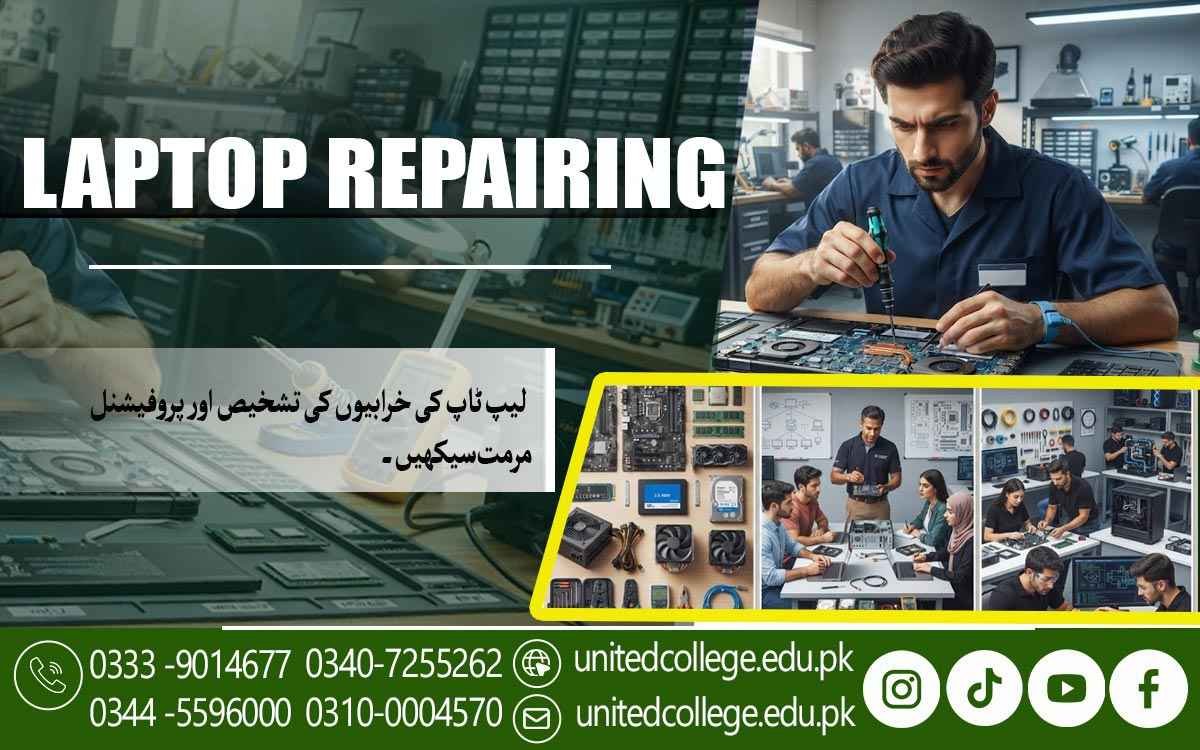

Laptop Repairing Course in Mandi Bahauddin for Skill Development
Turn Technical Interest Into Practical Repair Skills
Laptops have become essential tools for students, offices, businesses, online work, communication, and many everyday activities. When a laptop develops a fault, the problem can affect study, work, or important personal tasks. A device that suddenly stops charging, overheats, shows a blank screen, or becomes unusually slow needs more than basic computer knowledge. It needs someone who can understand the possible causes and approach the problem carefully.
The Laptop Repairing Course in Mandi Bahauddin gives beginners a practical way to explore the technology inside modern laptops. Learners can study hardware components, software problems, maintenance, fault diagnosis, and safe repair methods in an easy-to-understand way. For students, fresh learners, job seekers, and people interested in technical work, developing these skills can create a useful foundation for further learning in computer hardware and laptop servicing.
Mandi Bahauddin’s Digital Routine Makes Technical Skills More Valuable
As laptops become part of education, offices, shops, businesses, and personal work, technical knowledge about these devices can be useful. A laptop problem is not always easy to identify because the same symptom may come from different causes. For example, a device that refuses to start could have a battery, charger, power, connection, or internal hardware issue. Similarly, slow performance may be linked to storage, RAM, software, overheating, or operating system conditions.
Laptop Repairing Course in Mandi Bahauddin can introduce learners to a systematic way of looking at such problems. Instead of guessing, students can learn to observe symptoms, inspect relevant areas, and consider possible causes. This process helps develop patience and logical thinking while giving beginners a clearer understanding of how technical servicing works.
Inside the Laptop: The Components Every Beginner Needs to Recognize
Understanding hardware is one of the first steps toward becoming comfortable with laptop repair. Learners can study important parts such as RAM, hard drives, SSDs, processors, motherboards, batteries, cooling fans, displays, keyboards, touchpads, charging ports, and internal connectors. Each component has a specific purpose, while several parts work together to keep the laptop running.
Through Laptop Hardware Training, students can understand why RAM is important for active tasks, how storage devices hold files and system data, and how the motherboard connects many internal functions. They can also learn about cooling systems and the role of batteries and charging components. This knowledge gives beginners a stronger foundation in laptop hardware repair. Rather than memorizing component names, learners can connect each part with its function and understand how a fault in one area may affect the overall device.
Safe Disassembly Turns Careful Hands Into Better Repair Habits
A laptop contains compact and sensitive components, so opening the device requires attention and proper technique. Learners can practice identifying screws, connectors, cables, and internal parts while learning how to remove components carefully. Practical Laptop Repairing Skills also involve putting everything back correctly after inspection or repair. Students can learn why organized work matters and how mixing screws or pulling a connector incorrectly can create additional problems.
Proper use of basic repair tools is another important part of training. A technician needs to work with control rather than force, especially when dealing with delicate parts. Through repeated practical exercises, beginners can develop better hand coordination, patience, and attention to detail. These habits are useful for anyone who wants to understand Computer and laptop repair in a real-world setting.
Fault Diagnosis Begins With Symptoms, Testing, and Logical Thinking
A laptop technician needs to understand what a device is doing before deciding what might be wrong. Common situations include charging failure, unexpected shutdowns, overheating, display problems, keyboard faults, touchpad issues, storage errors, and unusual system performance. Laptop Troubleshooting teaches learners to treat these symptoms as clues rather than immediate answers.
A charging problem, for instance, may involve the adapter, battery, charging port, or another power-related area. Laptop Repairing Course in Mandi Bahauddin helps learners develop a structured approach to identifying and understanding these common laptop issues. A display problem may require checking the screen, connection, or related hardware. Students can learn how to narrow down possibilities through basic inspection and suitable testing methods.
Software and Boot Problems Add Another Layer to Laptop Repair
Hardware knowledge becomes more useful when combined with basic software understanding. A laptop can have perfectly working physical components and still experience problems because of its operating system, drivers, configuration, or startup process. Learners can explore operating system installation, basic setup, driver-related issues, and common software troubleshooting situations. They may also become familiar with BIOS and boot-related problems, such as a system failing to start correctly or not recognizing an expected storage device.
Laptop Software Troubleshooting helps learners understand that not every laptop problem requires physical repair. Sometimes the correct solution begins with checking system settings or software conditions. Learning to separate hardware faults from software issues gives beginners a more complete view of laptop servicing and strengthens their overall technical problem-solving approach.
United College of Technology Brings Practical Learning Into the Workshop Experience
The Laptop Repairing Course in Mandi Bahauddin is offered by United College of Technology, giving learners a structured environment to explore laptop hardware, software, maintenance, and troubleshooting. Practical training can help students connect technical explanations with actual repair procedures instead of relying only on theoretical information. Learners can become familiar with component identification, safe disassembly, basic inspection, troubleshooting methods, operating system setup, and maintenance practices.
United College of Technology can provide a setting where beginners gradually become more comfortable with technical equipment and learn how to approach repair tasks carefully. The focus of this type of learning is skill development and practical understanding, not promises about a particular salary, job, or business outcome. For someone starting from the basics, guided practice can make complex technical ideas easier to understand and apply.
Maintenance Knowledge Helps Protect the Work Behind Every Repair
Repairing a laptop is only one side of technical servicing. Understanding maintenance can also help learners recognize conditions that may affect device performance. Dust around cooling areas, blocked airflow, excessive heat, careless handling, and poor system care can contribute to problems over time. Laptop Maintenance Skills can teach learners to pay attention to ventilation, cleanliness, battery condition, storage health, and general device handling.
Overheating is especially important because a laptop that repeatedly becomes too hot may experience performance issues or unexpected shutdowns. Learners can study common warning signs and understand when a device needs inspection. This knowledge is useful not only for technicians but also for people who regularly depend on laptops for education, office work, business, or personal activities.
From Local Repair Knowledge to a Wider Technical Learning Path
Learning laptop repair can become a starting point for continued technical development. Once beginners understand hardware components, fault diagnosis, software setup, and maintenance, they can explore areas such as computer servicing, technical support, hardware maintenance, networking, or more advanced repair techniques. People interested in local work may use their knowledge in suitable repair shops or technical environments, while others may develop their skills for personal or workplace computer maintenance.
Laptop technology continues to change, with new processors, storage systems, designs, and operating environments appearing over time. The Laptop Repairing Course in Mandi Bahauddin can therefore provide a practical foundation for learners who enjoy working with technology. With consistent practice, careful observation, and continued learning, students can strengthen their Laptop Repairing Skills and build a broader understanding of modern computer hardware.
Frequently Asked Questions (FAQs)
A technician should be able to read basic specifications such as processor type, RAM capacity, storage technology, and other hardware details when examining or servicing a laptop.
Basic training can introduce the idea of checking model information, component specifications, connectors, and compatibility before considering a replacement part.
Keeping simple repair notes can help track symptoms, inspection results, replaced components, and completed procedures. This can make technical work more organized and easier to review.
Yes. Understanding hardware fundamentals can help learners become more familiar with older laptop designs and different generations of computer components.
Inspection allows a technician to notice physical damage, loose connections, unusual conditions, or visible signs of wear before beginning more detailed troubleshooting.
Working with different models can expose learners to variations in component placement, internal layouts, connectors, cooling arrangements, and servicing procedures.
Admission Open: Start Your Professional Journey Today!
Join United College of Technology and build a career with practical training, recognized certifications, and Gulf job support. Seats are limited.
Apply Now via WhatsAppContact Information
- Address: Rawalpindi: F-272 Main New Katarian Stop, Old IJP Road | Lahore Campus: Lahore, Pakistan
- Phone/WhatsApp: 0340-7255262 / 0333-9014677 / 0301-5044340 / 0310-0004570 / 051-8770756
- Website: unitedcollege.edu.pk
















Leave a Comment