


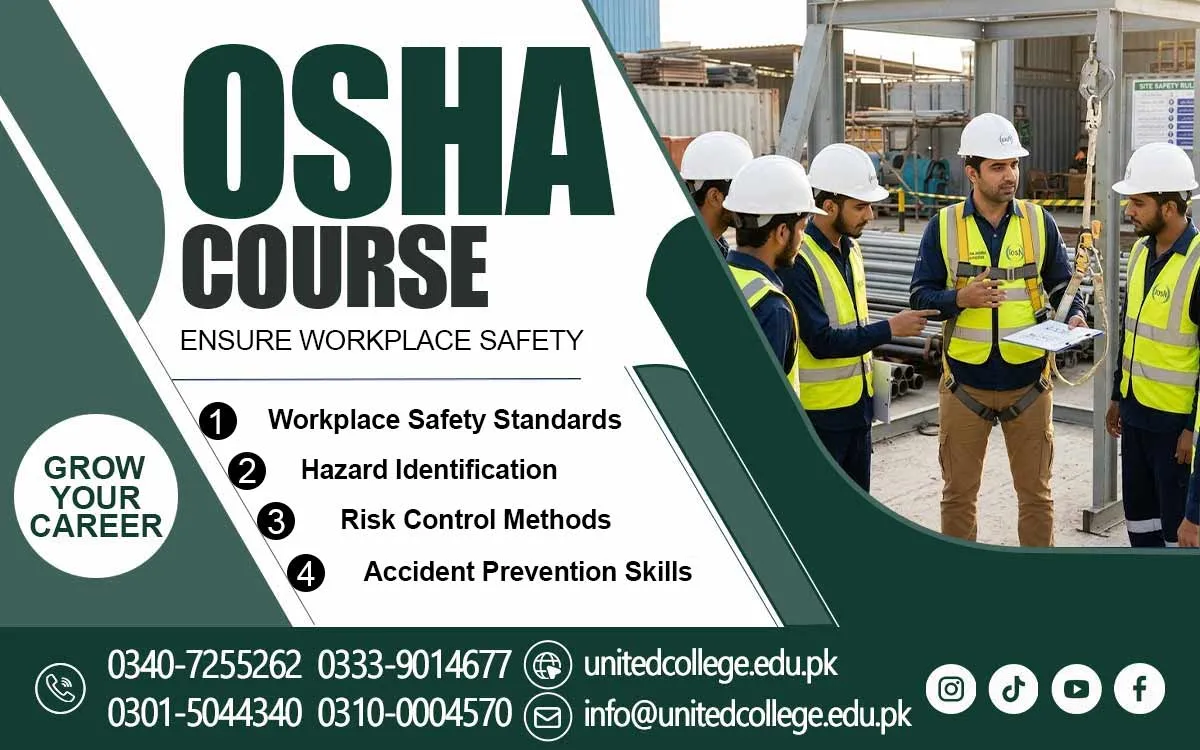

OSHA Course in Balakot – Understand Health and Safety
Workplace Safety Challenges on Construction and Industrial Sites
Imagine a construction worker climbing an unstable ladder to complete a task. A few metres away, another worker is operating equipment without proper protective gear. These situations may look like ordinary parts of a busy workday, but they can quickly lead to serious injuries if safety precautions are ignored. Workplace accidents often happen because of poor planning, a lack of training, unsafe equipment, or failure to recognise potential hazards. This is why workplace health and safety knowledge is important in construction, manufacturing, workshops, warehouses, and other industries. The OSHA Course in Balakot, offered by United College of Technology (UCT), introduces learners to important safety practices that help reduce workplace risks.
The course is relevant to students, fresh learners, job seekers, and individuals who want to understand occupational safety. It helps learners become familiar with common workplace dangers and the importance of following proper safety procedures. Even a simple action, such as keeping a walking area clear or checking a damaged electrical cable, can help prevent an accident. Through OSHA training, students can develop a better understanding of safe working environments and the responsibilities of workers and supervisors. Learning these skills can help individuals recognise unsafe conditions before they become serious problems and understand why safety should be part of every daily work activity.
The Role of OSHA Standards in Preventing Workplace Accidents
The Occupational Safety and Health Administration, commonly known as OSHA, is a United States government agency responsible for promoting safe and healthy working conditions through workplace safety standards and enforcement. Its standards cover different areas, including construction, general industry, personal protective equipment, machinery, electrical hazards, and employee protection. Understanding OSHA principles can help learners recognise why workplace safety rules are necessary and how they support accident prevention. For example, workers using heavy machinery need suitable training, proper machine guards, and clear operating procedures to reduce the risk of injuries. Similarly, construction workers must understand fall protection requirements when working at heights.
An OSHA Safety Course introduces students to these important safety concepts and explains how they can be applied in different working environments. During the OSHA Course in Balakot, learners can become familiar with occupational health and safety terminology, workplace responsibilities, and common safety regulations. It is important to understand that OSHA is a US agency, and its standards are not automatically the legal requirements of every country. However, its safety principles are widely studied as part of occupational safety education. Students can use this knowledge to develop a responsible approach towards workplace safety, understand the purpose of safety instructions, and recognise the importance of following the applicable regulations in their own working environments.
Essential Skills Developed Through OSHA Safety Training
A person working at a construction site or industrial facility needs more than general knowledge of workplace rules. They must be able to recognise hazards, understand safety instructions, communicate concerns, and respond appropriately to unsafe situations. OSHA training introduces learners to these important skills through different workplace safety topics. Students can learn about hazard identification, risk assessment, accident prevention, personal protective equipment, fire safety, and emergency procedures. For instance, if a worker notices that a machine is producing unusual noise or has a damaged protective cover, the issue should be reported instead of ignored. Similarly, workers should understand the importance of checking equipment before starting a task.
The course can also introduce basic safety communication, including reporting workplace incidents and explaining potential dangers to other team members. Depending on the training programme, learners may study topics associated with OSHA 10-Hour Training or OSHA 30-Hour Training. These programmes are designed for different training needs and levels of workplace responsibility. Students should confirm the specific course duration, syllabus, and certificate arrangements with the institute before enrolment. Developing a strong understanding of safety procedures can help beginners prepare for responsible participation in different workplace environments.
Hazard Identification and Risk Assessment in Daily Work
A small workplace hazard can sometimes create a much bigger problem than expected. Consider a warehouse where water has spilled near a storage area. If employees walk through that section without noticing the slippery floor, someone could fall and suffer an injury. Hazard identification means recognising anything that has the potential to cause harm, while risk assessment involves examining how likely an accident is and how serious its consequences could be. These two activities are important parts of occupational health and safety training. During an OSHA Certification Course, learners can study different categories of hazards, including physical, chemical, electrical, biological, and ergonomic risks. Physical hazards may include falling objects, excessive noise, and unsafe working platforms.
Chemical hazards can involve harmful cleaning products, gases, or industrial substances. Electrical hazards may result from damaged wires, overloaded sockets, or exposed connections. Students can also learn the importance of reporting hazards and selecting suitable control measures. For example, a loose cable should be repaired by an authorised person rather than covered temporarily and forgotten. Risk assessment and management help workplaces decide which problems need immediate attention and what precautions should be introduced. Through the OSHA course offered by United College of Technology, learners can understand how identifying hazards early supports safer working conditions and reduces the chances of preventable accidents.
Personal Protective Equipment and Safe Working Practices
Imagine a worker entering a construction area without a safety helmet while other employees are lifting heavy materials overhead. Even a small falling object could cause a serious head injury. Situations like this explain why Personal Protective Equipment (PPE) is an important part of workplace safety. PPE includes protective items such as safety helmets, gloves, goggles, face shields, safety shoes, ear protection, and respiratory masks. Each item is designed to protect workers against particular hazards. However, wearing protective equipment is not enough; employees must understand how to select, inspect, wear, and maintain it correctly. For example, safety goggles protect the eyes from flying particles, while suitable gloves can help protect hands from certain cuts, chemicals, or heat exposures.
Through Industrial Safety Training, students can learn why employers and workers must pay attention to protective equipment and workplace procedures. They can also understand that PPE is generally one part of a wider safety system, rather than a replacement for removing or controlling hazards. The OSHA Course in Balakot introduces learners to PPE requirements and safe working practices in different industries. This knowledge can help beginners understand the importance of following workplace instructions, checking equipment before use, and reporting damaged or unsuitable protective items to the responsible person.
Fire Prevention and Emergency Response at Work
A fire can start unexpectedly in a workshop, factory, office, or construction site. An overloaded electrical connection, careless handling of flammable materials, or an unsafe welding activity can create conditions that lead to a fire. If workers do not know the correct emergency procedures, confusion can make the situation even more dangerous. Fire Safety Training helps employees understand common fire risks and the precautions required to reduce them. During safety education, learners can become familiar with fire prevention, emergency alarms, evacuation routes, assembly points, and basic extinguisher awareness. They can also learn why emergency exits should remain clear and why flammable materials must be stored correctly.
Different types of fires require different extinguishing methods, so workers should never attempt to use an extinguisher without suitable training or when doing so would put them at risk. Emergency Response Procedures also include knowing whom to contact, how to alert others, and how to leave the building safely. For example, if smoke appears in a factory storage area, workers should follow the established evacuation plan rather than wasting time collecting personal belongings. Through the OSHA Course at United College of Technology, students can study the importance of fire prevention and emergency preparedness. Such knowledge helps learners understand that quick communication, proper planning, and regular safety awareness are essential for protecting people during workplace emergencies.
Electrical and Machinery Safety in Industrial Environments
Electrical equipment and industrial machinery are common sources of workplace accidents when they are used incorrectly or maintained poorly. Imagine an employee noticing a damaged power cable connected to a machine but continuing to use the equipment because production work is behind schedule. This decision could result in an electric shock, burns, or even a fire. Electrical Safety Awareness teaches workers to recognise dangerous conditions, avoid contact with exposed wires, and report damaged equipment to authorised personnel. Learners can also become familiar with basic electrical safety practices, including avoiding overloaded sockets, keeping electrical equipment away from water, and following proper isolation procedures. Machinery safety is equally important in factories and workshops.
Moving parts, rotating blades, unguarded belts, and unexpected machine movement can cause serious injuries. Machine guards and emergency stop systems help reduce these risks when they are correctly installed and maintained. Students studying the OSHA Course in Balakot can learn why machinery should only be operated by trained and authorised individuals. They can also understand the importance of following manufacturer instructions and workplace safety procedures. Maintenance work involving electrical systems or machinery should be handled by qualified personnel using appropriate isolation methods. These safety principles are useful for beginners because they develop an understanding of the risks associated with industrial equipment and the precautions required to maintain a safer working environment.
Workplace Inspections, Safety Reports, and Documentation
A workplace may appear clean and organised, but hidden hazards can still exist. A damaged ladder, blocked emergency exit, leaking chemical container, or missing machine guard may go unnoticed unless regular inspections are carried out. Workplace Safety Inspection involves checking working areas, tools, equipment, and safety arrangements to identify problems before they cause accidents. During occupational health and safety training, learners can understand the purpose of inspection checklists and how safety observations should be recorded. For example, if an employee finds a damaged fire extinguisher during a routine inspection, the condition should be reported so that the responsible person can arrange suitable action. Safety documentation is another important part of workplace management.
These records help organisations understand recurring problems and monitor whether corrective actions have been completed. Accident reporting is also important, even when an incident does not cause a serious injury, because near misses can reveal risks that need attention. The OSHA training offered by United College of Technology introduces students to the importance of safety reporting and documentation. Learners can develop an understanding of how clear communication and accurate records support workplace safety. These skills are particularly relevant to people interested in safety-related responsibilities in construction companies, factories, warehouses, and other industrial settings.
Professional Safety Knowledge Through United College of Technology
Choosing suitable training is an important step for anyone interested in learning workplace safety. Beginners may have heard terms such as OSHA, risk assessment, PPE, fire prevention, and hazard identification without fully understanding what they mean in practical situations. Structured learning can help bring these topics together and explain their importance in everyday working environments. United College of Technology (UCT) offers the OSHA Course in Balakot for individuals interested in developing occupational safety knowledge. The training introduces learners to workplace hazards, accident prevention, safety procedures, emergency awareness, and the responsibilities associated with maintaining safer working conditions.
However, completing a course does not automatically make someone qualified for every safety-related position, as employers may require relevant experience, additional qualifications, or specific training. Students should review the course syllabus and ask about its training format, duration, assessment method, and certificate details before joining. Developing safety knowledge requires attention, practical understanding, and a willingness to follow established procedures. With a responsible learning approach, students in Balakot can build a useful foundation in workplace health and safety and better understand the importance of protecting people in professional environments.
Frequently Asked Questions (FAQs)
The OSHA Course in Balakot is a workplace safety training programme that introduces students to hazard identification, risk assessment, accident prevention, and occupational health and safety practices.
Students, fresh learners, job seekers, and individuals interested in construction safety, industrial safety, and workplace health and safety can consider joining this course.
The course covers workplace hazards, risk assessment, personal protective equipment (PPE), fire safety, emergency procedures, electrical safety, and accident prevention.
OSHA 10 Hours Training is generally designed for entry-level workers, while OSHA 30 Hours Training provides more detailed safety education for supervisors and workers with additional safety responsibilities.
Hazard identification helps workers recognise dangerous conditions, such as exposed electrical wires, slippery floors, unsafe machinery, and falling-object risks before accidents occur.
Admission Open: Start Your Professional Journey Today!
Join United College of Technology and build a career with practical training, recognized certifications, and Gulf job support. Seats are limited.
Apply Now via WhatsAppContact Information
- Address: Rawalpindi: F-272 Main New Katarian Stop, Old IJP Road | Lahore Campus: Lahore, Pakistan
- Phone/WhatsApp: 0340-7255262 / 0333-9014677 / 0301-5044340 / 0310-0004570 / 051-8770756
- Website: unitedcollege.edu.pk
















Leave a Comment