


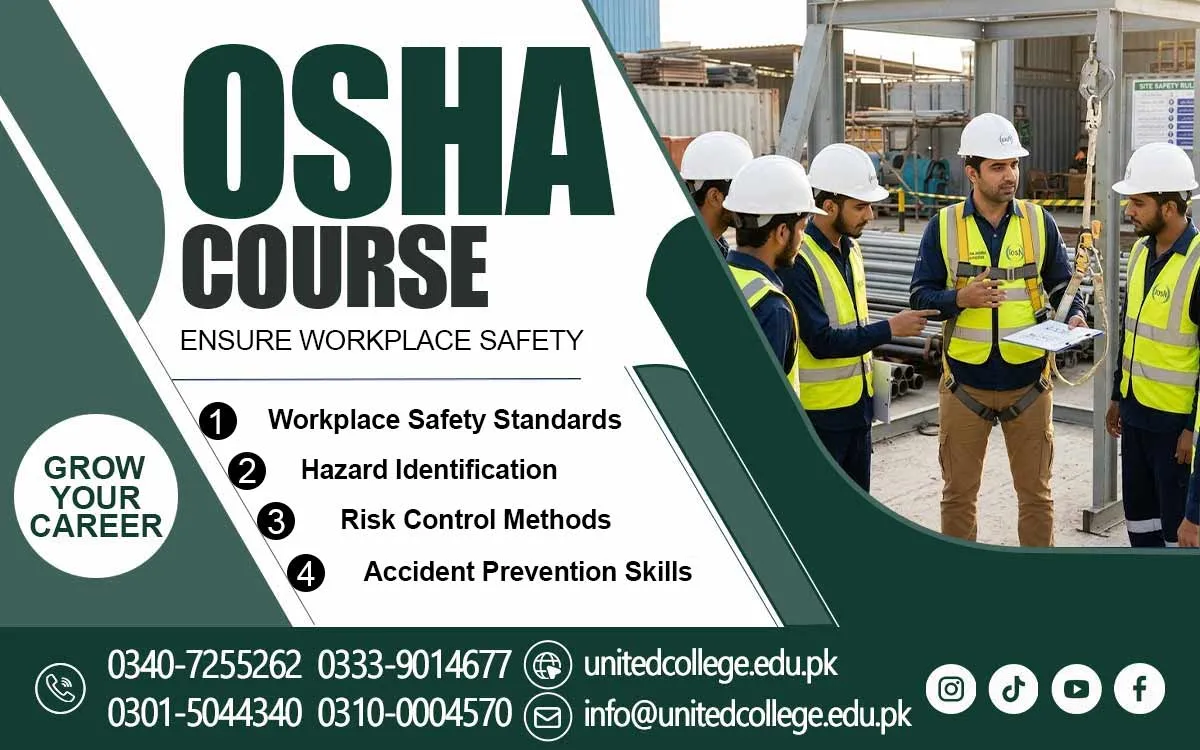

OSHA Course in Sibi Develops Skills for Hazard Prevention
Builds Confidence in Handling Safety Challenges
Workplace safety is an important part of every job where people use tools, operate machinery, handle materials, or work in environments with potential hazards. On construction sites, in factories, and across industrial workplaces, a small mistake can lead to injuries, damaged equipment, or unexpected emergencies. Understanding how to recognize dangers and follow safety procedures helps workers make better decisions and protect themselves and others.
The OSHA Course in Sibi introduces learners to occupational health and safety concepts that help them understand workplace hazards, risk awareness, and accident prevention. It can be a valuable learning option for students, new learners, job seekers, and individuals interested in industrial safety. Through safety education, learners can develop a clearer understanding of workplace responsibilities and the importance of following established procedures.
Building a Safety Mindset Before Entering the Workplace
Workplace safety begins with the ability to identify potential hazards before they cause injuries or accidents. Uneven floors, exposed electrical wires, unsecured ladders, and blocked emergency exits can create serious risks in construction and industrial environments. Workers may also face hazards from moving vehicles, falling materials, excessive noise, and poorly maintained equipment.
An OSHA Course in Sibi helps learners understand the importance of hazard identification, risk assessment, and accident prevention. OSHA training teaches workers how to recognize unsafe conditions and follow appropriate preventive measures. For example, employees should stay away from damaged electrical cables and report them to the responsible person. Similarly, keeping tools organized and walkways clear can help reduce workplace accidents and promote a safer working environment.
Understanding the Principles Behind Occupational Health and Safety
Occupational Health and Safety focuses on protecting people from workplace injuries, harmful exposure, and unsafe working conditions. It involves identifying possible dangers, assessing risks, following safety rules, and taking appropriate steps to reduce the likelihood of incidents. The OSHA training can introduce learners to these principles and help them understand how organizations use safety procedures to create more controlled working environments.
An important part of this learning process is understanding the difference between a hazard and a risk. A hazard is something that can cause harm, while risk concerns the likelihood and possible severity of that harm. For instance, a chemical substance may be hazardous, but the level of risk depends on factors such as exposure, handling methods, protective measures, and working conditions.
Recognizing the Safety Measures That Protect Workers Every Day
Different workplaces require proper knowledge of occupational health and safety practices to prevent accidents and protect employees. An OSHA Course in Sibi helps individuals understand the importance of Personal Protective Equipment (PPE), including safety helmets, shoes, gloves, eye protection, hearing protection, and respiratory equipment. Participants learn how to select and use protective equipment correctly according to workplace hazards and job requirements.
The course also covers fire prevention, emergency preparedness, workplace hazard identification, and accident prevention. Workers gain knowledge about keeping emergency exits clear, following fire safety procedures, and responding appropriately during emergencies. OSHA training is beneficial for construction workers, factory employees, engineers, and supervisors who want to improve their professional skills and understand internationally recognized occupational health and safety standards.
Developing Practical Skills Through Hazard Identification and Risk Assessment
Hazard identification and risk assessment help workers move beyond simply noticing problems. They encourage people to examine working conditions, consider who might be affected, and understand what measures may reduce the danger. For example, if materials are stacked unsafely in a storage area, workers should recognize the possibility of falling objects and report the condition to the responsible person.
Learners studying workplace safety should also develop the habit of communicating clearly when they notice an unsafe condition. They need to understand warning signs, read relevant instructions, and follow approved procedures instead of attempting unfamiliar tasks. Incident reporting is another important concept because accurate information can help an organization investigate what happened and reduce the chance of similar events.
Connecting Safety Knowledge With Future Professional Goals
For students and new learners, workplace safety education can provide a useful starting point for understanding professional responsibilities. Job seekers may use this knowledge to become more familiar with the safety expectations associated with technical and industrial work. People already working in construction, maintenance, manufacturing, or related fields may also benefit from reviewing safety principles and improving their awareness of common hazards.
The OSHA Training in Sibi may be relevant to individuals exploring safety-related responsibilities, but the value of training depends on their goals and the requirements of the position they wish to pursue. Some roles may require additional qualifications, practical experience, specialized training, or other recognized credentials. Completing a course does not automatically make someone eligible for every safety position or guarantee employment.
Selecting a Training Institute With Clear Learning Priorities
Choosing the right training provider is an important step in developing a reliable understanding of occupational safety. Learners should examine the course outline, teaching approach, instructor experience, and relevance of the material to real workplace situations. It is useful to check whether the programme explains hazard identification, risk assessment, PPE, fire prevention, and emergency procedures in a way that beginners can understand.
For learners considering an OSHA course offered by United College of Technology, contacting the institute directly can help clarify the current programme details. They should confirm the available subjects, course duration, fees, training arrangements, and certificate information rather than relying on assumptions. It is also important to understand whether the course meets the expectations of a particular employer or professional pathway.
Turning Safety Awareness Into Consistent Workplace Practice
Learning about occupational safety is most useful when the knowledge becomes part of everyday behaviour. Learners can strengthen their understanding by reviewing safety instructions, observing working conditions carefully, asking questions when procedures are unclear, and following approved methods for completing tasks. They should also understand the importance of reporting hazards promptly and respecting restricted areas.
For learners in Sibi, building safety knowledge is a practical step toward understanding the demands of modern workplaces. The OSHA Course in Sibi offers an opportunity to explore hazard prevention, protective measures, and responsible work practices in a structured learning environment. By selecting a suitable training provider and continuing to improve their knowledge, learners can build a stronger foundation for future professional development.
Frequently Asked Questions (FAQs)
OSHA training introduces learners to the importance of following workplace rules, respecting safety instructions, and understanding their role in reducing preventable incidents.
Organized storage helps prevent falling objects, blocked walkways, damaged materials, and unnecessary obstacles that may create dangerous working conditions.
Suitable ventilation can help control airborne contaminants and improve indoor air conditions, depending on the workplace and the hazards involved.
They should review the relevant instructions, seek guidance from an authorized supervisor, and ensure they have the necessary training and protective equipment before starting.
Clear instructions help workers recognize their responsibilities, follow procedures correctly, and avoid confusion when performing tasks that involve potential hazards.
They can review updated workplace procedures, participate in suitable refresher training, and learn from safety briefings and documented workplace incidents.
Admission Open: Start Your Professional Journey Today!
Join United College of Technology and build a career with practical training, recognized certifications, and Gulf job support. Seats are limited.
Apply Now via WhatsAppContact Information
- Address: Rawalpindi: F-272 Main New Katarian Stop, Old IJP Road | Lahore Campus: Lahore, Pakistan
- Phone/WhatsApp: 0340-7255262 / 0333-9014677 / 0301-5044340 / 0310-0004570 / 051-8770756
- Website: unitedcollege.edu.pk
















Leave a Comment