

Plumbing Course in Dera Ismail Khan with Practical Skills
Introduction to Professional Plumbing Technology
Professional plumbing technology is one of the most important technical trades in the construction and maintenance industry. Every modern residential, commercial, and industrial building depends on a properly designed plumbing system to deliver clean water, remove wastewater, and maintain hygienic living conditions. Without a reliable plumbing network, buildings cannot operate efficiently or meet modern health and safety standards. As construction continues to expand, the demand for qualified plumbing professionals also continues to grow.
A professional plumbing course introduces students to the fundamental concepts of water supply systems, drainage networks, sanitary installations, pipe materials, valves, fittings, pumps, and plumbing accessories. Learners gain a complete understanding of how different plumbing components work together to create efficient and reliable systems. They also study industry terminology, plumbing regulations, and installation standards that are commonly followed in residential and commercial projects.
Besides installation techniques, students also develop the ability to identify common plumbing faults and understand suitable repair methods. This balanced approach allows learners to build both theoretical knowledge and practical expertise, preparing them for future employment in construction companies, maintenance departments, and independent plumbing businesses.
Understanding Water Supply System Installation
The Plumbing Course in Dera Ismail Khan provides students with comprehensive knowledge of efficient water supply system installation and management. Learners understand how clean water is transported from the main supply source through storage tanks, pumps, distribution pipelines, valves, and plumbing fixtures while maintaining proper water pressure and consistent flow. Through practical and theoretical training, students develop the skills required to install reliable water supply systems for residential and commercial buildings according to modern plumbing standards.
The course explains different pipe materials commonly used for water supply installations, including PVC, CPVC, PPR, copper, and galvanized steel pipes. Learners understand the advantages, limitations, and appropriate applications of each material. They also study pipe sizing, routing techniques, pressure balancing, and methods for reducing water loss through proper installation practices.
Students learn how to read plumbing layouts, determine pipe routes, install shut-off valves, connect water fixtures, and position pipelines according to construction requirements. Proper planning allows plumbing systems to operate efficiently while simplifying future maintenance and repair work. Hands-on practice allows learners to install complete water supply systems using professional techniques. These practical exercises prepare students for real construction projects where precision and reliability are essential.
Practical Pipe Fitting and Jointing Techniques
Pipe fitting is one of the most valuable skills in the plumbing profession because every plumbing system depends on secure and accurate pipe connections. Students learn how to measure, mark, cut, bend, thread, and assemble different types of plumbing pipes using professional tools and equipment. Accurate measurements and precise workmanship contribute to long-lasting plumbing installations.
The training introduces several pipe joining methods used in modern construction. Learners study solvent welding, threaded joints, compression fittings, push-fit systems, brazing techniques, and heat fusion processes for plastic piping. Understanding when and how to apply each method improves installation quality and minimizes future maintenance requirements. Students also learn the importance of proper pipe alignment, secure support brackets, sealing compounds, and leak prevention methods.
Small installation errors can significantly affect plumbing performance, making careful workmanship an essential professional skill. Extensive workshop sessions allow learners to complete practical pipe fitting projects under realistic working conditions. Repeated hands-on practice develops confidence, improves efficiency, and prepares students to perform plumbing installations according to professional industry standards.
Drainage Network Planning and Maintenance
A well-designed drainage system safely removes wastewater from kitchens, bathrooms, commercial facilities, and industrial buildings. Students learn how drainage systems function through gravity flow, vent pipes, floor traps, inspection chambers, and underground sewer connections. Understanding these principles is essential for maintaining clean and healthy environments.
The Plumbing Course in Dera Ismail Khan explains how properly designed drainage layouts help prevent water accumulation, unpleasant odors, pipe blockages, and structural damage in residential and commercial buildings. Students learn about correct pipe gradients, venting arrangements, drainage pipe sizing, and inspection points that improve the efficiency and long-term performance of drainage systems. The course also introduces different drainage materials, professional installation procedures, and effective maintenance techniques, enabling learners to develop the practical knowledge required to install, inspect, and maintain modern plumbing systems with confidence.
Understanding these components helps reduce future repair costs and improve system reliability. Practical maintenance training focuses on identifying blockages, cleaning drainage lines, replacing damaged components, inspecting sewer connections, and performing preventive maintenance. These valuable skills enable future plumbing technicians to diagnose drainage problems quickly and restore normal system operation efficiently.
Essential Plumbing Tools and Equipment
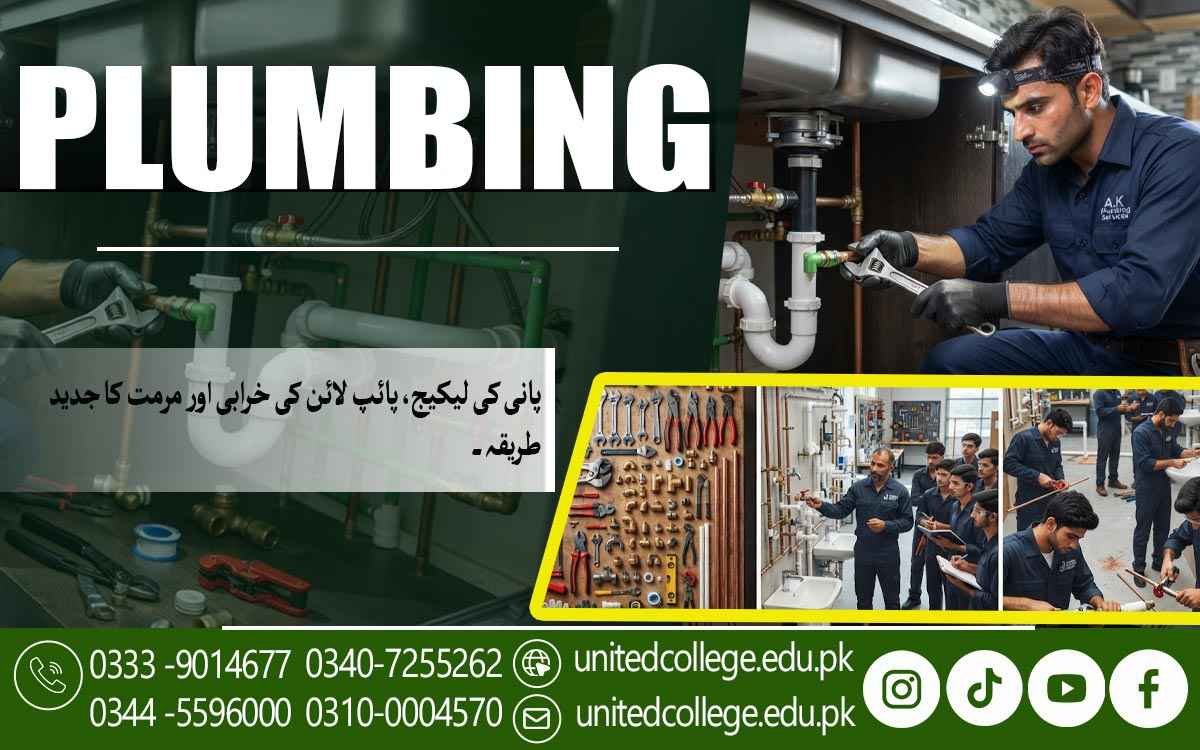
The Plumbing Course in Dera Ismail Khan provides practical training in the use of specialized plumbing tools and equipment that improve installation accuracy, repair quality, and workplace efficiency. Students receive hands-on instruction in the safe operation of measuring tapes, pipe cutters, threading machines, pipe wrenches, adjustable spanners, pliers, pressure testing equipment, pipe benders, sealant applicators, and leak detection devices.
Each tool has a specific purpose, and learners understand how selecting the correct equipment improves productivity while reducing material waste and installation errors. Students also learn proper cleaning, storage, and maintenance procedures that extend tool life and ensure reliable performance. Workshop training allows learners to perform practical plumbing tasks using industry-standard equipment.
They gain confidence while cutting pipes, creating threaded connections, tightening fittings, installing valves, and testing completed systems under instructor supervision. By becoming familiar with professional plumbing equipment, students develop practical abilities that prepare them for employment in construction companies, maintenance departments, and plumbing service organizations where technical competence is highly valued.
Leak Detection and Repair Methods
Leak detection is an essential responsibility for professional plumbers because untreated leaks can result in water loss, structural damage, mold growth, and expensive repair costs. Students learn systematic inspection techniques that help identify both visible and hidden plumbing leaks within residential and commercial systems.
The course discusses common causes of leakage, including pipe corrosion, damaged fittings, excessive water pressure, poor installation practices, worn sealing materials, cracked pipelines, and aging plumbing components. Understanding these causes allows learners to recommend effective repair solutions based on the condition of the system.
Students also study various inspection procedures, pressure testing methods, and troubleshooting techniques for accurately locating plumbing faults. Developing analytical skills helps reduce repair time while improving service quality. Practical exercises include replacing damaged pipe sections, repairing leaking joints, installing new fittings, resealing threaded connections, and testing repaired systems to confirm proper operation. These activities improve confidence and prepare learners for real maintenance and repair responsibilities.
Safety Standards for Plumbing Professionals
Safety is one of the most important aspects of plumbing work because technicians frequently handle heavy equipment, sharp tools, pressurized water systems, confined spaces, and construction environments. Students learn professional safety practices to reduce workplace hazards and protect themselves, coworkers, and clients.
Training covers the correct use of personal protective equipment, including gloves, helmets, eye protection, protective footwear, and work clothing. Learners understand safe lifting techniques, ladder safety, electrical awareness, hazard identification, emergency response procedures, and proper handling of plumbing equipment. Students also learn the importance of maintaining organized work areas, following plumbing regulations, inspecting equipment before use, and communicating effectively with other workers on construction sites.
These habits contribute to safer and more productive working environments. Developing a strong safety culture not only reduces workplace accidents but also improves professionalism and builds confidence among future plumbing technicians. Employers highly value workers who consistently follow safety standards while delivering quality workmanship.
Career Opportunities After Plumbing Training
The Plumbing Course in Dera Ismail Khan prepares students for a wide range of career opportunities in the construction and maintenance industries by developing practical plumbing knowledge and technical expertise. Skilled plumbers are required for residential housing projects, commercial buildings, shopping centers, hospitals, hotels, schools, factories, government infrastructure, and large industrial facilities where reliable water supply and drainage systems are essential. The course equips learners with industry-relevant skills that improve employability and prepare them to work confidently in diverse plumbing and construction environments.
After completing professional training, graduates can pursue careers as plumbing technicians, maintenance plumbers, pipe installers, sanitary fitting specialists, building maintenance supervisors, facility technicians, construction workers, or independent plumbing contractors. Many experienced professionals also establish their own plumbing businesses and provide installation and repair services to residential and commercial clients.
The combination of classroom learning, practical workshop experience, and professional problem-solving skills enables students to build rewarding long-term careers. Plumbing remains one of the most valuable technical professions because skilled technicians continue to be in demand wherever modern buildings are constructed, maintained, or renovated.
Frequently Asked Questions (FAQs)
Anyone interested in learning professional plumbing skills can join the course. It is suitable for beginners, job seekers, technicians, and individuals who want to start a career in the plumbing industry.
Students learn pipe installation, water supply systems, drainage systems, sanitary fitting, pipe jointing, leak detection, plumbing maintenance, and the safe use of professional plumbing tools through practical training.
Practical training allows students to apply classroom knowledge in real working situations. It helps improve installation accuracy, troubleshooting skills, and confidence while working with plumbing systems and equipment.
Graduates can work as plumbing technicians, pipe fitters, maintenance technicians, sanitary installation specialists, construction workers, facility maintenance staff, or start their own plumbing service business.
Modern plumbing techniques improve installation quality, reduce maintenance costs, increase workplace efficiency, and help students meet current industry standards, making them more competitive in the job market.
Admission Open: Start Your Professional Journey Today!
Join United College of Technology and build a career with practical training, recognized certifications, and Gulf job support. Seats are limited.
Apply Now via WhatsAppContact Information
- Address: Rawalpindi: F-272 Main New Katarian Stop, Old IJP Road | Lahore Campus: Lahore, Pakistan
- Phone/WhatsApp: 0333-9014677 / 0344-5596000 / 0310-0004570 / 0301-5044340 / 0340-7255262
- Website: unitedcollege.edu.pk















Leave a Comment