


Plumbing Course in Jhang: Step Into Practical Plumbing Training
Build Practical Skills That Work Beyond the Classroom
A leaking pipe, slow drain, loose tap, or poorly fitted water line can quickly turn into a frustrating building problem. Plumbing keeps water moving into homes and other buildings while drainage systems carry used water away. Because these systems involve many connected parts, proper plumbing requires more than basic repair knowledge.
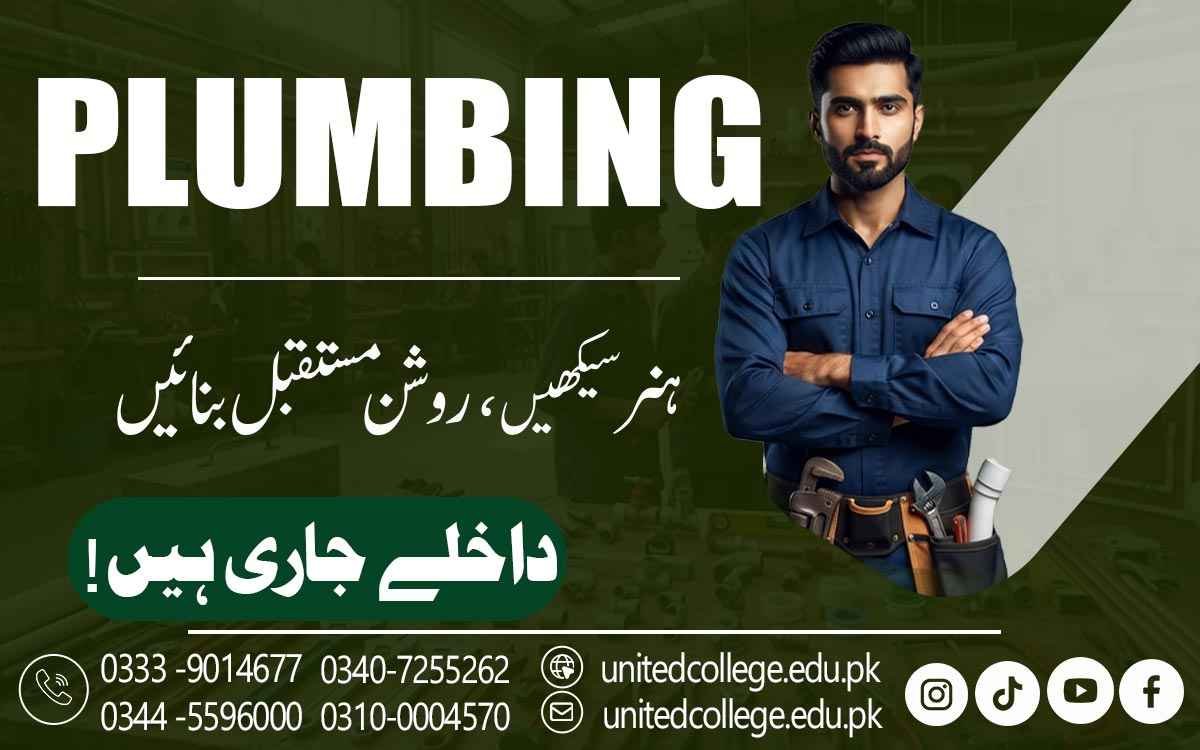
For beginners in Jhang, learning the trade through practical training can be a useful way to develop technical abilities. The Plumbing Course in Jhang, offered by United College of Technology, introduces learners to plumbing tools, pipe fitting, water supply systems, drainage work, sanitary fittings, maintenance, and repair techniques. The aim is to help students understand how plumbing tasks are performed and give them opportunities to build their skills through practice.
Start Where Every Plumbing Job Begins: Understanding The System
Before cutting a pipe or tightening a fitting, a learner needs to know what the plumbing system is designed to do. Water supply lines bring water to required points, while drainage pipes take wastewater away from the building. Plumbing classes can introduce beginners to basic concepts such as water flow, valves, pipe routes, connection points, and fixture placement.
During a Plumbing Course In Jhang, students can learn how individual parts work together instead of treating each pipe or fitting as a separate item. This foundation makes later practical lessons easier to follow. Once learners understand the basic path of water, they can better recognize how installation, maintenance, and repair tasks fit into the larger system.
Turn Measurements and Materials into Proper Pipe Work
Pipe fitting is one of the areas where accuracy matters most. A learner needs to consider the required length, diameter, direction, material, and type of connection before assembling a pipe section. During plumbing practical training, students can work with different pipe fittings, including elbows, tees, couplings, adapters, and valves.
Each fitting has a particular purpose, such as changing direction, joining sections, creating a branch, or controlling water flow. Pipe cutting and joining also require careful preparation. Measuring twice before cutting can prevent unnecessary material waste, while properly prepared joints can help create a more reliable installation.
Discover the Tools That Make Technical Work Easier
A plumbing technician depends on tools for many everyday tasks. Pipe cutters help prepare sections, wrenches secure connections, pliers assist with smaller components, and measuring tools help maintain accuracy. Beginners can learn not only the names of plumbing tools but also when and how to use them.
Choosing the right equipment for a particular task can make work more controlled and reduce the chance of damaging a pipe or fitting. Tool care is another useful habit. Keeping equipment clean, storing it properly, and checking it before use can support an organized approach to practical plumbing work.
Follow Water From The Main Line To The Final Fixture
Water supply systems need a planned route so that water can reach different points of a building. Depending on the layout, lines may connect to kitchens, bathrooms, washing areas, taps, storage tanks, and other fixtures. Learners can explore how water pipes are arranged and how valves help control individual sections.
During a Plumbing Course In Jhang, students can also study basic water pipe installation and understand why pipe routes need to be planned before physical work begins. This knowledge is useful for residential plumbing and other building settings. A student who understands the movement of water can more easily identify where a connection belongs and how different supply lines relate to one another.
Learn to Read the Signs Behind Common Plumbing Problems
Not every plumbing problem is immediately visible. A damp patch may come from a hidden leak, while slow drainage may indicate an obstruction farther along the waste line. Faulty fittings can also create problems even when the main pipe remains undamaged. Training can introduce learners to basic troubleshooting methods.
They can practice checking visible connections, valves, fixtures, joints, and exposed pipes to locate possible causes of leakage or poor water flow. Water leakage repair also requires care. A learner needs to understand the source of the issue before deciding whether a connection should be tightened, a component replaced, or further inspection carried out.
Build Safer Habits Alongside Technical Ability
Plumbing work involves tools, water, wet surfaces, and different materials, so safety should be part of the learning process from the beginning. Students can learn to keep their workspace clear and handle tools with proper care.
Basic plumbing safety may include using suitable protective equipment, checking relevant water supplies before certain tasks, keeping tools in good condition, and avoiding unnecessary risks around wet working areas. Good habits also include cleaning the area after completing a task and inspecting connections before considering the work finished.
Let Hands-On Practice Shape Your Confidence
Reading about plumbing can explain how a system works, but practical exercises allow learners to experience the details for themselves. Handling pipes, preparing joints, selecting fittings, and checking connections can reveal small issues that are difficult to understand through theory alone. The Plumbing Course in Jhang offered by United College of Technology gives learners a structured opportunity to develop practical plumbing knowledge.
Students can work toward understanding pipe installation, water supply, drainage, sanitary fittings, plumbing tools, maintenance, repair, and safety practices. This approach can suit beginners, students, fresh learners, job seekers, and others who want to develop practical technical skills. It also gives learners a starting point from which they can continue improving through regular practice.
Take the Next Step with a Skill You Can Keep Developing
Plumbing is a skill that grows through careful observation, accurate work, repeated practice, and learning from each task. A beginner does not need to master every technique at once. Building knowledge step by step can make more advanced work easier to understand.
For someone in Jhang, structured training can be a practical starting point for learning how plumbing systems are installed, maintained, and repaired. The Plumbing Course in Jhang at United College of Technology can help learners begin that process while developing a foundation they can continue strengthening through practice.
Frequently Asked Questions (FAQs)
A shut-off point allows a section of the water supply to be stopped when inspection, maintenance, or repair work is needed.
Correct positioning helps create convenient connections for both incoming water and outgoing waste. It also supports a cleaner and more organized installation.
They can learn how different components connect, how fittings join pipe sections, and how connections are prepared according to the requirements of a plumbing system.
Careful measurements and proper planning before cutting pipes can help learners use materials more efficiently and avoid unnecessary mistakes.
A basic check can include inspecting joints, fittings, valves, and visible sections for signs of loose connections, leakage, or other installation issues.
A clear arrangement makes individual components easier to identify and inspect, which can help when locating a section that needs attention.
Admission Open: Start Your Professional Journey Today!
Join United College of Technology and build a career with practical training, recognized certifications, and Gulf job support. Seats are limited.
Apply Now via WhatsAppContact Information
- Address: Rawalpindi: F-272 Main New Katarian Stop, Old IJP Road | Lahore Campus: Lahore, Pakistan
- Phone/WhatsApp: 0333-9014677 / 0344-5596000 / 0310-0004570 / 0301-5044340 / 0340-7255262
- Website: unitedcollege.edu.pk
















Leave a Comment