


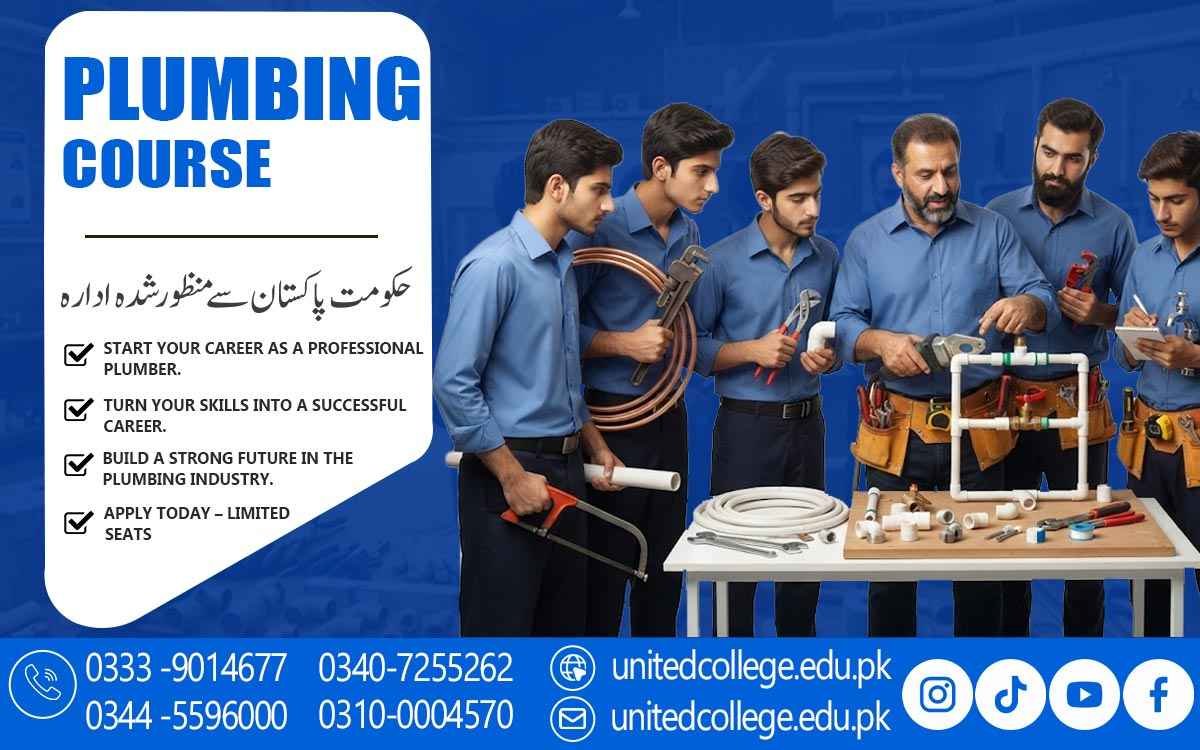

Plumbing Course in Mansehra Teaching Plumbing Essentials
Practical Training in Modern Plumbing
Practical learning is the foundation of professional plumbing because technical skills can only be developed through real workplace experience. The Plumbing Course in Mansehra is designed to combine classroom instruction with extensive workshop activities so students can understand how modern plumbing systems are installed, tested, and maintained. This practical approach allows learners to connect theoretical concepts with actual plumbing tasks.
During the course, students become familiar with plumbing tools, pipes, fittings, valves, sanitary fixtures, and installation equipment commonly used in residential and commercial projects. They learn proper working methods while following professional installation standards that improve the quality and durability of plumbing systems.
Regular workshop sessions encourage students to perform practical assignments independently while receiving guidance from experienced instructors. By repeatedly completing installation and maintenance tasks, learners develop confidence, improve technical accuracy, and prepare themselves for professional employment in the plumbing industry.
Water Line Installation and Maintenance
A properly installed water line is essential for supplying clean water safely and efficiently throughout any building. Students learn how water travels from the main source through pipelines, storage tanks, pumps, valves, and fixtures before reaching different areas of a property. Understanding these systems helps learners install reliable plumbing networks that perform efficiently for many years.
The Plumbing Course in Mansehra explains professional methods for selecting suitable pipe materials, measuring installation routes, controlling water pressure, and connecting pipelines securely. Students also study how poor installation practices can result in leakage, reduced water flow, and unnecessary maintenance expenses.
Practical training includes installing water supply pipelines, testing water pressure, inspecting pipe connections, replacing damaged fittings, and carrying out routine maintenance procedures. These practical exercises prepare learners to perform installation and servicing tasks confidently in residential and commercial environments.
Drainage and Sewerage System Concepts
Drainage and sewerage systems play a vital role in maintaining sanitation by removing wastewater safely from buildings. Students learn how wastewater moves through drainage pipes, floor traps, vent systems, inspection chambers, and sewer connections while preventing contamination and unpleasant odors. Understanding these concepts is essential for designing efficient plumbing systems.
The Plumbing Course in Mansehra provides detailed knowledge about drainage layouts, pipe gradients, venting methods, wastewater flow management, and sewerage system planning. Learners understand how properly designed drainage systems reduce blockages, improve performance, and increase the lifespan of plumbing installations.
Workshop activities include drainage pipe installation, blockage identification, cleaning procedures, inspection methods, and maintenance techniques. These practical sessions help students understand the importance of maintaining safe and efficient drainage systems for different types of buildings.
Plumbing Materials and Their Applications
Modern plumbing projects require different materials depending on the building design and water system requirements. Students become familiar with PVC, CPVC, PPR, copper, galvanized steel, and flexible plumbing pipes while learning where each material is most suitable. Understanding the properties of these materials helps improve installation quality and system reliability.
The Plumbing Course in Mansehra explains the advantages, limitations, durability, and maintenance requirements of different plumbing materials. Learners study pipe fittings, valves, connectors, sealants, insulation products, and plumbing accessories commonly used in residential and commercial construction.
Practical sessions allow students to identify plumbing materials, prepare pipe sections, assemble fittings, and complete installation projects using professional techniques. This practical knowledge enables learners to select appropriate materials for different plumbing applications.
Diagnosing Plumbing System Faults
Every plumbing technician must be able to identify system faults quickly to prevent major damage and unnecessary repair costs. Students learn professional troubleshooting techniques that help locate leaks, blocked drainage lines, damaged fittings, pressure loss, faulty valves, and pipe failures in different plumbing systems.
The Plumbing Course in Mansehra teaches learners how to inspect plumbing installations, evaluate system performance, perform pressure testing, and identify hidden plumbing defects using systematic inspection methods. Accurate diagnosis helps reduce repair time while improving service quality.
Practical assignments involve examining faulty plumbing systems, identifying the cause of problems, replacing damaged components, and testing repaired installations. These activities strengthen analytical thinking and improve students' confidence when dealing with real plumbing challenges.
Efficient Repair and Replacement Methods
Professional plumbing requires effective repair techniques that restore system performance while minimizing downtime and material waste. Students learn how to repair leaking pipes, replace damaged fittings, install new valves, reseal threaded joints, and restore water supply and drainage systems using professional procedures.
The Plumbing Course in Mansehra explains how different repair methods are selected according to the type of pipe material, system condition, and installation requirements. Learners understand the importance of choosing durable repair solutions that improve long-term plumbing performance.
Hands-on training enables students to complete repair tasks safely while following industry standards. Repeated practical work improves technical ability and prepares learners to carry out maintenance and repair services efficiently in professional workplaces.
Workplace Safety in Plumbing Projects
Safety is an essential part of every plumbing project because technicians regularly work with construction equipment, sharp tools, ladders, electrical installations, and pressurized water systems. Students learn professional safety procedures that reduce workplace risks while protecting both workers and building occupants.
The Plumbing Course in Mansehra introduces safe working practices, hazard identification, personal protective equipment, electrical awareness, manual handling techniques, emergency response procedures, and proper tool handling methods. Following these practices improves workplace safety and professional performance.
Practical workshops reinforce safe working habits by encouraging students to use equipment correctly, maintain clean work areas, inspect tools before use, and follow industry regulations during installation and maintenance projects.
Professional Development Through Plumbing Skills
Learning professional plumbing creates valuable career opportunities because skilled technicians continue to be required in construction, maintenance, industrial, and facility management sectors. Strong technical skills combined with practical experience allow graduates to build stable and rewarding careers.
The Plumbing Course in Mansehra helps students develop installation, maintenance, troubleshooting, communication, and problem-solving abilities that employers expect from modern plumbing professionals. Continuous practical training prepares learners for real workplace responsibilities.
After completing the course, graduates can pursue careers as plumbing technicians, maintenance plumbers, sanitary fitting specialists, pipe installers, facility maintenance workers, or independent plumbing contractors. With additional experience and continuous learning, they can also progress into supervisory and project management roles within the plumbing industry.
Frequently Asked Questions (FAQs)
The duration depends on the training schedule and institute plan. During the course, students complete both theoretical lessons and practical workshop sessions to develop professional plumbing skills.
Yes. The Plumbing Course in Mansehra teaches students how to identify common plumbing problems such as leaking pipes, blocked drains, low water pressure, faulty valves, and damaged fittings using practical troubleshooting methods.
Yes. Learners gain experience with PVC, CPVC, PPR, copper, galvanized steel, and other commonly used plumbing materials. They also learn how to select suitable materials for different plumbing applications.
Absolutely. Students learn safe working practices, proper tool handling, the use of personal protective equipment (PPE), hazard identification, and safety procedures followed during plumbing installation and maintenance projects.
Students participate in hands-on workshop activities that include water line installation, drainage system setup, pipe fitting, plumbing fixture installation, maintenance procedures, and repair techniques to prepare for real workplace responsibilities.
Admission Open: Start Your Professional Journey Today!
Join United College of Technology and build a career with practical training, recognized certifications, and Gulf job support. Seats are limited.
Apply Now via WhatsAppContact Information
- Address: Rawalpindi: F-272 Main New Katarian Stop, Old IJP Road | Lahore Campus: Lahore, Pakistan
- Phone/WhatsApp: 0333-9014677 / 0344-5596000 / 0310-0004570 / 0301-5044340 / 0340-7255262
- Website: unitedcollege.edu.pk
















Leave a Comment