


Plumbing Course in Murree for Residential Plumbing Knowledge
Getting Familiar with Building Plumbing Systems
Building plumbing systems are responsible for supplying water to different areas and removing wastewater through properly arranged pipes and drainage lines. These systems are used in homes, offices, commercial buildings, and other structures. Understanding their basic operation is important for anyone who wants to enter the plumbing field.
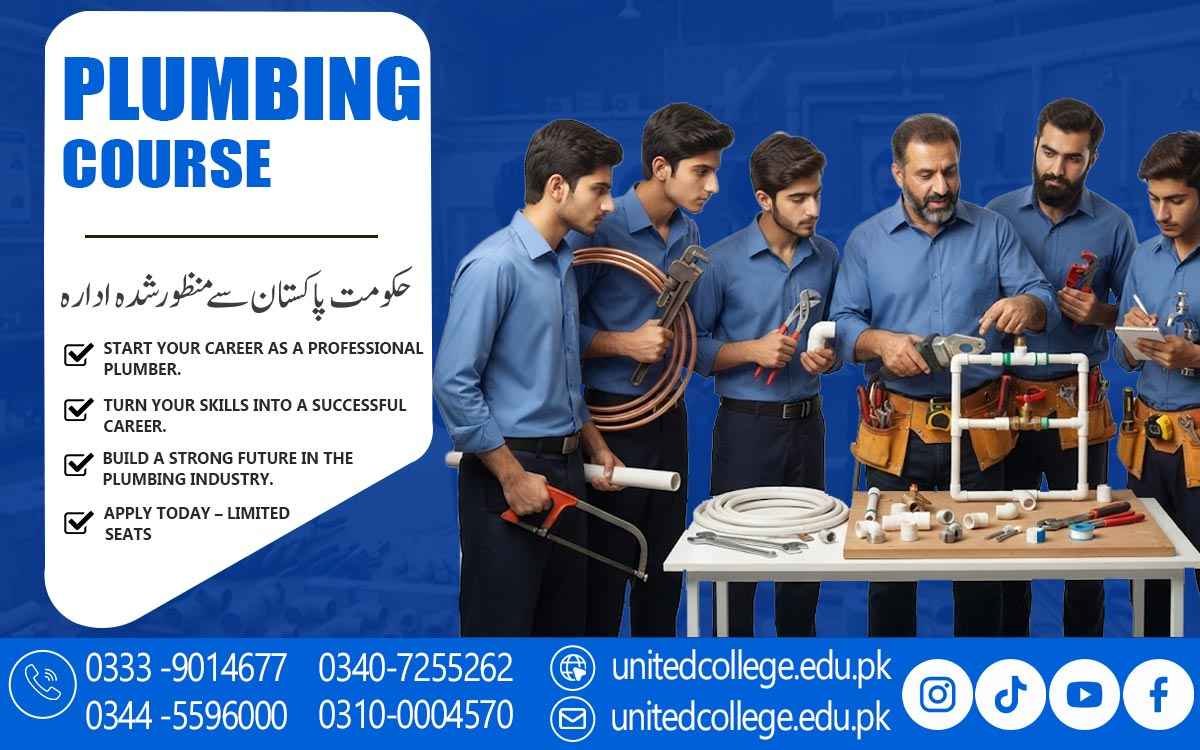
The Plumbing Course in Murree introduces learners to the main components of building plumbing systems. Students can learn about water supply pipes, drainage lines, valves, fittings, fixtures, and other essential parts. They can also understand how these components work together to provide a functional water and sanitation system.
Learners can explore simple plumbing layouts and become familiar with the movement of water through a building. This knowledge can help them understand where supply lines, drainage pipes, and fixtures are normally positioned. A strong understanding of these basics can make advanced plumbing topics easier to learn.
Exploring Water Supply Pipes and Their Applications
Water supply pipes carry clean water from the main source to different fixtures inside a building. The selection of pipes depends on the type of system, building requirements, water usage, and installation conditions. Understanding different pipe applications is therefore an important part of plumbing education.
Through the Plumbing Course in Murree, students can explore commonly used water supply pipes, their sizes, fittings, and connection methods. Learners can understand how pipes are selected for different water supply requirements. They can also study the role of elbows, tees, couplings, valves, and other fittings.
Practical knowledge can help students understand how water supply lines are arranged in residential and commercial buildings. They can learn about basic measurement, cutting, joining, and positioning procedures. This can prepare them for simple water line installation tasks under suitable supervision.
Learning Safe Methods for Pipe Installation
Pipe installation requires careful preparation because incorrectly installed pipes can lead to leakage, poor water flow, or maintenance problems. Proper measurements, suitable fittings, and secure connections are important for creating a reliable plumbing system. Safety should also be considered throughout the installation process.
The Plumbing Course in Murree can teach learners basic and safe methods of installing different plumbing pipes. Students can study pipe measurement, cutting, alignment, fitting, and connection procedures. They can also learn why checking each connection before completing an installation is important.
Practical exercises can help learners become more familiar with installation procedures. They can practice assembling pipes and fittings while learning how to keep the work area organized. These activities can improve their understanding of safe and systematic plumbing installation.
Understanding Drainage and Sewer Line Basics
Drainage and sewer lines are important parts of building sanitation systems. They help move wastewater away from bathrooms, kitchens, washing areas, and other locations. Properly planned drainage lines can reduce water accumulation and help maintain a cleaner building environment.
During the Plumbing Course in Murree, students can learn about drain pipes, waste lines, traps, outlets, and basic sewer connections. Learners can understand the general movement of wastewater from fixtures toward appropriate drainage points. They can also explore the importance of suitable pipe layouts.
Students can become familiar with common drainage problems such as blockages, slow water flow, unpleasant smells, and leakage. Learning basic inspection procedures can help them recognize possible causes. This knowledge can be useful for routine drainage maintenance in residential and other buildings.
Practicing Fitting of Taps, Valves, and Fixtures
Taps, valves, and plumbing fixtures are used throughout residential and commercial buildings. They control water flow and provide convenient access to water in kitchens, bathrooms, washing areas, and other locations. Proper fitting is important to prevent leakage and maintain effective water flow.
The Plumbing Course in Murree can provide learners with practical knowledge of installing and connecting common taps, valves, and fixtures. Students can explore different types of connections and understand how fixtures are attached to supply and drainage lines. They can also learn the importance of checking connections after installation.
Practical work can help students become more familiar with everyday plumbing components. Learners can practice assembling suitable fittings and identifying common installation problems. This experience can be useful for future residential plumbing and maintenance tasks.
Identifying Plumbing Issues in Residential Buildings
Residential plumbing systems can develop problems because of damaged pipes, loose connections, blocked drains, worn-out fixtures, or other causes. Early identification of these issues can help reduce water wastage and prevent further damage. Basic inspection knowledge is therefore valuable for plumbing learners.
The Plumbing Course in Murree can teach students how to recognize common plumbing problems in residential buildings. Learners can inspect visible pipes, joints, taps, valves, fixtures, and drainage points. They can also learn how unusual water flow, damp areas, or visible leakage may indicate a plumbing issue.
Understanding possible causes is an important part of maintenance work. Students can explore basic solutions such as tightening connections, cleaning blocked areas, or replacing damaged components where appropriate. Practical training can help them develop better awareness of routine residential plumbing problems.
Studying Preventive Maintenance for Water Systems
Preventive maintenance focuses on identifying and addressing small plumbing issues before they become major problems. Regular inspection of pipes, fittings, valves, and fixtures can help maintain a water system for longer. It can also support better water use and reduce avoidable repairs.
Through the Plumbing Course in Murree, learners can study basic preventive maintenance practices for water systems. Students can learn how to inspect connections, check fixtures, observe water flow, and identify possible signs of leakage. They can also understand the importance of keeping plumbing components in suitable condition.
Regular maintenance is useful in homes, offices, hotels, and other buildings. Learners can develop simple maintenance routines and understand when a component may require attention. This knowledge can support future responsibilities in building maintenance and plumbing service work.
Preparing for Plumbing Projects in Different Buildings
Plumbing requirements can vary according to the size, purpose, and design of a building. A house may have different plumbing needs compared with an office, shop, hotel, or other commercial structure. Learners therefore benefit from understanding how plumbing concepts can be applied in different environments.
The Plumbing Course in Murree can help students build a foundation for working on different types of plumbing projects. They can study water supply, drainage, pipe fitting, fixtures, inspection, and maintenance procedures. Practical activities can help learners understand how these areas are connected within a complete project.
With continued practice, students can become more familiar with the responsibilities involved in plumbing work. They can develop better awareness of tools, materials, safety procedures, and organized installation practices. This foundation can support further technical learning and entry-level plumbing opportunities.
Frequently Asked Questions (FAQs)
The course covers building plumbing systems, water supply pipes, pipe installation, drainage lines, fixtures, plumbing problems, and preventive maintenance.
Yes, beginners can start with basic plumbing concepts and gradually learn about pipes, fittings, water systems, drainage, and practical maintenance.
Learners can study commonly used supply pipes, different sizes, fittings, valves, and their applications in residential and commercial buildings.
Yes, learners can understand basic drainage layouts, waste pipes, traps, outlets, and common problems related to wastewater removal.
Students can learn routine inspection practices for water lines, fixtures, connections, and other components to identify potential problems early.
Admission Open: Start Your Professional Journey Today!
Join United College of Technology and build a career with practical training, recognized certifications, and Gulf job support. Seats are limited.
Apply Now via WhatsAppContact Information
- Address: Rawalpindi: F-272 Main New Katarian Stop, Old IJP Road | Lahore Campus: Lahore, Pakistan
- Phone/WhatsApp: 0333-9014677 / 0344-5596000 / 0310-0004570 / 0301-5044340 / 0340-7255262
- Website: unitedcollege.edu.pk














Leave a Comment