


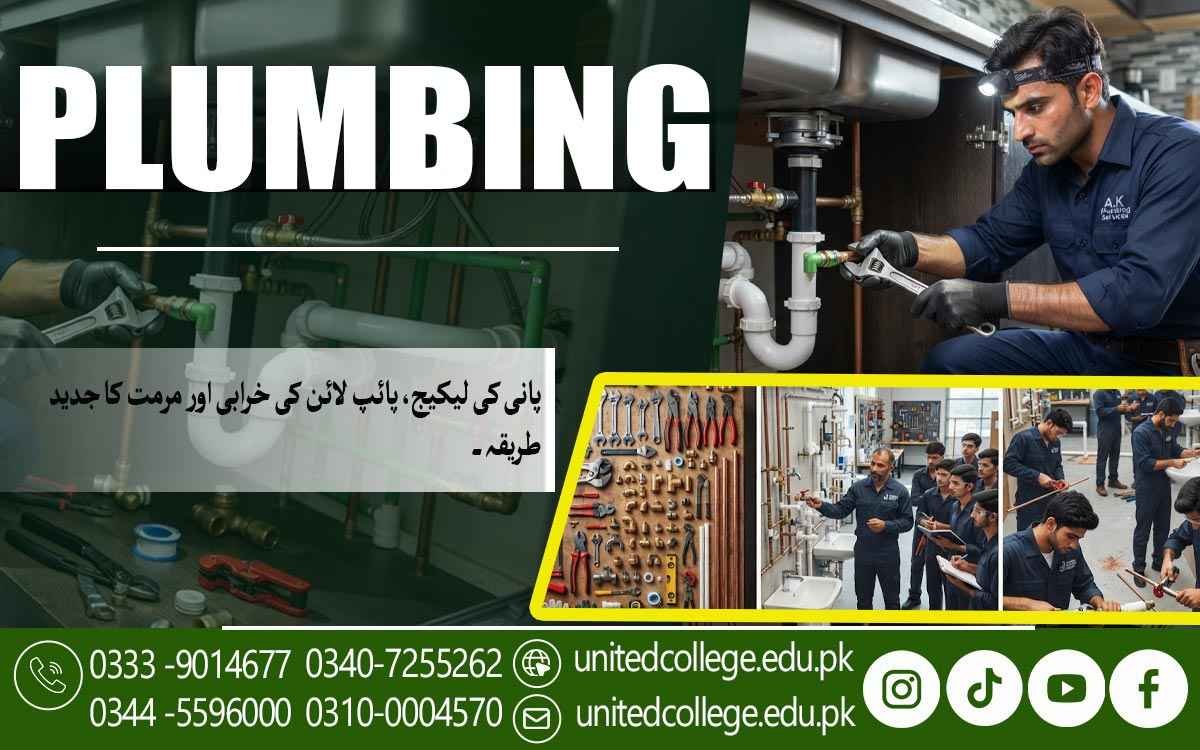

Plumbing Course in Sahiwal – Learn Practical Plumbing Skills
When a Plumbing Problem Becomes a Lesson in How Buildings Work
A leaking pipe under the sink, a blocked drain, or a tap with very low water pressure can quickly turn an ordinary day into a frustrating one. These problems may look simple from the outside, but fixing them properly often requires an understanding of pipes, joints, valves, water flow, and drainage routes. This is where practical plumbing knowledge becomes valuable. A Plumbing Course in Sahiwal can introduce beginners to the systems and techniques used to install, maintain, and repair plumbing in homes, shops, offices, and construction projects.
Instead of only learning the names of plumbing components, students can develop an understanding of how those components work together. At United College of Technology, learners can become familiar with plumbing tools, pipe fitting, water supply systems, drainage work, sanitary fittings, leak detection, and safe working methods. For students, fresh learners, and people interested in practical technical work, this type of training can provide a structured way to understand plumbing tasks step by step.
Understanding the Route of Water From Supply to Every Fixture
Have you ever wondered why water reaches a bathroom on the upper floor or why one tap may have better pressure than another? The answer often lies in the way the water supply system has been planned and installed. During plumbing training, learners can study how water travels from a main supply, storage tank, or other source through a network of pipes toward taps, sinks, showers, toilets, and other fixtures. They can learn about water tanks, pumps, valves, pipe sizes, connections, and basic water pressure concepts. A Plumbing Course in Sahiwal can help beginners understand that every part of the system has a purpose.
A valve can control or stop water flow, while a pump may assist with moving water where required. Pipe layout also matters because unnecessary bends or poorly planned routes can make installation and maintenance more difficult. Through practical exercises, learners can work with different components and understand how supply lines are connected. This knowledge can be useful in residential plumbing as well as commercial and construction environments, where properly planned water distribution is an important part of building services.
Pipes, Joints, and Fittings Turn Measurements Into Working Systems
A pipe may look like a simple piece of material, but creating a reliable plumbing system requires careful measurement and accurate connections. Learners in plumbing training can practice measuring pipe lengths, marking cutting points, preparing pipe ends, and joining sections using suitable methods. They can become familiar with different types of pipes and commonly used fittings, including elbows, tees, sockets, reducers, unions, and connectors. Valves and fittings can also be studied so learners understand how water flow is controlled and how different sections of a system are connected.
Depending on the material and installation, techniques such as threading, solvent joining, or other suitable connection methods may be introduced. Practical plumbing skills develop through repeated practice because a connection needs to be aligned, secure, and appropriate for the system. Students can also learn why poor measurements or weak pipe joints may result in leakage and future maintenance problems. By working through these tasks in a plumbing workshop, beginners can gradually understand how separate pipes and fittings are assembled into a complete water supply or drainage network.
Bathroom and Kitchen Plumbing Brings Technical Skills Into Everyday Spaces
A bathroom or kitchen provides a practical example of how several plumbing components must work together. A sink, tap, water supply line, waste pipe, valve, and drainage connection may all be located within a relatively small area. If one connection is installed incorrectly, the problem can affect the entire fixture. During a Plumbing Course in Sahiwal, learners can study bathroom plumbing and kitchen plumbing through practical tasks involving sanitary fittings and common fixtures. They can learn how taps, sinks, showers, toilets, wash basins, and other components connect to water supply and drainage systems.
Students can also practice checking alignment, securing connections, and testing installations for leaks or poor drainage. Understanding these familiar environments can make plumbing techniques easier for beginners because they can connect classroom learning with situations they have already seen at home or in other buildings. The same principles can then be applied to larger residential and commercial plumbing projects, where multiple fixtures need to receive water and discharge wastewater through properly planned systems.
Drainage and Sewerage Systems Need More Than a Simple Pipe Connection
Clean water is only one side of a building's plumbing system. Once water has been used, wastewater needs to leave the building through an appropriate drainage and sewerage arrangement. A poorly planned drainage route can lead to slow flow, unpleasant smells, repeated blockages, or standing water. This makes drainage work an important area of practical plumbing education. Learners can study how wastewater from sinks, showers, wash basins, toilets, and other fixtures enters drainage pipes and moves toward an appropriate discharge point. They can learn about pipe slopes, joints, traps, access points, and the importance of keeping drainage routes suitable for inspection and maintenance.
During hands-on plumbing training, students can practice assembling drainage sections and identifying possible causes of poor flow. They may also learn basic drain cleaning and maintenance methods for common situations. Understanding the difference between water supply and wastewater systems helps beginners think about a building as a complete network rather than a collection of unrelated pipes. This knowledge can support plumbing work in homes, commercial buildings, renovation projects, and construction sites throughout Sahiwal and surrounding areas.
Finding Leaks Starts With Observation Instead of Guesswork
A small damp patch on a wall or a sudden increase in water use may indicate a plumbing problem, but the visible symptom does not always show the exact location of the fault. Water can travel along pipes, walls, or surfaces before becoming noticeable. This is why leak detection requires careful observation and systematic checking. In a practical plumbing Course, learners can study common causes of leakage, including loose joints, damaged pipes, worn seals, faulty valves, and poorly fitted connections. They can learn to inspect visible areas, check fittings, follow the likely route of water, and identify the component that may be causing the problem.
Basic plumbing repair can then involve tightening a connection, replacing a fitting, repairing a damaged section, or changing a faulty component when appropriate. Students can also explore common faults such as blocked drains, dripping taps, weak water flow, and problems with supply connections. A Plumbing Course in Sahiwal can help learners develop a troubleshooting mindset in which they first understand the symptoms and then investigate possible causes. This approach is useful because effective plumbing work often depends on finding the real source of a problem rather than simply treating the most visible sign.
The Right Plumbing Tool Makes Difficult Work Much Easier
Trying to complete plumbing work without the correct tool can make even a simple task unnecessarily difficult. A pipe may need to be cut accurately, a fitting may require controlled tightening, or a connection may need to be measured and aligned before installation. Learners can become familiar with tools such as pipe cutters, pipe wrenches, adjustable wrenches, pliers, measuring tapes, screwdrivers, levels, hacksaws, threading tools, and other equipment used in plumbing installation and repair. Training can explain what each tool is designed to do and how it should be handled safely.
Measuring tools can help establish accurate dimensions, while cutting and threading tools prepare pipes for particular types of connections. Wrenches can be used for fittings and valves, but excessive force can damage components, so learners need to understand controlled tool use. At United College of Technology, practical learning can give students opportunities to work with plumbing tools and materials rather than relying only on written explanations. As beginners practice different tasks, they can become more comfortable with selecting the appropriate equipment, keeping their workspace organized, and completing plumbing installation and repair work with greater care.
Water Pressure, Pumps, and Storage Help Explain Why Plumbing Layout Matters
Why does one shower sometimes have strong water flow while another fixture struggles? Several factors can influence water delivery, including elevation, pipe size, system layout, supply conditions, valves, and the use of pumps. Understanding these factors can help learners make better sense of plumbing systems. During a Plumbing Course in Sahiwal, students can explore basic water pressure concepts and how water tanks and pumps may form part of a building's supply arrangement. They can learn why pipe routes need to be planned carefully and why connections should be installed correctly.
Water storage tanks can provide a supply point for a building, while pumps may be used in certain systems to assist water movement. Learners can study basic connections and understand the purpose of valves used to control different sections of a system. This knowledge is especially useful when working on buildings with multiple floors or several water-use points. Rather than memorizing isolated plumbing terms, beginners can learn how pressure, storage, pipe routes, and fixtures interact. This broader understanding can make it easier to identify possible causes when a water supply does not perform as expected.
Hands-On Practice Turns Plumbing Knowledge Into Practical Confidence
Reading about pipe fitting is helpful, but actually measuring a pipe, making a connection, checking a joint, and testing a completed section provides a different kind of learning experience. Practical activities allow beginners to understand the physical side of plumbing and become familiar with the small details that are difficult to learn from theory alone. At United College of Technology, learners studying the Plumbing Course in Sahiwal can develop practical familiarity with tools, pipes, fittings, water supply components, drainage sections, sanitary fixtures, and basic repair procedures. Safety should remain part of every task, particularly when learners are cutting materials, handling tools, working around water, or carrying out installation work at a construction site.
Students can learn to inspect their tools, keep work areas organized, use suitable protective equipment, and follow safe procedures while completing plumbing tasks. With regular practice, beginners can become more comfortable with measuring, cutting, joining, installing, testing, and troubleshooting. Plumbing is a skill that develops through repeated hands-on experience, so formal training can provide a useful starting point while continued practice and field exposure can help learners strengthen their techniques over time. These skills can be relevant to residential plumbing, commercial maintenance, construction plumbing, renovation work, and other environments where reliable water supply and drainage systems are needed in Sahiwal and beyond.
Frequently Asked Questions (FAQs)
A Plumbing Course in Sahiwal teaches learners practical skills related to pipe installation, fittings, water supply, drainage systems, repairs, maintenance, and plumbing tools.
Yes. Beginners can learn plumbing step by step, starting with common tools, pipes, fittings, joints, and basic installation techniques before moving toward more practical tasks.
Plumbing training may cover pipe cutting, threading, joining, water supply connections, drainage systems, sanitary fittings, leak detection, repairs, maintenance, and workplace safety.
Students can learn about water supply systems, drainage and sewerage systems, bathroom and kitchen plumbing, water tanks, pumps, valves, and different pipe arrangements used in buildings.
Yes. Hands-on practice helps learners become familiar with plumbing tools, pipes, fittings, connections, installation procedures, troubleshooting, and repair techniques.
Admission Open: Start Your Professional Journey Today!
Join United College of Technology and build a career with practical training, recognized certifications, and Gulf job support. Seats are limited.
Apply Now via WhatsAppContact Information
- Address: Rawalpindi: F-272 Main New Katarian Stop, Old IJP Road | Lahore Campus: Lahore, Pakistan
- Phone/WhatsApp: 0333-9014677 / 0344-5596000 / 0310-0004570 / 0301-5044340 / 0340-7255262
- Website: unitedcollege.edu.pk
















Leave a Comment