



Plumbing Course in Sheikhupura: Shape Your Technical Skills
Build Hands-On Skills for Smarter Plumbing Work
A building can look complete from the outside, but it cannot function properly without a well-planned plumbing system. Water needs to reach kitchens, bathrooms, washing areas, and other points, while used water must leave through suitable drainage lines. Even a small mistake in pipe fitting or installation can lead to leakage, blockage, or costly maintenance.
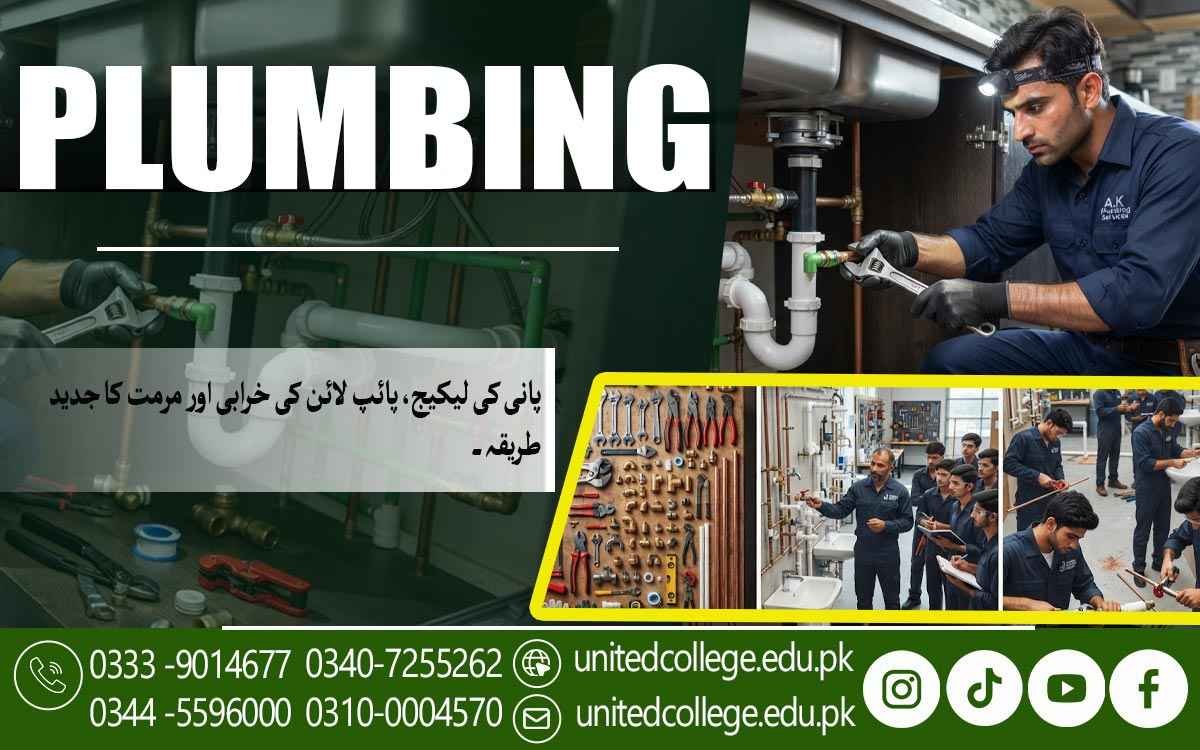
For beginners in Sheikhupura, learning how these systems work can be a practical way to develop a useful technical skill. The Plumbing Course in Sheikhupura, offered by United College of Technology, introduces learners to the tools, materials, techniques, and working methods used in everyday plumbing. The focus is on understanding practical tasks step by step rather than depending only on theoretical knowledge.
See The Plumbing System As A Connected Network
Plumbing becomes easier to understand when learners stop looking at individual pipes and start seeing the complete system. Water supply lines, valves, fittings, fixtures, and drainage pipes all have specific roles within a building. Students can begin by learning basic concepts such as water flow, pipe direction, pressure, connections, and drainage.
During a Plumbing Course In Sheikhupura, learners can understand how a supply line carries water toward an outlet and how a separate waste line moves used water away. This foundation is important because every later task depends on it. Once beginners understand the purpose of different components, they can approach pipe installation and repair work with greater awareness and accuracy.
Learn the Tools That Shape Everyday Plumbing Work
Plumbing tools allow a technician to perform different jobs with greater control. Measuring equipment helps determine pipe length, while cutters prepare pipes for installation. Wrenches and pliers are used for tightening or loosening different connections. During plumbing training, learners can become familiar with common tools and their proper uses.
They can practice holding equipment correctly, applying suitable pressure, and choosing a tool according to the task. Tool handling is not only about completing a job. It also involves caring for equipment and keeping the working area organized. These simple habits can support cleaner, safer, and more efficient plumbing work.
Turn Measurements into Proper Pipe Fitting
Pipe fitting requires careful preparation. Before joining two sections, a learner needs to consider measurements, pipe size, connection type, direction, and the fitting required for the layout. Students can practice working with elbows, tees, couplings, adapters, valves, and other pipe fittings. These components help create different routes for water and allow pipes to connect, change direction, or divide into separate lines.
Pipe cutting and joining also demand precision. If a pipe is cut too short or a connection is poorly prepared, the final arrangement may not work as intended. Repeated practice helps beginners understand how small details affect the complete installation.
Trace the Journey of Water Through a Building
Water supply systems need to be arranged so that water can reach different fixtures. A building may have lines running toward bathrooms, kitchens, washing points, storage tanks, and taps. Learners can study how these water lines are connected and how valves help control the flow.
They can also become familiar with the basic role of storage tanks and distribution pipelines. Understanding this process gives students a practical view of water pipe installation. Instead of seeing a pipe as an isolated object, they learn how it forms part of a larger plumbing system serving different areas of a building.
Give Wastewater A Clear Path Out
Drainage work has its own set of requirements. Used water from sinks, toilets, showers, and other fixtures needs to move through suitable waste pipes and leave the building properly. In practical training, learners can explore drainage layouts and understand why pipe positioning, connections, and suitable slopes matter.
During a Plumbing Course In Sheikhupura, students can learn how sanitary plumbing connects with drainage work. Toilets, wash basins, sinks, floor drains, and similar fixtures need appropriate supply and waste connections. Learning these arrangements gives beginners a better understanding of plumbing inside actual buildings and helps them recognize how different drainage components work together as part of a complete system.
Approach Leaks and Blockages with a Troubleshooting Mindset
Plumbing repair is not always about immediately replacing a pipe or fitting. First, the problem needs to be examined. A visible water mark, for example, may not show the exact location of the leak. Learners can develop basic inspection skills by checking joints, valves, fittings, exposed pipes, and drainage points.
They can learn to look for signs of loose connections, damaged sections, unusual water flow, or blocked lines. This approach introduces an important part of plumbing maintenance: finding the likely cause before taking action. With practice, learners can become more systematic when dealing with common plumbing repair situations.
Make Safety Part of the Work, Not an Afterthought
Technical ability should always be supported by safe working habits. Plumbing tasks can involve sharp tools, wet surfaces, pressurized water, confined spaces, and equipment that needs careful handling. Students can learn basic plumbing safety practices such as keeping tools organized, using suitable protective equipment, maintaining a clean workspace, and checking relevant water supplies before beginning certain tasks.
Clean working habits also matter. Removing waste material, keeping fittings organized, and checking completed connections can make practical work more controlled. These habits are useful whether the task involves construction plumbing, repair, or building maintenance.
Build Skill Through Practice at United College of Technology
Plumbing knowledge becomes more useful when learners get opportunities to apply it. Measuring a pipe, preparing a fitting, assembling a connection, checking a water line, or identifying a possible leak can teach details that are difficult to understand through reading alone. The Plumbing Course in Sheikhupura offered by United College of Technology provides a structured opportunity for learners to develop practical plumbing knowledge.
Beginners can work toward understanding plumbing tools, pipe fitting, water supply systems, drainage arrangements, sanitary fittings, repair methods, and maintenance practices. This type of training can suit people who prefer learning through practical activities. Students, fresh learners, job seekers, and anyone interested in developing technical skills can use structured practice to strengthen their understanding of plumbing work.
Let Each Practical Task Add to Your Skill Set
Becoming comfortable with plumbing does not happen from learning one technique. It develops gradually as learners understand materials, use tools correctly, follow layouts, make accurate connections, inspect their work, and solve practical problems. For someone in Sheikhupura, taking a structured approach to plumbing training can provide a foundation for continued skill development.
The next step is to focus on regular practice, learn from each task, and gradually improve accuracy rather than trying to master everything at once. The Plumbing Course in Sheikhupura can serve as a starting point for learners who want to turn basic knowledge into practical ability. With careful learning and consistent practice, each new plumbing technique can become another useful part of their technical skill set.
Frequently Asked Questions (FAQs)
Beginners can learn to recognize simple layouts showing supply routes, fixture positions, pipe directions, valves, and drainage paths within a building.
Pipe size should match the requirements of the plumbing arrangement. Using suitable sizes helps create properly planned connections and supports effective water movement.
Valves help control water flow. They can be used to stop or regulate water in particular sections when installation, inspection, or repair work is needed.
Problems may result from poor fitting, incorrect measurements, damaged components, loose joints, or unsuitable materials. Careful installation helps reduce such issues.
Learners become familiar with different pipes, connectors, sealants, valves, and fixtures while understanding how to handle and prepare materials for specific tasks.
Yes. Basic plumbing knowledge can help with routine inspection, fixture maintenance, minor pipe-related tasks, and identifying issues that may require further repair.
Admission Open: Start Your Professional Journey Today!
Join United College of Technology and build a career with practical training, recognized certifications, and Gulf job support. Seats are limited.
Apply Now via WhatsAppContact Information
- Address: Rawalpindi: F-272 Main New Katarian Stop, Old IJP Road | Lahore Campus: Lahore, Pakistan
- Phone/WhatsApp: 0333-9014677 / 0344-5596000 / 0310-0004570 / 0301-5044340 / 0340-7255262
- Website: unitedcollege.edu.pk















Leave a Comment