


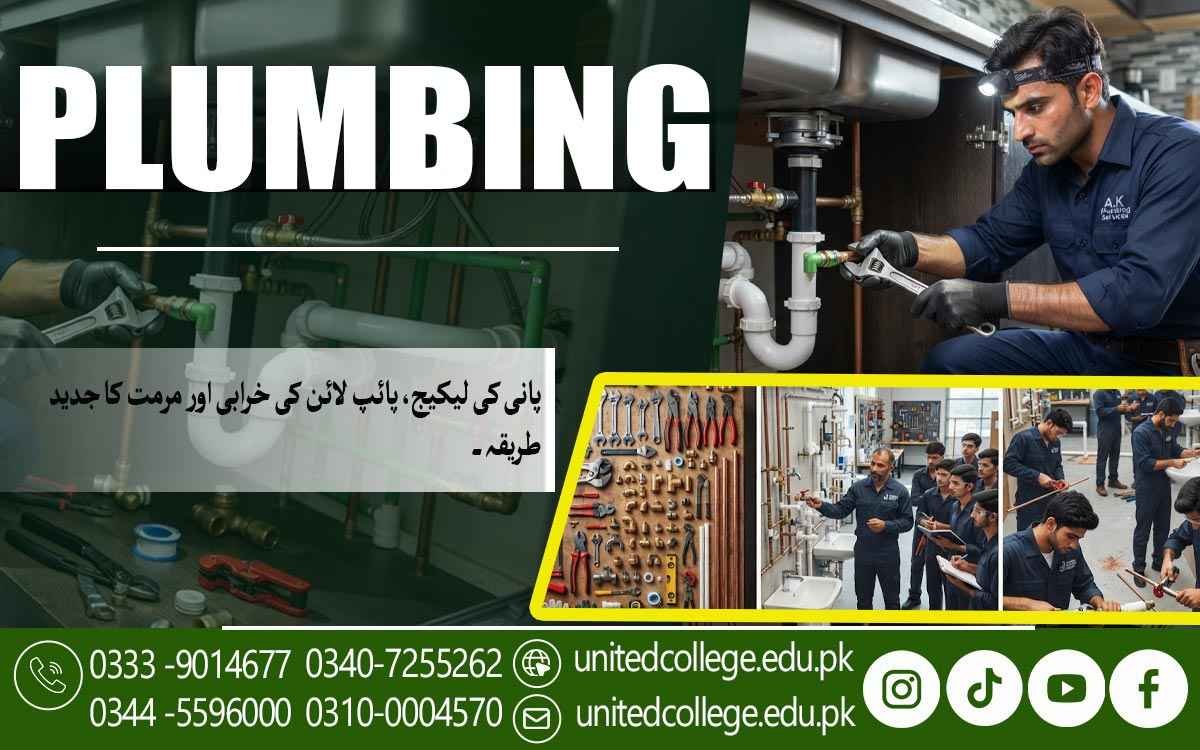

Plumbing Course in Sukkur for Practical Skills and Training
When a Plumbing Problem Shows What Really Happens Behind a Building
A dripping tap, blocked drain, weak water flow, or leaking pipe may look like a small household problem, but fixing it properly often requires practical knowledge of the entire plumbing system. Behind walls, floors, bathrooms, kitchens, and construction structures, a network of pipes, valves, fittings, tanks, and drainage lines works together to move clean water and remove wastewater. This is why plumbing is much more than tightening a loose connection or replacing a damaged tap.
A Plumbing Course in Sukkur can help beginners understand how these systems are planned, installed, tested, repaired, and maintained. For learners in Sukkur who want a practical technical skill, plumbing training can provide an opportunity to become familiar with real tools, materials, installation procedures, and common plumbing problems. As buildings are constructed, renovated, and maintained, understanding how water supply and drainage systems work can be useful in many practical environments.
Building Strong Skills Through Practical Plumbing Training
What happens when someone has studied plumbing theory but has never actually measured or joined a pipe? Practical experience makes a major difference because plumbing work depends heavily on correct measurements, proper fitting, careful connections, and hands-on problem-solving. During a Plumbing Course in Sukkur, learners can gradually become familiar with common plumbing tools, pipes, fittings, valves, taps, sanitary fixtures, and other materials used in everyday plumbing work. They can learn how different components fit together and why choosing the right material and connection method matters.
Training may introduce students to tasks such as measuring pipe lengths, marking cutting points, preparing joints, installing fittings, checking connections, and inspecting completed work. Instead of simply memorizing the names of tools or materials, learners can understand how they are used in practical situations. United College of Technology can provide a learning environment where students develop their understanding through technical instruction and practical activities, helping them connect classroom concepts with actual plumbing tasks. This step-by-step approach can be particularly useful for beginners who are starting without previous professional plumbing experience.
From Pipe Measurements to Reliable Connections
A plumbing system can only work properly when its pipes and connections are installed with care. Even a small measurement mistake can create alignment problems, unnecessary bends, leakage, or difficulty when connecting another fixture later. This makes pipe fitting an important part of plumbing training. Learners can study different types of pipes, including PVC, PPR, and GI pipes, and understand that each material may have different properties, joining methods, and applications.
Students can also become familiar with fittings such as elbows, tees, couplings, reducers, and connectors, which allow pipes to change direction, branch into different lines, or connect sections of different sizes. Valves are another important part of the system because they can control or stop water flow when maintenance is required. Through practical plumbing training, learners can practice creating clean and properly aligned connections rather than treating every pipe as a simple straight piece. These skills are useful when working on new installations as well as repairing or modifying existing plumbing systems in homes, commercial buildings, and construction projects around Sukkur.
Understanding How Water Reaches Every Fixture
Turn on a tap and water appears within seconds, but a properly planned water supply system involves much more than the fixture itself. Water may travel through a main supply line, storage tank, pump, valves, and several branches before reaching a bathroom, kitchen, wash area, or other point of use. During a Plumbing Course in Sukkur, learners can explore how these parts work together and why pipe layout, connection quality, water pressure, and pipe size can affect the performance of a system. Training can also introduce the basic principles of water tank installation and water pump connections, helping beginners understand how stored water can be distributed through a building.
Learners can examine the role of valves in controlling water flow and understand how taps, sinks, showers, and other fixtures connect to supply lines. A good plumbing layout also considers accessibility for future inspection and repair, rather than placing every connection where it becomes difficult to reach. Understanding these details helps students see plumbing as a complete system instead of a collection of separate pipes. This knowledge can be relevant to residential construction and building maintenance in Sukkur, where reliable water distribution is an important part of everyday property use.
Making Sense of Bathrooms, Kitchens, and Sanitary Fittings
Walk into a bathroom or kitchen and almost every visible fixture has a plumbing connection behind it. Sinks, washbasins, toilets, showers, taps, and other sanitary fittings need appropriate water supply and drainage arrangements to function correctly. A Plumbing Course can help learners understand how these fixtures are connected and how their installation affects the rest of the plumbing system. Practical plumbing training allows students to become familiar with bathroom plumbing, kitchen plumbing, supply lines, waste pipes, valves, and different fittings used in everyday installations. Bathroom plumbing often requires careful positioning of supply lines, waste pipes, valves, and fixtures, while kitchen plumbing may involve sink connections, water supply lines, waste outlets, and other fittings. nd the overall plumbing system works properly.
They can also learn why drainage pipes need suitable slopes to allow wastewater to move effectively and reduce the possibility of standing water or repeated blockage. In residential plumbing, attention to these details can make future maintenance easier and help reduce common installation problems. For learners in Sukkur, understanding household plumbing can provide a useful foundation before moving toward more complex commercial or construction plumbing tasks. The focus is not simply on fitting a fixture but on understanding how that fixture becomes part of a larger water supply and drainage system.
Following Wastewater from the Drain to the Main Line
Clean water entering a building is only half of the plumbing story; wastewater must also leave the building safely and efficiently. Drainage and sewerage systems carry used water away from sinks, bathrooms, kitchens, and other fixtures, making their design and maintenance an important part of plumbing work. In training, learners can study drainage pipe installation, waste outlets, pipe slopes, joints, traps, and basic methods for inspecting drainage problems. A blocked drain, slow-moving wastewater, unpleasant smell, or repeated backup can sometimes indicate an issue within the drainage system rather than simply a problem with the visible fixture.
They can also understand why proper pipe alignment and suitable connections matter when installing drainage lines. Practical exercises may help learners recognize common blockage points and understand basic maintenance procedures used to keep drainage systems functioning properly. These skills can be useful in homes, shops, offices, and construction settings throughout Sukkur, particularly where plumbing systems need regular inspection or repair. By understanding both water supply and wastewater movement, a learner develops a more complete picture of how a building's plumbing system operates from beginning to end.
Finding Leaks Before a Small Fault Becomes a Bigger Problem
A small wet patch near a pipe may seem harmless, but ignoring it can lead to damaged surfaces, wasted water, or more complicated repair work. This is why leak detection and plumbing inspection are important parts of practical training. Learners can be introduced to common causes of leakage, including loose joints, damaged pipes, worn seals, faulty fittings, excessive pressure, or poor installation. Instead of guessing where the problem begins, a plumbing technician can learn to inspect the system step by step and identify visible signs of a fault.
Students can also learn the importance of testing a repaired section before considering the job complete. Plumbing maintenance is not limited to emergency repairs; regular inspection can help identify problems before they become more disruptive. Through hands-on plumbing practice, beginners can develop a methodical approach to troubleshooting, where they examine symptoms, check possible causes, make an appropriate repair, and test the result. This practical problem-solving mindset can become one of the most useful parts of plumbing technician training for anyone interested in residential, commercial, or construction plumbing work.
Using the Right Plumbing Tools Without Creating New Problems
A good plumbing job depends not only on knowing what needs to be done but also on knowing how to use the correct tool safely. Pipe cutters, adjustable wrenches, pipe wrenches, measuring tools, threading equipment, pliers, sealants, and other plumbing tools each have specific purposes. During practical training, learners can become familiar with selecting suitable tools for different tasks and handling them correctly. For example, accurate measurement is important before cutting a pipe, while a suitable wrench can help secure a fitting without unnecessarily damaging it. Learners can also practice keeping tools organized and inspecting equipment before use.
Safe working practices are equally important, especially when plumbing work involves wet surfaces, elevated locations, sharp tools, electrical equipment near water, or construction-site conditions. At United College of Technology, practical learning can help students understand plumbing procedures alongside workplace safety and responsible tool use. Training may also encourage learners to develop habits such as checking water supply before beginning repair work, keeping work areas organized, and using appropriate protective equipment where required.
Turning Workshop Practice Into Useful Plumbing Skills
Imagine being asked to install a pipe, connect a fitting, identify a leak, or inspect a drainage problem for the first time. Without hands-on practice, even a simple task can feel unfamiliar. This is why practical experience is an important part of a Plumbing Course in Sukkur. Workshop-based learning can allow beginners to handle pipes, fittings, valves, tools, and fixtures while following real installation and repair procedures under guidance. Students can practice measuring and cutting materials, assembling connections, checking alignment, installing supply lines, working with drainage components, and testing completed sections.
The same practical skills can later be applied to different environments, from residential buildings and shops to offices, commercial properties, and construction sites. Plumbing work also requires patience because not every fault has an obvious cause; a learner may need to inspect several connections before identifying the actual source of a problem. Consistent practice helps develop this habit of careful observation and step-by-step troubleshooting.
Frequently Asked Questions (FAQs)
A Plumbing Course in Sukkur teaches learners practical skills related to pipe installation, water supply systems, drainage, sanitary fittings, repairs, and plumbing maintenance.
Yes. Beginners can learn plumbing step by step, starting with common tools, pipes, fittings, measuring, cutting, joining, and basic installation tasks.
Students can develop skills in pipe fitting, pipe joining, water supply installation, drainage work, leak detection, sanitary fitting, maintenance, and basic troubleshooting.
Training may introduce learners to residential, commercial, and construction plumbing, including water supply, drainage, wastewater, bathroom, and kitchen plumbing systems.
Hands-on practice helps learners become familiar with real plumbing tools, materials, pipe connections, installation procedures, repairs, and safe working methods.
Admission Open: Start Your Professional Journey Today!
Join United College of Technology and build a career with practical training, recognized certifications, and Gulf job support. Seats are limited.
Apply Now via WhatsAppContact Information
- Address: Rawalpindi: F-272 Main New Katarian Stop, Old IJP Road | Lahore Campus: Lahore, Pakistan
- Phone/WhatsApp: 0333-9014677 / 0344-5596000 / 0310-0004570 / 0301-5044340 / 0340-7255262
- Website: unitedcollege.edu.pk















Leave a Comment