


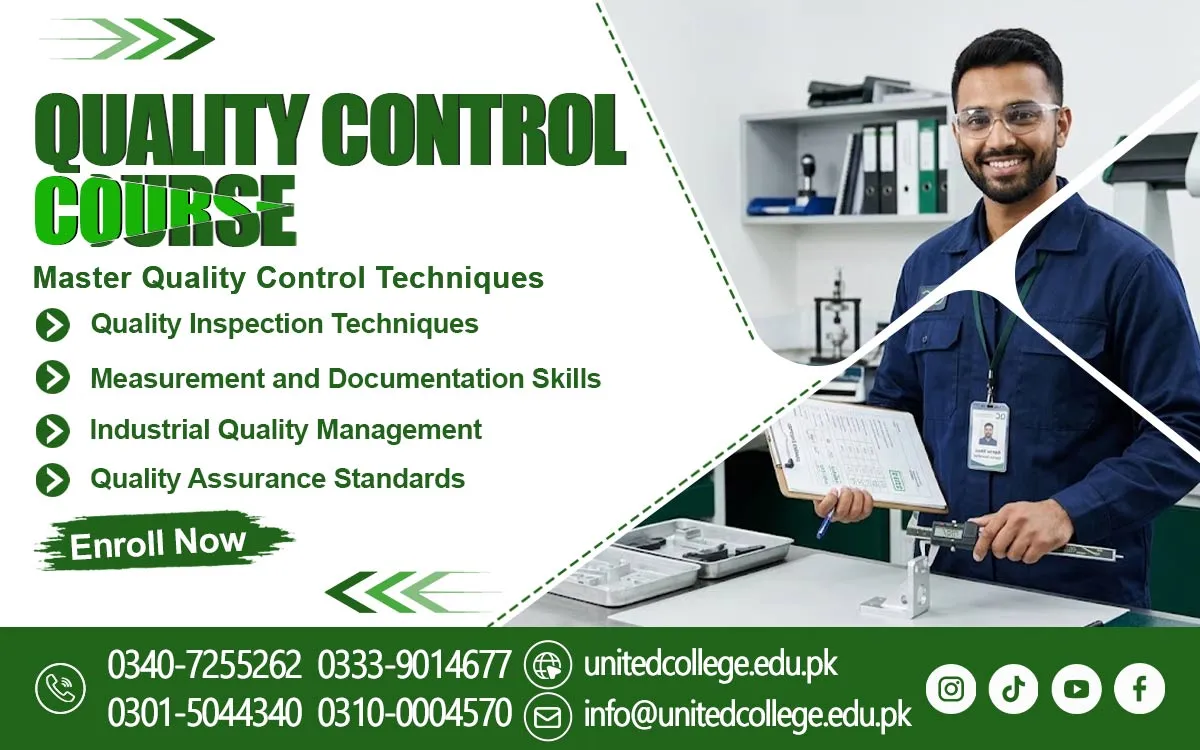

Quality Control Course in Charsadda Strengthens Defect Recognition
Quality Checks That Protect Products Before They Reach Customers
Product quality plays an important role in manufacturing, food production, construction, packaging, and many other industries. Customers expect products to work properly, meet required standards, and remain safe to use. Even a small mistake during production can cause waste, delays, complaints, or extra costs. Quality control helps businesses identify these problems before products reach customers. Consider a factory that produces plastic containers. If workers fail to check the size, shape, or sealing quality of each batch, some containers may leak or fail to close properly.
Regular inspections can help identify these faults early and allow the production team to correct the problem. The Quality Control Course in Charsadda can help beginners understand how businesses check products, recognize defects, and maintain consistent standards. It introduces learners to the basic ideas behind product inspection and quality management. For students, fresh learners, and job seekers, learning these concepts can provide a useful starting point for developing practical workplace skills.
Build a Strong Foundation in Quality Control Training
Quality control involves checking materials, products, and processes to determine whether they meet established requirements. A Quality Control Training program introduces learners to the methods used to inspect products, measure results, record information, and report problems. The aim is to help learners understand how quality checks support reliable production. A beginner may start by learning how to compare a product with its specifications.
The course can also introduce the relationship between Quality Control and Quality Assurance. Quality Control Course in Charsadda mainly focuses on checking products or results to identify problems. Quality assurance focuses on the processes and systems used to prevent problems from happening. Both approaches support consistent standards, although their responsibilities can differ between workplaces. Learners should also understand that quality control is not limited to finding mistakes.
Essential Skills That Turn Careful Observation Into Accurate Results
Good Quality Inspector Skills develop through practice, attention, and a willingness to learn. A person does not need to know every technical method before beginning training. Instead, learners can start with basic skills and gradually build confidence through exercises and practical experience. Observation and attention to detail help workers notice small differences in shape, colour, size, finish, or packaging. A minor defect may be easy to overlook when inspections are rushed, so careful observation matters.
Problem-solving helps workers recognize unusual results and report them in a useful way. Inspectors do not always decide how a problem should be fixed, but they can provide reliable information that supports investigation. Communication and teamwork also matter. Quality control workers often coordinate with production staff, supervisors, warehouse teams, or other departments. They need to explain findings clearly and follow workplace procedures. Developing these skills can help learners prepare for quality-related responsibilities in different industries.
Practical Tools and Methods Behind Reliable Product Inspection
Quality Control Course in Charsadda teaches students different tools and methods used to maintain product quality. Beginners can first learn the purpose of common tools before moving on to advanced techniques. Measuring tools such as rulers, measuring tapes, weighing scales, and calipers help workers check product dimensions and weight. Students learn how to choose the correct tool, take accurate measurements, and compare results with the required specifications. Inspection check sheets provide an organized way to record inspection results.
Some workplaces also use sampling methods, where inspectors examine selected items from a larger batch according to an established procedure. This helps teams assess product quality without checking every item. Advanced quality control training may include control charts, which help monitor changes in production processes over time, and process analysis, which helps identify patterns in inspection results. These skills prepare learners for quality control and quality assurance jobs in Charsadda.
Where Quality Management Supports Different Industries?
Quality control is relevant to many industries because each sector needs products or materials that meet specific requirements. The inspection process changes according to the item being produced, the risks involved, and the standards that apply. In manufacturing, workers may check machine-produced parts, electrical components, furniture, metal items, or plastic products. They compare finished goods with specifications and identify faults that could affect performance or appearance.
Construction materials also require careful inspection. Cement, bricks, steel, tiles, and other materials may need checks against specified dimensions, strength requirements, condition, or documentation. Proper testing may require trained personnel and specialized equipment. Packaging businesses inspect cartons, bottles, labels, seals, and printed information to help ensure products remain protected and correctly identified.
Career Directions for Learners Developing Quality Inspection Skills
Learning quality control can introduce beginners to several possible career directions. Depending on the training completed and the requirements of an employer, relevant roles may include quality control assistant, junior quality inspector, production inspection worker, or quality documentation assistant. With further education and experience, some individuals may work toward responsibilities in Quality Assurance, quality management, process monitoring, supplier inspection, or internal quality auditing. These positions can require additional technical knowledge, industry-specific experience, and familiarity with applicable standards.
The Quality Control Training in Charsadda can be a starting point for learners who want to explore this field and understand its basic working practices. United College of Technology offers training options, including quality-related learning, and the course is offered by United College of Technology. Interested learners should contact the institution directly to confirm current course details and determine whether the training matches their goals. It is important to keep expectations realistic.
Prepare for Training With Simple Habits That Improve Accuracy
Beginners can prepare for quality control learning by strengthening a few basic habits. These small steps make technical concepts easier to understand and help learners approach inspection tasks with care. Start with basic mathematics, including addition, subtraction, decimals, units, and simple calculations. These skills are useful when comparing measurements, recording quantities, or identifying differences between results and specifications. Practice careful observation in everyday situations.
Workplace safety is equally important. Learners should understand the need to follow instructions, use tools correctly, wear required protective equipment, and avoid handling unfamiliar machinery without proper guidance. Safety requirements vary by workplace, so workers must follow the relevant procedures. Before choosing a training option, review the topics covered and ask whether they match your learning needs. A clear understanding of the course content can help you set realistic goals and identify areas where additional practice may be useful.
Turn Quality Knowledge Into Lasting Skills and Better Decisions
Quality control learning becomes more valuable when learners continue practicing after their initial training. Classroom explanations can introduce important ideas, but exercises and supervised workplace experience help learners understand how those ideas apply to real situations. Begin with simple practice activities, such as checking an object's dimensions, comparing a product against a written specification, identifying visible differences, and preparing a sample inspection record.
For learners in Charsadda, the Quality Control Course in Charsadda offers a skill-based learning direction worth exploring if product inspection and quality management match their interests. Start by understanding the course content, checking the training provider's current information, and identifying the skills required for your intended career path. With steady practice, realistic expectations, and a commitment to accurate work, beginners can build a useful foundation for continued learning and future quality-related responsibilities.
Frequently Asked Questions (FAQs)
Rework means correcting a defective item so it can meet requirements, while scrap refers to an item that cannot be used or repaired economically.
Product specifications explain the required features, dimensions, materials, or performance that inspectors use to evaluate an item.
A control chart tracks process results over time and helps teams notice unusual changes that may need investigation.
Damaged or poorly sealed packaging may reduce protection, affect presentation, or allow contamination, depending on the product.
Supplier evaluation helps businesses assess whether incoming materials consistently meet agreed requirements and support reliable production.
Non-destructive testing examines certain properties or faults without damaging the item being tested, using methods suited to the material and purpose.
Admission Open: Start Your Professional Journey Today!
Join United College of Technology and build a career with practical training, recognized certifications, and Gulf job support. Seats are limited.
Apply Now via WhatsAppContact Information
- Address: Rawalpindi: F-272 Main New Katarian Stop, Old IJP Road | Lahore Campus: Lahore, Pakistan
- Phone/WhatsApp: 0340-7255262 / 0333-9014677 / 0301-5044340 / 0310-0004570 / 051-8770756
- Website: unitedcollege.edu.pk
















Leave a Comment