


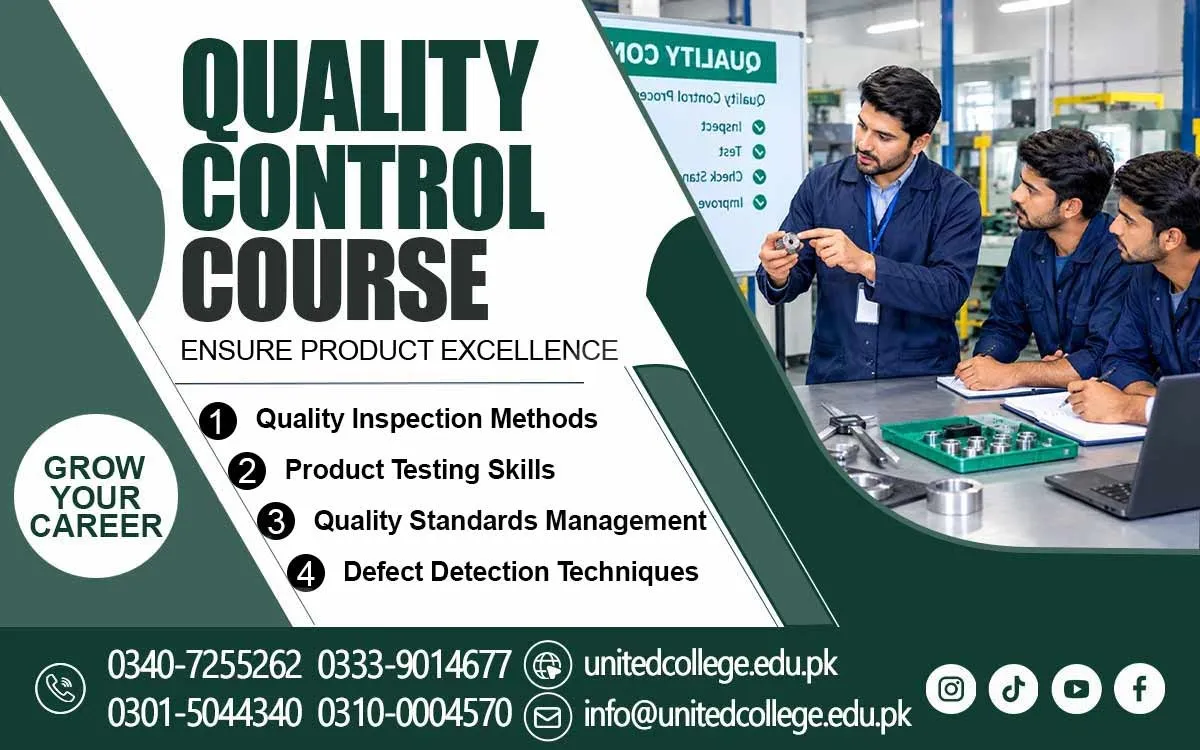

Quality Control Course in Hangu Enhances Standards for Reliable Results
Strong Quality Standards Begin With Careful Inspection and Clear Decisions
Every reliable product or service depends on meeting certain quality standards. From construction materials and manufactured goods to packaged products and everyday equipment, quality checks help ensure that work meets expected requirements. A small defect can affect product performance, customer satisfaction, or the next stage of production. This makes quality control an important part of many industries. The Quality Control Course in Hangu introduces learners to the basic knowledge and practical concepts used to inspect products, recognize faults, and maintain consistent standards.
It is a useful learning option for students, beginners, fresh learners, and job seekers who want to understand how quality inspection works. Through Quality Control Training, learners can develop a better understanding of inspection procedures, testing methods, and workplace expectations. These skills also help individuals understand why accuracy matters at every stage of a process. Whether someone is interested in manufacturing, construction, production, or another technical field, learning quality control can provide a helpful foundation for professional development.
Practical Inspection Knowledge That Helps Identify Defects Early
Quality inspection involves checking materials, products, and completed work to determine whether they meet defined requirements. It requires more than simply looking at an item. An inspector needs to understand what should be checked, which standards apply, and how to recognize differences between acceptable and defective results. During the Quality Control Course in Hangu, learners can explore basic inspection methods and the importance of following clear procedures. Visual inspection helps identify visible problems such as cracks, scratches, uneven surfaces, damaged parts, or incorrect finishing.
Testing concepts also introduce learners to ways of examining performance and material characteristics. For example, a construction material may need to meet certain size or strength requirements, while a manufactured component may need accurate dimensions to fit another part. Understanding these checks helps learners see how small mistakes can affect the final result. Careful observation and a systematic approach are essential parts of effective Product Inspection.
Essential Training Areas That Shape a Skilled Quality Inspector
Quality control training covers several connected topics that help learners understand how organizations maintain standards. Students can develop an introduction to Quality Assurance and learn how it differs from routine inspection. Quality assurance focuses on planned processes that help prevent problems, while quality control checks whether the actual output meets requirements. Training may also introduce inspection techniques, basic testing concepts, measurement practices, and workplace quality standards.
Documentation is another important area because inspection results need clear records. These records can help teams understand what was checked, which results were found, and whether further action is required. Learners can also explore how quality procedures guide workers through different stages of production.
Industrial Applications That Turn Quality Concepts Into Useful Knowledge
Quality control plays a role in many workplaces because different industries need reliable materials, products, and completed work. In manufacturing, inspection helps teams identify defects in components, check product dimensions, and review finished goods before further processing. In construction, quality checks can support the evaluation of building materials, workmanship, and project requirements. Production units may use inspection procedures to check whether each stage follows the required specifications.
Food processing and packaging operations also rely on quality practices to review product appearance, packaging condition, and other relevant requirements. These examples show that quality control is not limited to one profession or industry. The Quality Control Training helps learners understand how inspection concepts can apply in different working environments. It also introduces the connection between product quality and organized production activities.
Personal Abilities That Improve Accuracy and Professional Performance
Technical knowledge is important, but effective quality inspection also depends on personal skills. Attention to detail helps an inspector notice small differences that may otherwise go unnoticed. Strong observation allows individuals to examine products carefully and compare their condition with expected standards. Problem-solving is useful when inspection results show an unexpected issue because the inspector may need to understand what happened and communicate the finding to the relevant team. Clear communication also matters. Inspection information should be shared in a way that other workers and supervisors can understand.
Record-keeping supports this process by making results easier to review later. Time management can help inspectors complete assigned checks without ignoring important steps. Professional honesty is equally valuable because inspection decisions should be based on evidence rather than personal preference. Through the Quality Control Course in Hangu, learners can become more aware of these qualities and understand how they support reliable work. Developing these abilities can also improve confidence when handling technical instructions and workplace responsibilities.
Professional Development Through Broader Quality Management Skills
Learning quality control can support professional development by helping individuals understand how organizations check work and maintain required standards. The knowledge may be relevant to people interested in inspection support, production activities, quality documentation, material checking, or other technical responsibilities. It can also help students understand the connection between product requirements and the processes used to meet them.
However, completing training does not automatically guarantee a particular job, salary, or career outcome. Opportunities depend on factors such as practical experience, individual ability, employer requirements, and the needs of a specific industry. Individuals may strengthen their knowledge further through relevant experience, additional learning, and regular practice. A willingness to learn and follow professional standards can help them make better use of the knowledge they gain.
Quality Control Training in Hangu Through United College of Technology
Choosing a suitable training provider is an important part of beginning any learning journey. Students should look for course information that clearly explains the subject, learning goals, and areas of knowledge covered. They should also consider whether the training matches their current understanding and future interests. The Quality Control Training in Hangu, offered by United College of Technology, provides a learning opportunity for individuals interested in understanding quality inspection and industrial standards. United College of Technology introduces this course for learners who want to explore the principles behind product checking, defect identification, Quality Assurance, and inspection procedures.
Beginners can use these subjects to build their understanding of how quality-related responsibilities fit into different workplaces. Before enrolling, interested individuals should contact the institute directly to confirm current course details, availability, and any applicable requirements. Asking clear questions can help learners make an informed decision. A suitable learning path should match personal goals and provide a clear starting point for developing useful technical knowledge.
Building a Stronger Understanding of Quality Through Continuous Learning
Quality control is an ongoing process that requires careful attention, clear procedures, and a willingness to improve. Products, materials, and workplace requirements can differ, so individuals need to understand how to follow relevant standards instead of relying on assumptions. The Course can help learners develop a foundation in inspection methods, testing concepts, documentation, and quality-related responsibilities. These subjects encourage a more organized way of examining work and understanding the reasons behind quality requirements.
Learners can strengthen this foundation by reading technical instructions, practising careful observation, improving communication, and becoming familiar with industry standards. They should also remain open to learning new methods as workplace processes change. Quality knowledge becomes more useful when individuals apply it thoughtfully and understand the purpose of each check. With continued learning and practical development, students can build greater confidence in quality-related tasks and prepare themselves to explore different technical areas where accuracy and consistent standards matter.
From Basic Knowledge to a More Quality-Conscious Professional Approach
A strong approach to quality begins with understanding that every detail can influence the final result. Identifying a defect, checking a measurement, following an inspection procedure, and recording accurate information are all important parts of maintaining reliable standards. For beginners and job seekers in Hangu, learning these concepts can open a path toward better technical awareness and informed career planning. The Quality Control Course in Hangu offers an opportunity to explore how quality inspection supports manufacturing, construction, production, and other industries.
Through the training opportunity offered by United College of Technology, interested learners can begin developing knowledge that supports careful evaluation and responsible workplace practices. The most valuable progress comes from combining training with curiosity, regular practice, and a commitment to accuracy. By building these habits, learners can develop a stronger understanding of quality management and the role it plays in producing dependable results.
Frequently Asked Questions (FAQs)
A quality deviation occurs when a product, material, or process does not follow an approved requirement or established procedure.
It helps determine how long a product can maintain its expected condition when stored under suitable conditions.
Process validation checks whether a particular process can consistently produce results that meet defined requirements.
They provide examples of common faults, helping inspectors recognize different types of defects more consistently.
Change control is a planned method of reviewing and approving changes to materials, processes, equipment, or procedures.
It confirms that the required checks have been completed before approved products move to storage, delivery, or the next stage.
Admission Open: Start Your Professional Journey Today!
Join United College of Technology and build a career with practical training, recognized certifications, and Gulf job support. Seats are limited.
Apply Now via WhatsAppContact Information
- Address: Rawalpindi: F-272 Main New Katarian Stop, Old IJP Road | Lahore Campus: Lahore, Pakistan
- Phone/WhatsApp: 0340-7255262 / 0333-9014677 / 0301-5044340 / 0310-0004570 / 051-8770756
- Website: unitedcollege.edu.pk
















Leave a Comment