


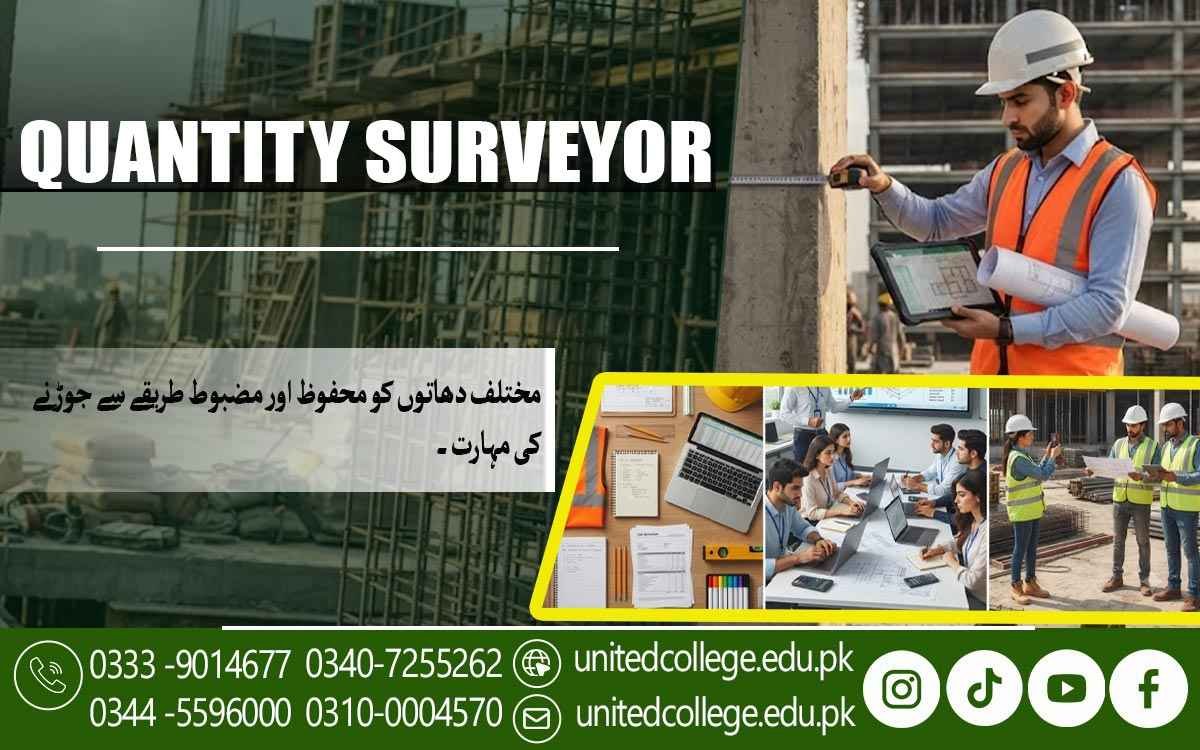

Quantity Surveyor Course in Mandi Bahauddin for Technical Growth
Quantity Surveyor Course in Mandi Bahauddin to Master the Practical Side of Construction
Construction projects require careful decisions at every stage. Before materials are ordered or work progresses on site, someone needs to understand measurements, quantities, estimated costs, and project requirements. Quantity surveying brings these details together and helps turn construction information into organized figures that can support planning.
The Quantity Surveyor Course in Mandi Bahauddin gives beginners, students, fresh learners, diploma holders, and construction-focused individuals a way to explore this important area. The subject combines construction measurement with material estimation, costing, documentation, and other practical tasks. For learners who want to understand what happens behind the numbers of a building project, quantity surveying offers a useful technical direction.
Where Construction Work Begins With Careful Measurement
Quantity surveying starts with understanding what is actually being built. A quantity surveyor may study drawings, specifications, site information, and other project details to identify the work that needs to be measured. Learners can explore how construction elements such as foundations, walls, concrete, flooring, plaster, and other components are converted into measurable quantities.
For beginners, the Quantity Surveyor Course in Mandi Bahauddin can help explain how accurate measurement requires more than simple calculations. Students need to understand dimensions, units, building details, and the purpose of each figure. Developing this approach can strengthen basic Quantity Surveyor skills and make construction information easier to manage.
Turning Material Requirements Into Practical Project Figures
Every construction activity requires materials, and understanding their quantities is an important part of estimation. Material estimation allows learners to explore how project requirements can be identified before they are connected with cost information. Students can work with examples involving construction materials and learn how measurements can be used to determine approximate quantities.
This helps connect the physical side of construction with the numerical side of project planning. Construction measurement and material calculation also encourage learners to check their work carefully. A mistake in one measurement can affect later figures, so students can develop habits of reviewing dimensions and units before moving to the next stage.
BOQ Preparation Gives Construction Details a Clear Shape
A Bill of Quantities, commonly known as a BOQ, organizes construction work into a structured document. It can contain descriptions of work, units, quantities, and other information used during estimation and project planning. Learning BOQ preparation gives students a practical understanding of how individual measurements can be brought together.
Instead of keeping calculations as separate figures, learners can see how project information can be arranged into a clearer format. This knowledge can also connect with bill preparation and construction documentation. For beginners, the process helps explain why organized records matter when many construction activities are being considered at the same time.
Rate Analysis Connects Quantities With Construction Costs
After quantities have been identified, learners can begin exploring how construction costs are estimated. Rate analysis provides a basic way to understand the components behind the expected cost of a construction activity. A rate may relate to materials, labor, and other relevant factors. Students can study how quantities and rates work together to create estimated costs rather than treating a project figure as an unexplained number.
This area introduces learners to construction cost estimation and basic project budgeting. It can also help them understand the importance of cost control, where project information is reviewed to keep spending-related decisions connected with actual requirements.
Site Measurement Brings Classroom Concepts Closer to Construction Work
Construction information does not always come from drawings alone. Site measurement can provide additional details about work being carried out and the quantities involved. Learning how site information is collected can therefore give students a wider understanding of quantity surveying. Learners can explore how measurements may be recorded, checked, and organized for use in project documents.
This also introduces the importance of keeping clear records when construction conditions or requirements change. Practical Quantity Surveyor Course in Mandi Bahauddin can help students connect classroom concepts with examples based on construction situations. For fresh learners, this approach can make measurement and documentation feel more understandable because the figures are connected to actual building activities.
Building Estimating Skills Through Practical Problem Solving
Quantity surveying involves more than following formulas. Learners need to look at project information, identify what needs to be measured, choose suitable calculations, and review the results. This makes problem-solving an important part of practical Quantity Surveyor training. Students can strengthen their understanding through sample drawings, measurement exercises, material calculations, BOQ practice, and basic estimating tasks.
Each exercise can help them recognize how one stage of quantity surveying connects with another. Digital tools may also support this learning process. Basic spreadsheet methods and relevant quantity surveying software can help organize figures and documentation. However, understanding the underlying calculations remains important because software is most useful when the learner knows what information is being entered and why.
A Technical Path for Construction-Minded Learners in Mandi Bahauddin
Quantity surveying can appeal to different learners because it combines construction knowledge with numbers, planning, and documentation. Students interested in civil works can explore the measurement and costing side of projects, while diploma holders may use it to expand their existing technical knowledge. Fresh learners and job seekers who are interested in construction-related fields can also explore the subject.
Strong attention to detail, patience, basic mathematical ability, and a willingness to practice can support the learning process. For people researching professional construction courses or a Quantity Surveyor course in Pakistan, local training can provide a structured way to explore the subject. Learners in Mandi Bahauddin can focus on understanding construction estimating, measurement, material planning, and documentation without depending only on theoretical study.
Strengthening Technical Knowledge Through Consistent Practice
United College of Technology offers the Quantity Surveyor Course in Mandi Bahauddin for learners who want to develop knowledge in construction estimation and measurement. A structured learning environment can help students approach the subject step by step and connect different concepts through practical exercises. Progress in quantity surveying comes from understanding and practice rather than memorizing calculations.
The field gives learners a practical way to understand how quantities, materials, measurements, and costs interact within construction projects. For anyone in Mandi Bahauddin interested in the planning and estimating side of building work, developing these skills can create a stronger technical foundation and a clearer understanding of construction project information.
Frequently Asked Questions (FAQs)
Cost control involves monitoring project-related expenses and comparing available cost information with planned requirements to identify areas that may need attention.
Material knowledge helps learners recognize different building requirements and understand how material types can affect quantities, rates, and project calculations.
Records may include measurement sheets, estimates, quantity details, cost information, drawings, specifications, and other documents connected with project activities.
Yes. Beginners can start with basic measurement and estimating concepts and gradually develop their understanding through guided study and practical exercises.
Project budgeting uses estimated quantities and costs to create a clearer picture of expected construction expenses and helps organize financial information.
Learners should focus on accuracy, understanding construction details, checking calculations, organizing information, and applying each concept to practical examples.
Admission Open: Start Your Professional Journey Today!
Join United College of Technology and build a career with practical training, recognized certifications, and Gulf job support. Seats are limited.
Apply Now via WhatsAppContact Information
- Address: Rawalpindi: F-272 Main New Katarian Stop, Old IJP Road | Lahore Campus: Lahore, Pakistan
- Phone/WhatsApp: 0333-9014677 / 0344-5596000 / 0310-0004570 / 0301-5044340 / 0340-7255262
- Website: unitedcollege.edu.pk
















Leave a Comment