


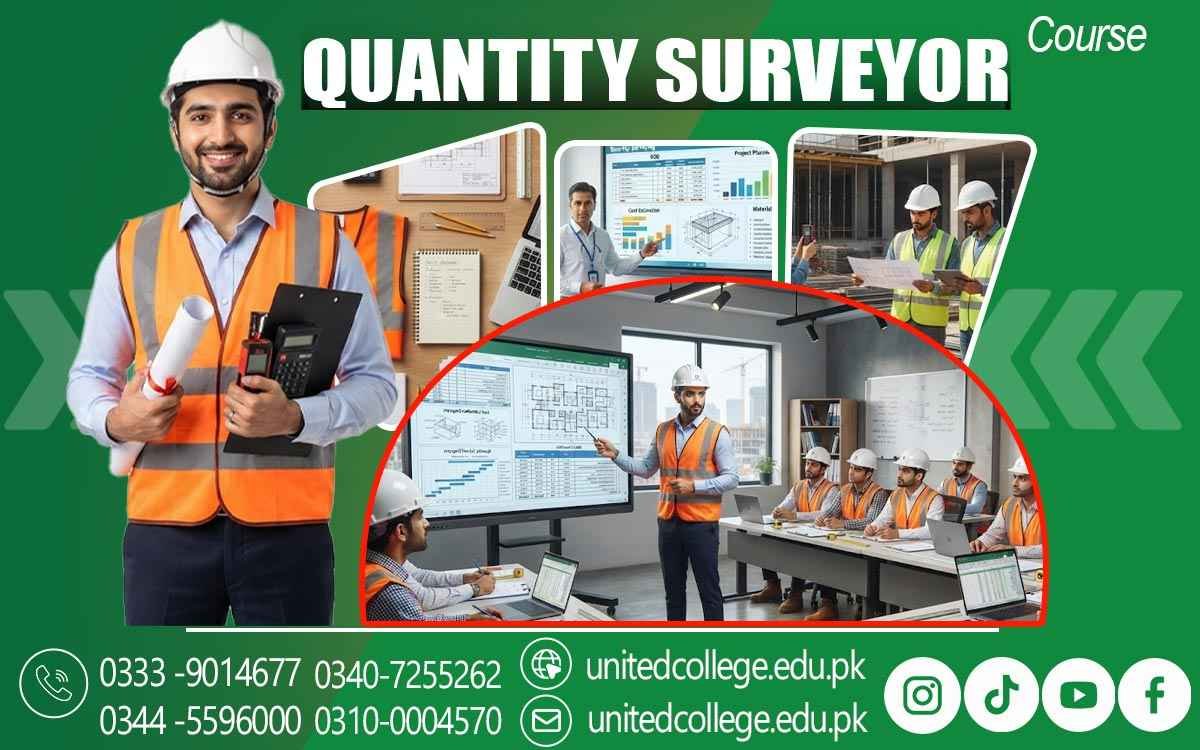

Quantity Surveyor Course in Pakpattan for BOQ and Cost Estimation
Understanding BOQ and Quantity Analysis
A Bill of Quantities, commonly known as a BOQ, is an important document used in construction projects. It presents different work items along with their descriptions, units, quantities, and cost-related information. Quantity analysis helps construction teams understand the amount of work involved before estimating the overall project cost.
The Quantity Surveyor Course in Pakpattan introduces learners to the basic concepts of BOQ preparation and quantity analysis. Students can learn how construction activities are identified from drawings, plans, and project information. They can also understand how these activities are converted into measurable items.
Practical examples can help students understand how quantities are organized within a BOQ. Learners may work with examples related to excavation, concrete, brickwork, plastering, flooring, and other construction activities. This can help them develop a better understanding of construction documentation and quantity calculations.
Exploring Construction Cost Assessment
Construction cost assessment involves studying the expenses associated with different activities of a project. These expenses can include materials, labor, equipment, transportation, and other requirements. Understanding these costs is important when preparing estimates and monitoring construction budgets.
Through the Quantity Surveyor Course in Pakpattan, students can explore the basic methods used to assess construction costs. Learners can study how quantities and rates are connected to calculate the estimated cost of individual work items.
Students can also practice reviewing sample project costs and organizing them into different categories. This can help them understand how individual expenses contribute to the overall construction budget. Regular practice can improve their ability to work with cost-related information accurately.
Learning Material Measurement Techniques
Construction projects require different materials, and each material may need to be measured according to the type of work involved. Cement, sand, bricks, steel, concrete, tiles, and other products are commonly considered during construction planning. Proper measurement helps in estimating material requirements.
The Quantity Surveyor Course in Pakpattan can introduce students to basic material measurement techniques. Learners can understand how construction dimensions and quantities are used to estimate the approximate amount of materials required for different activities.
Students can work through practical examples involving common building materials. They can learn how to record measurements and check calculations before using them in project estimates. This knowledge can support better material planning and quantity management.
Preparing Quantities for Building Work
Preparing quantities involves calculating the amount of work required for different components of a building. This may include foundations, walls, floors, roofs, concrete structures, plastering, and finishing works. Accurate quantities provide useful information for both material planning and cost estimation.
In the Quantity Surveyor Course in Pakpattan, learners can study how building quantities are prepared from measurements and project details. Students can understand how dimensions are collected and converted into quantities using suitable units.
Practical exercises can help learners develop confidence in calculating quantities for different building activities. They can also practice reviewing their calculations to identify possible errors. This systematic approach can be useful when preparing project estimates and BOQs.
Studying Estimation and Rate Analysis
Estimation is an important part of quantity surveying because it provides an approximate cost of proposed construction work. Rate analysis goes a step further by examining the individual components that contribute to the rate of a particular activity.
The Quantity Surveyor Course in Pakpattan can help students understand the basic relationship between quantities, rates, and total costs. Learners can explore how material, labor, equipment, and other relevant expenses may be considered during rate analysis.
Students can practice simple estimation and rate analysis examples to strengthen their understanding. These exercises can help them recognize how changes in quantities or rates can affect estimated project costs. Such knowledge can be useful when reviewing construction budgets.
Managing Construction Cost Documents
Construction projects involve many documents related to quantities and expenses. These may include BOQs, estimates, measurement sheets, rate analysis details, material calculations, invoices, and site records. Keeping these documents organized can make project information easier to review.
The Quantity Surveyor Course in Pakpattan introduces learners to the importance of maintaining construction cost documents properly. Students can learn how different records are arranged and why accurate documentation is necessary for project management.
Organized documents can also help quantity surveyors communicate information to engineers, contractors, and other project members. Learners can develop good record-keeping habits by practicing with sample documents and calculations. This can prepare them for handling construction information in a professional environment.
Checking Project Measurements on Site
Site measurements provide information about the actual work completed or being carried out at a construction location. These measurements can be compared with drawings, estimated quantities, and project records. Regular checking can help identify differences between planned and actual work.
The Quantity Surveyor Course in Pakpattan can help students understand the importance of checking project measurements on site. Learners can study how dimensions and quantities are recorded and why measurements should be verified before being included in project documents.
Students can also learn about the connection between site measurements and cost information. When actual quantities are checked carefully, project records can remain more accurate. This can support better estimation, quantity monitoring, and construction documentation.
Building Knowledge for Quantity Surveying
Quantity surveying combines several areas of construction work, including measurement, quantity analysis, estimation, costing, documentation, and site checking. Developing knowledge in these areas can help learners understand how construction projects are planned and monitored.
The Quantity Surveyor Course in Pakpattan brings together important concepts related to BOQs, cost assessment, material measurement, building quantities, rate analysis, and construction records. Studying these topics can provide learners with a broader understanding of quantity surveying responsibilities.
With continued practice, students can improve their ability to work with construction quantities and cost information. The course can provide a foundation for further learning and for exploring entry-level opportunities related to quantity surveying, construction estimation, site measurement, BOQ preparation, and project documentation.
Frequently Asked Questions (FAQs)
It is a professional course that introduces students to BOQ preparation, quantity analysis, construction costing, material measurement, estimation, and site measurements.
BOQ stands for Bill of Quantities. It contains organized information about construction work items, quantities, units, and related cost details.
Students can learn how to measure and calculate quantities for common construction materials such as cement, bricks, concrete, steel, sand, and tiles.
Yes, learners can study basic methods for assessing construction costs by considering quantities, rates, materials, labor, and other project expenses.
Rate analysis helps determine the cost components of individual construction activities by considering factors such as materials, labor, equipment, and related expenses.
Admission Open: Start Your Professional Journey Today!
Join United College of Technology and build a career with practical training, recognized certifications, and Gulf job support. Seats are limited.
Apply Now via WhatsAppContact Information
- Address: Rawalpindi: F-272 Main New Katarian Stop, Old IJP Road | Lahore Campus: Lahore, Pakistan
- Phone/WhatsApp: 0333-9014677 / 0344-5596000 / 0310-0004570 / 0301-5044340 / 0340-7255262
- Website: unitedcollege.edu.pk
















Leave a Comment