

Rigger Course in Attock – Develop Professional Rigging Skills
Build Your Future with Professional Rigging Training
The construction, oil and gas, manufacturing, power, heavy engineering, and infrastructure industries need skilled professionals who can handle lifting operations safely and efficiently. A Rigger Course in Attock provides students with the technical knowledge and practical skills required to work confidently in these industries. Rigging is a responsible technical profession where workers handle heavy loads, prepare lifting equipment, inspect rigging accessories, and coordinate with crane operators and supervisors.
Proper training helps learners understand safe lifting methods and workplace procedures while developing the confidence needed for professional responsibilities. Through a combination of theoretical learning and practical training, students can develop useful skills that prepare them for employment opportunities in construction and industrial sectors.
Learn Modern Rigging Techniques and Lifting Methods
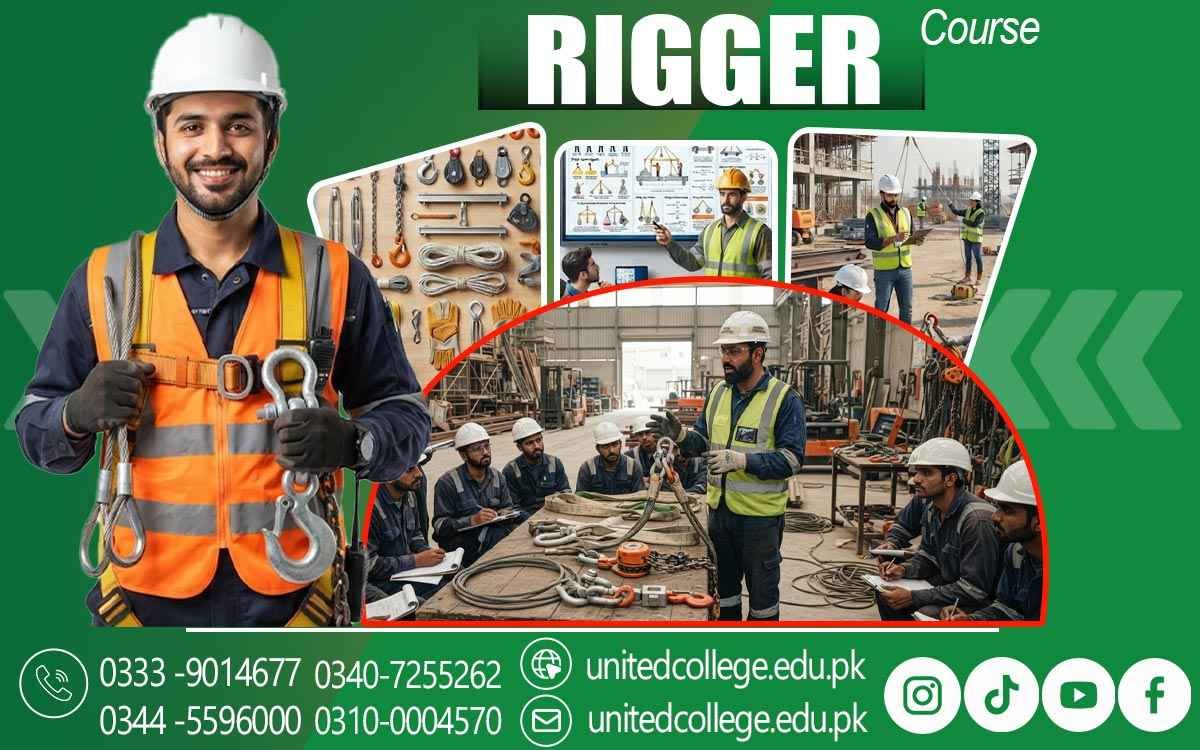
A professional Rigger Course introduces students to the tools, equipment, and techniques used during lifting operations. Learners study wire ropes, chains, slings, shackles, hooks, lifting accessories, and other equipment commonly used for handling heavy loads. They learn how to select suitable equipment based on the type and weight of the load and understand the importance of checking equipment before use.
The training also introduces important concepts such as load weight, load balance, center of gravity, sling angles, safe working loads, and crane hand signals. Understanding these areas helps students develop a better understanding of professional lifting operations and prepares them to work more responsibly on construction sites and industrial projects.
Gain Practical Experience Through Hands-On Training
The main purpose of a Rigger Course in Attock is to provide practical experience along with theoretical knowledge. Rigging is a hands-on profession, so students need practical training to understand how to handle lifting equipment and follow safe lifting procedures. During practical sessions, learners can practice equipment inspection, load preparation, rigging techniques, communication signals, and safe working procedures.
They also learn how riggers coordinate with crane operators, lifting supervisors, engineers, and safety teams during different lifting activities. This practical approach helps students improve their confidence, teamwork, attention to detail, and ability to handle workplace responsibilities.
Develop Equipment Inspection and Load Handling Skills
Proper equipment inspection and load handling are essential skills for every professional rigger. During the Rigger Course in Attock, students learn how to check wire ropes, chains, slings, hooks, shackles, and other lifting accessories before starting an operation. They learn how to identify damaged or unsuitable equipment and understand why unsafe tools should never be used. Students also develop an understanding of load calculations, load distribution, balancing techniques, sling selection, and equipment capacity.
Practical exercises help learners become familiar with different rigging tools and improve their ability to prepare loads correctly. These skills are important for preventing unsafe lifting practices and supporting safe operations in construction, manufacturing, oil and gas, and heavy engineering environments.
Understand Workplace Safety and Risk Management
Safety is one of the most important parts of professional rigging because incorrect lifting procedures can lead to serious accidents, injuries, and equipment damage. A Rigger Course in Attock teaches students how to identify workplace hazards, assess risks, and follow proper safety procedures before and during lifting operations. Learners understand the importance of personal protective equipment, equipment inspection, safe communication, and emergency procedures.
They also learn how proper coordination between riggers, crane operators, supervisors, and safety officers can reduce risks during lifting activities. Developing a safety-focused mindset helps students understand that successful rigging is not simply about moving a heavy load but also about protecting workers, equipment, and the surrounding workplace.
Improve Communication and Teamwork Skills
Rigging is a team-based profession that requires clear communication and proper coordination. During the training, students learn how riggers communicate with crane operators and lifting supervisors using recognized hand signals and workplace communication methods. They understand why instructions must be clear and why every team member needs to understand their responsibilities before a lifting operation begins.
Learners also develop teamwork skills by understanding how different professionals cooperate during complex lifting activities. These communication abilities can help students work more effectively in busy construction sites, factories, power plants, and other industrial environments.
Explore Career Opportunities After Rigger Training
Completing a Rigger Course in Attock can help students explore different career opportunities in technical and industrial sectors. Skilled riggers are required in construction companies, oil and gas projects, manufacturing plants, power projects, warehouses, infrastructure development, and heavy engineering organizations.
Depending on their skills and experience, graduates may work as Riggers, Assistant Riggers, Rigging Technicians, Lifting Crew Members, Crane Support Staff, or Rigging Supervisors. With professional experience and additional training, workers can take on greater responsibilities and move toward supervisory positions. This makes rigging a suitable career option for individuals who prefer practical, technical, and industrial work.
Build a Successful Career with Professional Rigging Skills
Build a Successful Career with Professional Rigging Skills
Learning professional rigging skills can provide a strong foundation for long-term career growth in construction, engineering, manufacturing, and other industrial sectors. By joining a Rigger Course in Attock, students can gain practical knowledge of lifting operations, equipment handling, load management, safety procedures, risk assessment, and workplace communication. The training helps learners understand how different rigging tools are used, how lifting equipment is inspected before operations, and how heavy loads can be handled safely according to workplace requirements.
With dedication, practical experience, continuous learning, and a strong commitment to workplace safety, trained riggers can develop successful careers in Pakistan and explore opportunities in international construction and industrial markets. As professionals gain experience, they may progress from entry-level rigging positions to more responsible roles such as Rigging Technician, Senior Rigger, or Rigging Supervisor, depending on their skills and qualifications.
Frequently Asked Questions (FAQs)
A Rigger Course in Attock is a professional training program that teaches students lifting operations, rigging equipment handling, load management, safety procedures, and workplace communication.
Beginners, students, job seekers, and individuals interested in construction, heavy industries, and technical work can join the course to develop professional rigging skills.
Students learn about lifting equipment, wire ropes, slings, shackles, hooks, load calculations, equipment inspection, crane hand signals, and safe lifting procedures.
Yes, practical training helps students understand equipment handling, load preparation, lifting techniques, inspection procedures, and workplace safety in real working situations.
Graduates can explore roles such as Rigger, Assistant Rigger, Rigging Technician, Lifting Crew Member, Crane Support Staff, and Rigging Supervisor.
Yes. Skilled riggers are needed in construction, oil and gas, manufacturing, power, infrastructure, and other heavy industries where lifting operations are performed.
Admission Open: Start Your Professional Journey Today!
Join United College of Technology and build a career with practical training, recognized certifications, and Gulf job support. Seats are limited.
Apply Now via WhatsAppContact Information
- Address: Rawalpindi: F-272 Main New Katarian Stop, Old IJP Road | Lahore Campus: Lahore, Pakistan
- Phone/WhatsApp: 0333-9014677 / 0344-5596000 / 0310-0004570 / 0301-5044340 / 0340-7255262
- Website: unitedcollege.edu.pk















Leave a Comment