


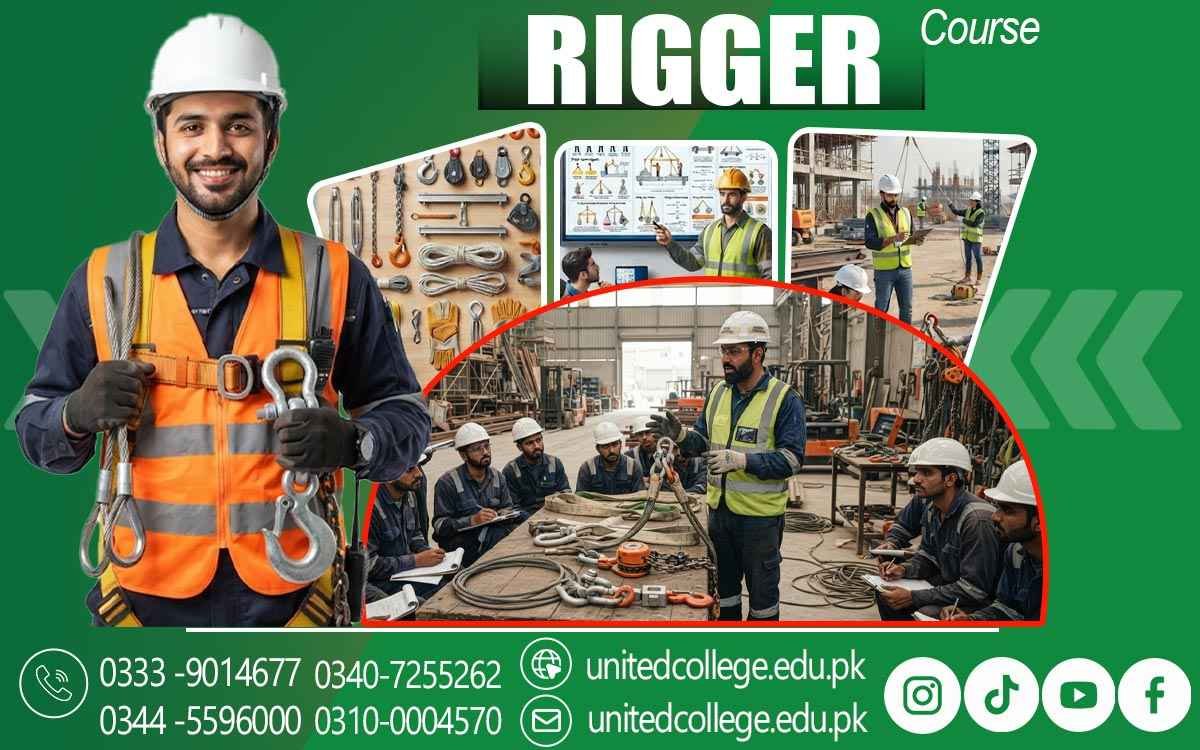

Rigger Course in Gujranwala with Advanced Rigging Techniques
Advanced Rigging Skills for Modern Industries
The Rigger Course in Gujranwala is designed to develop advanced rigging skills that meet the requirements of today's construction, manufacturing, oil and gas, logistics, power generation, and heavy engineering industries. Modern industrial projects involve complex lifting operations that require trained professionals who understand safe rigging procedures, proper equipment handling, and workplace safety standards. This course provides students with the knowledge and practical experience needed to perform lifting operations confidently and efficiently.
Students begin by understanding the responsibilities of a professional rigger throughout every stage of a lifting operation. They learn how to inspect lifting equipment, prepare lifting plans, secure loads correctly, and coordinate with crane operators while following approved industrial procedures. The course also explains how proper planning reduces operational risks and improves productivity on construction sites and industrial facilities.
Classroom instruction is supported by practical demonstrations that help learners understand real workplace situations. Through this balanced learning approach, students gain the technical expertise and confidence required to perform advanced rigging operations safely while meeting modern industry expectations.
Professional Load Handling Techniques
Handling heavy loads safely requires technical knowledge, careful planning, and practical experience. During the Rigger Course in Gujranwala, students learn how to evaluate different types of loads by considering weight, dimensions, center of gravity, lifting points, and stability before any lifting activity begins.
The course explains modern load handling techniques, including proper sling selection, balancing methods, load distribution, and safe attachment procedures. Students also learn how environmental conditions such as uneven surfaces, weather changes, overhead obstacles, and confined workspaces can affect lifting operations and require additional safety measures.
Practical lifting exercises allow learners to apply these techniques under instructor supervision. Regular hands-on practice strengthens technical ability, improves confidence, and prepares students to handle lifting operations safely in various industrial environments.
Understanding Lifting Equipment and Gear
Professional riggers must have detailed knowledge of lifting equipment and accessories to ensure every lifting operation is completed safely. Students become familiar with wire rope slings, chain slings, synthetic web slings, hooks, shackles, lifting clamps, eyebolts, spreader beams, turnbuckles, and other specialized rigging equipment commonly used in industrial projects.
The course teaches equipment inspection procedures, safe working load limits, maintenance requirements, and methods for identifying damaged or defective lifting gear before use. Understanding equipment specifications helps prevent overloading, equipment failure, and workplace accidents during lifting activities.
Hands-on training sessions allow learners to inspect, assemble, and use lifting equipment according to industry standards. Practical experience enables students to select suitable lifting accessories while ensuring compliance with workplace safety regulations.
Effective Crane Communication Practices
Clear communication between riggers and crane operators is essential for successful lifting operations. The Rigger Course in Gujranwala teaches internationally recognized hand signals, radio communication methods, and standard signaling procedures used on construction sites and industrial projects around the world.
Students learn the duties of signalers, the importance of maintaining visual contact with crane operators, and how to provide clear, accurate instructions during lifting operations. The course also emphasizes teamwork and communication to prevent misunderstandings that could lead to workplace incidents.
Practical communication exercises allow students to coordinate lifting operations through realistic training scenarios. These activities improve confidence, strengthen teamwork, and prepare learners to work effectively in demanding industrial environments.
Occupational Safety in Rigging Operations
Safety is the foundation of every professional lifting operation. The Rigger Course in Gujranwala provides comprehensive instruction on hazard identification, workplace risk assessment, emergency response procedures, accident prevention, and the proper use of Personal Protective Equipment (PPE).
Students learn how to inspect lifting equipment, evaluate work areas, establish exclusion zones, monitor environmental conditions, and perform safe lifting operations according to industrial safety regulations. Understanding these procedures helps reduce workplace accidents while protecting personnel and valuable equipment.
Practical safety exercises reinforce classroom learning by allowing students to apply safety principles during lifting operations. Developing a strong safety culture prepares graduates to work responsibly in construction, engineering, manufacturing, and heavy industrial sectors.
Hands-On Industrial Rigging Experience
Practical learning is one of the most valuable components of the Rigger Course in Gujranwala. Students participate in supervised industrial training sessions where they perform lifting operations using professional rigging equipment under realistic working conditions.
Training activities include equipment inspection, sling installation, load balancing, crane communication, lifting plan preparation, and safe material handling procedures. Experienced instructors guide students through every stage of the training while providing professional feedback to improve their performance.
Continuous practical exercises strengthen technical skills, improve decision-making, and increase confidence. This hands-on experience ensures graduates are prepared to perform safely and efficiently in real industrial workplaces.
Expanding Career Opportunities for Riggers
The demand for skilled riggers continues to grow across construction, infrastructure development, manufacturing, shipping, mining, oil and gas, renewable energy, and heavy engineering industries. Employers seek professionals who possess practical lifting experience, technical expertise, and strong workplace safety awareness.
After completing the Rigger Course in Gujranwala, graduates can pursue careers as professional riggers, crane signalers, lifting technicians, material handling specialists, lifting supervisors, and industrial support professionals. These positions provide opportunities for career advancement and long-term employment in both public and private sectors.
The internationally relevant knowledge gained through this course also improves employment opportunities in Gulf countries and other overseas markets where experienced riggers are required for major industrial and infrastructure projects.
Achieving Success in the Rigging Profession
The Rigger Course in Gujranwala equips students with the technical knowledge, practical experience, and professional confidence required to build a successful long-term career in the rigging industry. Throughout the training, learners strengthen their understanding of lifting equipment, safe lifting procedures, hazard management, crane communication, and industrial safety practices.
Graduates complete the course with the ability to perform professional lifting operations according to industry standards while adapting to different workplace environments and project requirements. Their practical skills, technical competence, and commitment to safety make them valuable assets for employers.
As industrial development continues to expand in Pakistan and around the world, qualified riggers remain in high demand. Completing this comprehensive training program provides students with excellent career prospects, higher earning potential, and opportunities to work on major construction, engineering, manufacturing, and infrastructure projects for many years to come.
Frequently Asked Questions (FAQs)
Students participate in equipment inspection, sling selection, load balancing, crane signaling, lifting plan preparation, safe material handling, and supervised industrial rigging exercises.
Professional riggers are needed in construction, oil and gas, manufacturing, engineering, logistics, shipping, mining, power generation, and infrastructure development projects.
The course teaches hazard identification, workplace risk assessment, PPE usage, emergency response procedures, equipment inspection, and safe lifting practices according to industrial safety standards.
Yes. The course is beneficial for beginners starting a career and for experienced workers who want to upgrade their rigging knowledge and practical skills.
Professional rigging training develops technical expertise, practical lifting experience, and safety awareness, making graduates more competitive for local and international employment in industrial and construction sectors.
Admission Open: Start Your Professional Journey Today!
Join United College of Technology and build a career with practical training, recognized certifications, and Gulf job support. Seats are limited.
Apply Now via WhatsAppContact Information
- Address: Rawalpindi: F-272 Main New Katarian Stop, Old IJP Road | Lahore Campus: Lahore, Pakistan
- Phone/WhatsApp: 0333-9014677 / 0344-5596000 / 0310-0004570 / 0301-5044340 / 0340-7255262
- Website: unitedcollege.edu.pk
















Leave a Comment